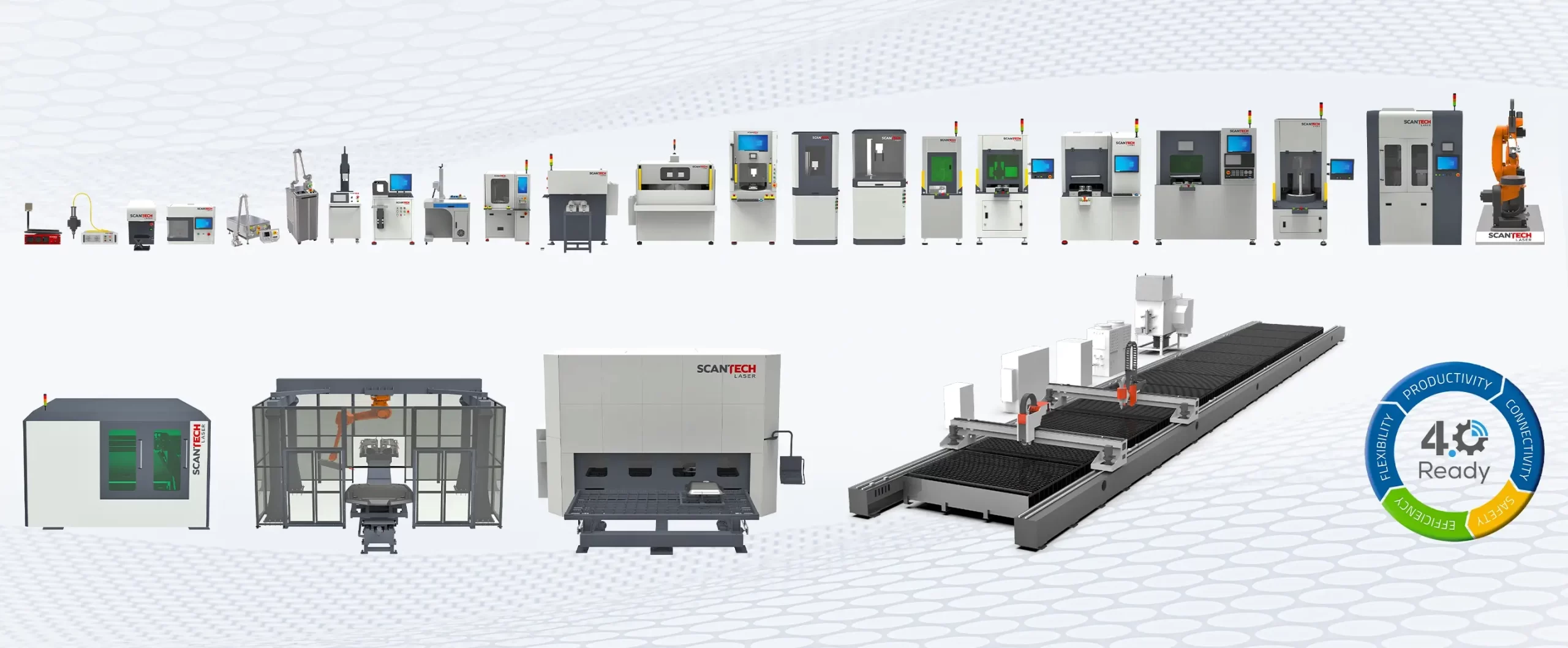
Sheet Metal Fiber Laser Cutting Machine Lineup by Scantech Laser
Engineering Precision Since 1991

Next-Gen Sheet Metal Fiber Laser Cutting

Empowering global manufacturers with ultra-high power (3kW to 60kW) fiber laser systems, dynamic focal control, and 5-axis 3D cutting architectures. Engineered in-house for zero-burr edge quality and minimum Total Cost of Ownership (TCO).
0
Years of Optoelectronic Innovation
60kW
Max Fiber Laser Power
0
Global Manufacturing Sectors
24/7
Expert Global Technical Support
Engineering E-E-A-T & Technical Superiority

The Physics & Economics of Sheet Metal Fiber Laser Cutting

Sheet metal fiber laser cutting represents a pivotal advancement in industrial photonics. By concentrating a 1070 nm ytterbium fiber laser beam into a micro-spot, material transformation shifts from mechanical shearing to instantaneous thermal vaporization and high-velocity melt expulsion.

Global procurement teams evaluating Sheet Metal Fiber Laser Cutting systems face complex technical trade-offs between beam parameter product (BPP), Rayleigh length, assist gas fluid dynamics, and electrical wall-plug efficiency. Unlike legacy CO2 lasers that rely on external optical mirrors and helium-mix resonator gases, solid-state fiber lasers deliver laser light directly through a flexible optical fiber core. This architecture eliminates beam divergence drift, reduces maintenance overhead to near-zero, and achieves wall-plug efficiencies exceeding 45%.

At Scantech Laser, engineered from our MIDC Mahape manufacturing facility in Navi Mumbai since 1991, every laser cutting cell is built upon a high-rigidity stress-relieved welded steel or natural granite machine bed. Combined with custom linear drive motors capable of 2.5G dynamic acceleration, closed-loop capacitive height sensing, and real-time melt pool pyrometry, our systems ensure edge bevel tolerances under ±0.03 mm across mild steel, stainless steel, aluminum, brass, and copper stock.

Data-Driven Procurement

Technical Benchmarking: Fiber Laser vs Legacy Technologies

Quantitative comparison for procurement directors and technical evaluation committees reviewing thermal sheet metal cutting platforms.

Performance Metric Sheet Metal Fiber Laser (Scantech) CO2 Laser Cutting High-Definition Plasma Waterjet Cutting
Wall-Plug Efficiency (%) 45% – 50% 8% – 10% 15% – 20% 25% – 30%
Processing Speed (2mm Stainless N2) 38 – 45 m/min 10 – 12 m/min 4 – 6 m/min 0.4 – 0.8 m/min
Heat-Affected Zone (HAZ) Ultra-Narrow (0.05 - 0.15mm) Moderate (0.3 - 0.6mm) Wide (1.5 - 3.0mm) Zero Thermal Impact
Consumable Overhead Focusing Nozzle & Cover Glass Optical Mirrors, Laser Gas, Nozzles Plasma Electrodes, Nozzles, Swirl Rings Garnet Abrasive, High-Pressure Seals
Reflective Metal Capability (Cu/Brass) High (1070 nm Wavelength) Extremely Low (Risk of Back Reflection) Moderate High
Maintenance Cycle Interval 5,000+ Hours (Solid State) 500 Hours (Mirror Alignment & Turbine) 200 Hours (Torch Consumables) 300 Hours (Intensifier Pump Seals)
Future Trends (2026–2030)

Industrial buyer requirements are undergoing a fundamental transformation driven by automation, energy efficiency, and high-power beam shaping.

  • 01. Ultra-High Power ScalingShift from 6kW/12kW standard systems to 30kW–60kW sources, replacing plasma in heavy structural steel and shipbuilding.
  • 02. Dynamic Beam Shaping (DBS)Real-time adjustment of beam spot geometry and Rayleigh range to instantly switch between thin-gauge speed cutting and thick-plate kerf clearing.
  • 03. Autonomous Gas MixingOn-demand proportional mixing of Nitrogen and Oxygen to eliminate micro-dross on thick carbon steel while maintaining 2x speed over pure O2 cutting.
  • 04. AI Machine Vision IntegrationAutomated sheet positioning alignment, real-time nozzle cleanliness verification, and thermal closed-loop anti-burn algorithms.
Send an Inquiry
Why Global Procurement Partners Choose Us

35 Years of Integrated Laser Engineering

Scantech Laser is not an assembler; we are an optoelectronic systems integrator delivering vertically controlled manufacturing standard across every machine platform.

01

In-House R&D Application Lab

We test your exact material samples, optimize assist gas pressures, measure edge roughness (Ra), and validate cycle times before machine order.

02

Custom Optomechanical Design

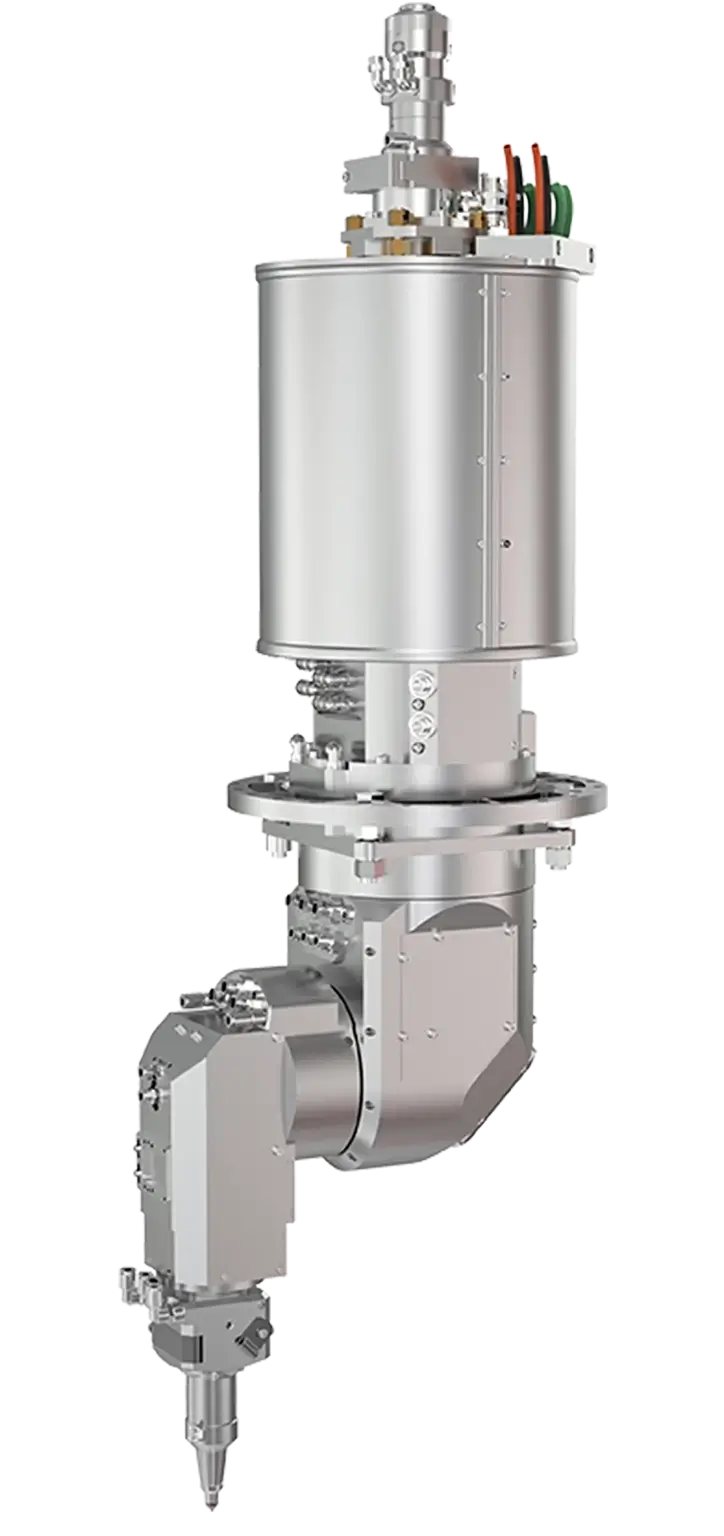
Proprietary 5-axis dynamic cutting heads, capacitive sensor assemblies, and thermally stable collimation optics engineered under one roof.

03

ISO & CE Compliant Build

Every system undergoes laser safety enclosure verification (Class 1 compliant), vibration stress relief, and 24-hour laser power output logging.

04

Turnkey Automation Systems

Seamless integration with compact shuttle tables, pneumatic sheet loading towers, robotic deburring cells, and shop-floor MES networks.

05

Global Field Engineering Support

Direct technical assistance from factory-trained field engineers based in Navi Mumbai and global regional service hubs.

06

Transparent Cost Structure

Clear, unbundled spare parts pricing, long optical component life spans, and guaranteed zero hidden software licensing fees.

07

Non-Standard Customization

Custom bed sizes up to 12 meters x 3 meters, dual-rotary tube attachments, and specialized multi-head laser cutting configurations.

08

Complete Audit Documentation

Comprehensive FAT/SAT reports, electrical schematics, optical ray diagnostics, and preventive maintenance guides included with delivery.

AI & Buyer Intent FAQ

Critical Technical Questions Asked by Global Procurement Teams

Synthesized from global tender requirements, engineering queries, and AI-driven search intent across sheet metal fabrication industries.

Laser power selection depends directly on material thickness, alloy grade, and desired processing speed. For thin to medium sheet metal (0.5mm to 6mm carbon steel, stainless steel, or aluminum), a 3kW to 6kW fiber laser provides ultra-fast feed rates up to 45 m/min using compressed air or nitrogen assist gas. For heavy plate cutting (12mm to 30mm carbon steel or stainless steel), 12kW to 30kW fiber laser sources are recommended to maintain clean kerf geometry, minimize dross formation, and achieve high-volume productivity. Ultra-high-power fiber systems (30kW to 60kW) enable single-pass cutting of thick carbon steel plates up to 50mm with high-pressure nitrogen or oxygen-mix assist gas.

Assist gas plays a dual role: ejecting molten metal from the kerf and protecting the cut boundary. High-Pressure Nitrogen (15–25 bar) produces an oxide-free, bright cut edge ideal for stainless steel, aluminum, and galvanised sheets intended for direct welding or powder coating without secondary grinding. Oxygen assist gas (0.5–5 bar) utilizes an exothermic reaction to cut thick mild steel efficiently at lower laser power levels, though it leaves a thin oxide layer. High-Pressure Clean Compressed Air (12–16 bar) offers up to 60% operational cost savings for carbon steel (up to 10mm) and thin stainless steel by eliminating bottled gas overhead while retaining rapid processing speeds.

Burr or dross formation occurs when molten metal is not completely blown clear of the kerf lower edge before re-solidifying. Common root causes include incorrect focal position, insufficient assist gas pressure, inappropriate nozzle orifice diameter, or sub-optimal feed rates. Heat-Affected Zone (HAZ) expansion occurs when excessive heat accumulates due to slow cutting speeds or inadequate cooling. Scantech Laser mitigates both issues using dynamic beam shaping, closed-loop capacitive distance tracking, precise gas-nozzle concentricity calibration, and automated parameter adaptation inside the CNC numerical control system.

Standard 3-axis flatbed fiber laser cutters operate along X, Y, and Z axes, making them optimized for flat sheet metal stock. A 5-axis 3D fiber laser cutting system adds rotational (A-axis) and tilting (B-axis) movement to the cutting head. This allows the laser focal point to maintain precise perpendicularity or specified bevel angles across hydroformed components, deep-drawn automotive body panels, structural tubes, and complex 3D profiles without requiring multiple fixture setups.

Transitioning to modern fiber laser cutting technology typically yields a return on investment (ROI) within 12 to 18 months. Key savings stem from electrical wall-plug efficiency (45-50% for solid-state fiber lasers vs. 8-10% for CO2 systems), zero optical mirror maintenance, eliminate laser gas consumables (He/CO2/N2 laser gas mix), and processing speeds up to 3 to 5 times faster on thin-to-medium sheet metals. Compared to plasma cutting, fiber lasers eliminate secondary edge finishing, cut tighter tolerances (±0.03 mm vs ±0.5 mm), and reduce kerf scrap material.

Maintaining high operational availability requires daily inspection and cleaning of protective optical windows (cover slides), verifying assist gas filtration purity (oil/water-free to ISO 8573-1 Class 1 standard), checking nozzle tip centricity and capacitive sensor calibration, and monitoring water chiller loop conductivity and temperature stability. Scantech Laser systems incorporate automated sensor suites that continuously monitor optical cover glass thermal shifts, back-reflection levels, and beam alignment to prevent costly optical downtime.

Every Scantech sheet metal fiber laser cutting system undergoes rigorous Factory Acceptance Testing (FAT) at our Navi Mumbai manufacturing headquarters prior to global shipment. FAT includes laser power meter verification across the operational range, 24-hour laser stability stress testing, laser interferometer linear axis calibration, dynamic acceleration checks up to 2.0G, cut-sample dimensional inspection, and metallurgical edge analysis. Export customers receive full FAT documentation, video verification trials, and comprehensive SAT (Site Acceptance Testing) supervised by our global field engineers.

Engineered for your exact application

Request a Sheet Metal Fiber Laser Cutting Trial & ROI Calculation

Send us your DXF/STEP CAD drawings, material grade specifications, thickness ranges, and target monthly output. Our laser application team will analyze your part geometry, calculate optimized gas consumption, and send a complete feasibility report.

Inside Our Manufacturing & Testing Facility

Precision Fiber Laser Manufacturing in Action

Watch how Scantech Laser builds, calibrates, and validates high-power fiber laser machines to deliver continuous operational reliability under demanding industrial factory conditions.

Global Operations & Support

Connect Directly With Our Senior Laser Engineers

Skip generic sales reps. Speak directly with laser applications specialists who design machine beds, integrate optical trains, and optimize CNC cutting recipes.

Global Manufacturing HQ Navi Mumbai, Maharashtra, India A-517 MIDC Mahape, Ghansoli, Navi Mumbai – 400710. ISO-compliant optical testing and build plant.
Technical Application Desk [email protected] Submit CAD drawings for sample cutting trials, time-motion studies, and custom system pricing.
Direct Phone Line +91 932 191 7007 Monday through Saturday (IST business hours). 24/7 emergency field support.