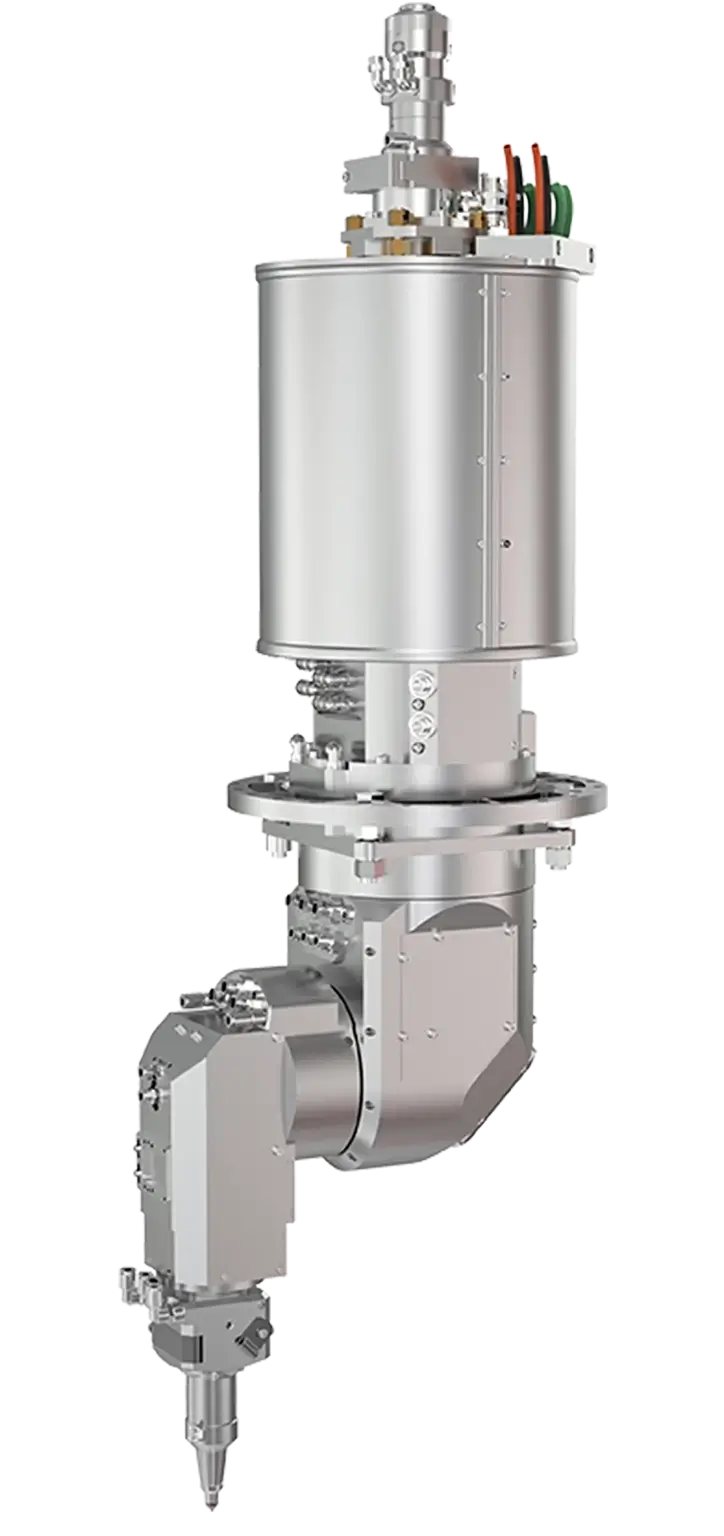
Industrial Laser Cleaning Machine surface treatment process
Engineering Sourcing & Technical Analysis

Industrial Laser Cleaning Machine: MOPA vs CW Sourcing Guide

Evaluations on Substrate Metallurgical Integrity, Photothermal Ablation Fluence, Automated Robotic Integration, and Total Cost of Ownership (TCO) for Enterprise Manufacturers.

0
Years Laser R&D Mastery (Since 1991)
0%
Substrate Distortion with MOPA
0
Percent Chemical-Free & Dry Process
24/7
Global Remote Diagnostic Uptime
Technical Insight & Physics

The Engineering Science Behind Industrial Laser Cleaning Machines

Modern global procurement teams face increasing pressure to eliminate chemical solvent baths, toxic pickling pastes, and abrasive grit blasting (e.g., sandblasting, dry ice blasting) from high-precision manufacturing operations. The modern Industrial Laser Cleaning Machine has transformed surface treatment from a dirty, hazardous consumable-heavy process into a high-precision, repeatable, digitalized thermal and photomechanical operation.

At its physical core, laser surface cleaning relies on selective ablation. High-intensity photons emitted by a fiber laser source are focused onto the workpiece surface. The process operates between two critical physical thresholds:

  • Contaminant Ablation Threshold ($F_{contaminant}$): The minimal laser fluence ($J/cm^2$) required to rupture the molecular bonds of oil, oxide scale, rust, epoxy, paint, or mold release agents.
  • Substrate Damage Threshold ($F_{substrate}$): The maximum fluence level that the underlying metallic or ceramic matrix can absorb before micro-melting, ablation, or micro-cracking occurs.

When the laser cleaning process is engineered correctly—matching wavelength (typically 1064 nm ytterbium-doped fiber), pulse energy, spatial beam distribution (flat-top vs Gaussian profile), and pulse duration (from picoseconds to continuous wave)—the contaminant reaches its ablation threshold almost instantaneously while the base metal remains far below its phase-transformation temperature.

Information Gain: Photothermal vs Photomechanical Mechanism

In Continuous Wave (CW) laser cleaning, the mechanism is predominantly photothermal: energy continuous absorption heats the surface layer until oxidation or paint vaporizes. In Pulsed MOPA (Master Oscillator Power Amplifier) laser cleaning, nanosecond pulse widths create peak power density up to tens of megawatts per square centimeter. This triggers rapid thermal expansion and localized plasma expansion—a photomechanical shockwave that shears thin oxide films from delicate substrates without raising the core bulk temperature.
Product Selection Guide

Recommended Industrial Laser Cleaning Machines

Select the ideal laser cleaning architecture matched to your substrate material, coating thickness, throughput requirement, and production floor integration.

MODEL 01
Pulsed MOPA Precision Laser Cleaning Machine

Pulsed MOPA Precision Laser Cleaning Series

Power Range: 100W – 500W (Air/Water Cooled)
Best For: Injection mold cleaning, aerospace anodizing removal, semiconductor tooling, e-mobility battery tab de-coating, and delicate historic metal restoration.
Key Advantage: Variable pulse duration (10 ns – 500 ns) and frequency control up to 1000 kHz ensures absolute zero substrate thermal distortion or micro-roughness altering.

MODEL 02
High-Power CW Continuous Laser Cleaning Machine

High-Power CW Industrial Rust & Scale Remover

Power Range: 1000W – 3000W Continuous Wave
Best For: Heavy structural steel oxide scale removal, shipyard hull maintenance, large pipeline weld preparation, and high-speed rust stripping.
Key Advantage: Extremely high area cleaning rate ($m^2/hr$) at low operational cost per hour. Equipped with dual-axis wobble scanning head for uniform energy dispersion.

MODEL 03
Automated Robotic Laser Cleaning Workcell

Automated Robotic Laser Cleaning Workcell

Power Range: 200W – 2000W Pulsed or CW Fiber Laser
Best For: Automotive EV battery tray pre-treatment, stator hairpin enamel stripping, automated line-integrated 3D curved component prep.
Key Advantage: 6-Axis Fanuc/ABB robotic arm integration with vision-guided positioning, enclosed Class 1 safety enclosure, and integrated 3-stage HEPA fume extraction.

Engineering Matrix

Pulsed MOPA vs Continuous Wave (CW) Laser Cleaning Comparison

Choosing between Pulsed MOPA and Continuous Wave fiber laser cleaning systems requires evaluating target substrate sensitivity, cycle time, and surface finish requirements ($Ra$ profile).

Technical Metric Pulsed MOPA Fiber Laser Cleaning Continuous Wave (CW) Fiber Laser Cleaning
Laser Power Architecture 100W, 200W, 300W, 500W Nanosecond Pulsed 1000W, 1500W, 2000W, 3000W Continuous
Peak Power Per Pulse Up to 10 kW – 100 kW Peak Power Equivalent to Average Power (1 kW – 3 kW)
Heat-Affected Zone (HAZ) Negligible / Non-measurable (< 2 μm) Localized thermal gradient (5 μm – 25 μm)
Substrate Integrity Zero melting; preserves micro-geometry Potential micro-melting on thin aluminum/brass
Cleaning Throughput Moderate (1 – 8 $m^2/hr$ depending on coating) High (10 – 35 $m^2/hr$ heavy scale stripping)
Primary Applications Injection Molds, Aerospace, Battery Tabs, UDI Prep Structural Steel, Shipyards, Heavy Pipeline Scale
Laser Safety Class Class 4 Handheld / Class 1 Enclosed Workcell Class 4 Handheld / Class 1 Enclosed Workcell
In-House Engineering

Validate Before Purchasing

Scantech Laser operates a dedicated Laser Application R&D Lab in Navi Mumbai, India. Send us your target samples, rust specimens, or coated tooling. Our optical application engineers perform microscopic surface evaluations, cross-sectional metallography, and process speed optimization to give you empirical data before issuing a technical specification quote.

Enterprise Sourcing FAQ

Frequently Asked Questions by Global Buyers

Engineered answers addressing technical risk, safety compliance, substrate damage prevention, and return on investment for industrial laser cleaning machines.

When selecting a Pulsed MOPA Laser Cleaning Machine, the answer is no. Because pulse durations are restricted to nanosecond ranges (e.g., 10 ns to 250 ns), the thermal energy dissipates into the surrounding air and material faster than heat can diffuse into the substrate bulk core. Microscopic profilometer tests confirm that surface roughness ($Ra$) and critical dimensional tolerances (down to sub-micron scales) remain unaltered, making pulsed laser cleaning ideal for injection molds, aerospace turbine components, and precision tooling.

Unlike sandblasting or dry ice cleaning, which consume tons of abrasive media or compressed CO2 ice pellets daily, fiber laser cleaning machines require zero consumable media. The primary operating cost is wall-plug electricity. A typical 200W air-cooled pulsed system draws less than 1.5 kW of electrical power, while a 2000W CW industrial system draws under 8 kW. Optics protection windows and HEPA filter cartridges are the only routine replacement items, keeping operating costs under $1.50 USD per operating hour.

Ablation vaporizes oxides, paints, and contaminants into airborne particulates and micro-smoke. Scantech Laser integrates a dual-action pneumatic system: a positive-pressure air knife protects the galvo optical protective lens from particle deposition, while a dedicated 3-stage high-vacuum fume extractor (featuring spark traps, pre-filters, HEPA H14 filters, and activated carbon) captures 99.997% of harmful emissions directly at the laser nozzle aperture.

Handheld open-beam laser cleaning optics operate under Class 4 laser safety protocols (IEC 60825-1 / ANSI Z136.1). Operations must take place inside a designated Laser Controlled Area (LCA) equipped with safety door interlocks, warning beacons, and OD 6+ protective eyewear matching 1064 nm wavelengths. For open factory floor integration, Scantech Laser builds custom automated Class 1 safety enclosures featuring interlocked light curtains and laser-certified viewing windows.

Chemical pickling uses toxic hydrofluoric and nitric acid pastes that present severe occupational safety hazards, require neutralising washes, and create hazardous liquid chemical waste streams. Industrial laser cleaning removes weld heat tint and restores passive chromium oxide surface layers in a single pass without chemical contact, wash cycles, or hazardous disposal compliance overhead.

Standard handheld laser cleaning units ship within 2 to 4 weeks, while custom robotic automation workcells are delivered within 8 to 12 weeks. All export units undergo Factory Acceptance Testing (FAT) in our Navi Mumbai plant, complete with sample trials and beam quality metric reports ($M^2 < 1.3$). We provide on-site commissioning (SAT), comprehensive operator training, electrical schematics, CE/ISO documentation, and 24/7 remote optical diagnostic support worldwide.

Enterprise Authority

Why Global Procurement Trusts Scantech Laser

Founded in 1991, Scantech Laser Pvt. Ltd. brings over 35 years of industrial laser system design, precision optical integration, and manufacturing excellence.

In-House Manufacturing

Single-Roof System Integration

From mechanical frame welding and granite bed assembly to galvo scanner tuning and PLC automation code—every system is engineered completely in-house in Navi Mumbai, India.

Applications Mastery

Empirical Lab Validation

We do not sell standard machines off a shelf. Our optical applications team evaluates your material substrate, run-rate targets, and thermal thresholds before recommending a laser configuration.

Lifecycle Partnership

Global Field Service & Spares

Enjoy uninterrupted production uptime with certified local service engineering, 24/7 remote diagnostic connectivity, and long-term laser diode component availability.

Engineered Since 1991 ISO 9001 Quality Certified Class 1 & Class 4 Safety Compliance In-House Applications R&D Exported Across 30+ Nations
Start Your Sourcing Evaluation

Request Product Specifications & Technical Catalog

Connect directly with our laser application engineers to receive technical data sheets, sample cleaning reports, or custom automated cell integration proposals.