Packaging Laser Coding & Marking: Next-Gen Industrial Systems
High-speed, zero-consumable laser date coding, 2D DataMatrix serialisation, and GS1 Digital Link marking systems engineered for global pharma, FMCG, food, and beverage production lines.
GMP-compliant UV and Fiber laser packaging coders integrated with vision verification systems, supporting 21 CFR Part 11 audit trails and EU FMD anti-counterfeiting compliance.
Dynamic galvo scan heads and closed-loop encoder tracking capable of crisp vector marking on flexible films, PET bottles, glass, and foil packaging at line speeds exceeding 120 m/min.
As global manufacturing transitions to Industry 4.0 and stringent sustainability mandates take effect, procurement managers and plant engineers are systematically replacing legacy Continuous Inkjet (CIJ) and Thermal Transfer Overprinting (TTO) systems with high-reliability laser coding technology.
In modern industrial packaging, continuous traceability is no longer merely an operational requirement—it is a legal baseline and a brand protection necessity. Global enterprise buyers across the pharmaceutical, fast-moving consumer goods (FMCG), food and beverage, cosmetics, and agrochemical sectors are actively searching for packaging laser coding and marking systems capable of delivering high-contrast, permanent, micro-precise codes at blinding conveyor line speeds.
Legacy ink-based marking systems impose heavy ongoing operational expenses (OPEX), including continuous purchases of hazardous solvent inks, makeup fluids, thermal ribbons, filter replacements, and frequent nozzle unclogging maintenance. Furthermore, ink marks are vulnerable to mechanical abrasion, chemical solvent exposure, moisture, and temperature fluctuations. In contrast, Packaging Laser Coding & Marking systems offer a zero-consumable, maintenance-light, and eco-friendly alternative that achieves permanent chemical or physical surface alteration across rigid metals, glass, PET, flexible barrier films, and recycled paperboard packaging.
At Scantech Laser Pvt. Ltd. (engineered in India since 1991), we combine over three decades of in-house laser physics research, mechanical design, dynamic motion software, and automated system integration. Our application-first approach ensures that every laser batch coder, pharmaceutical serialisation station, or mark-on-the-fly (MOTF) system is optimized for your exact substrate chemistry, production throughput, and regulatory framework.
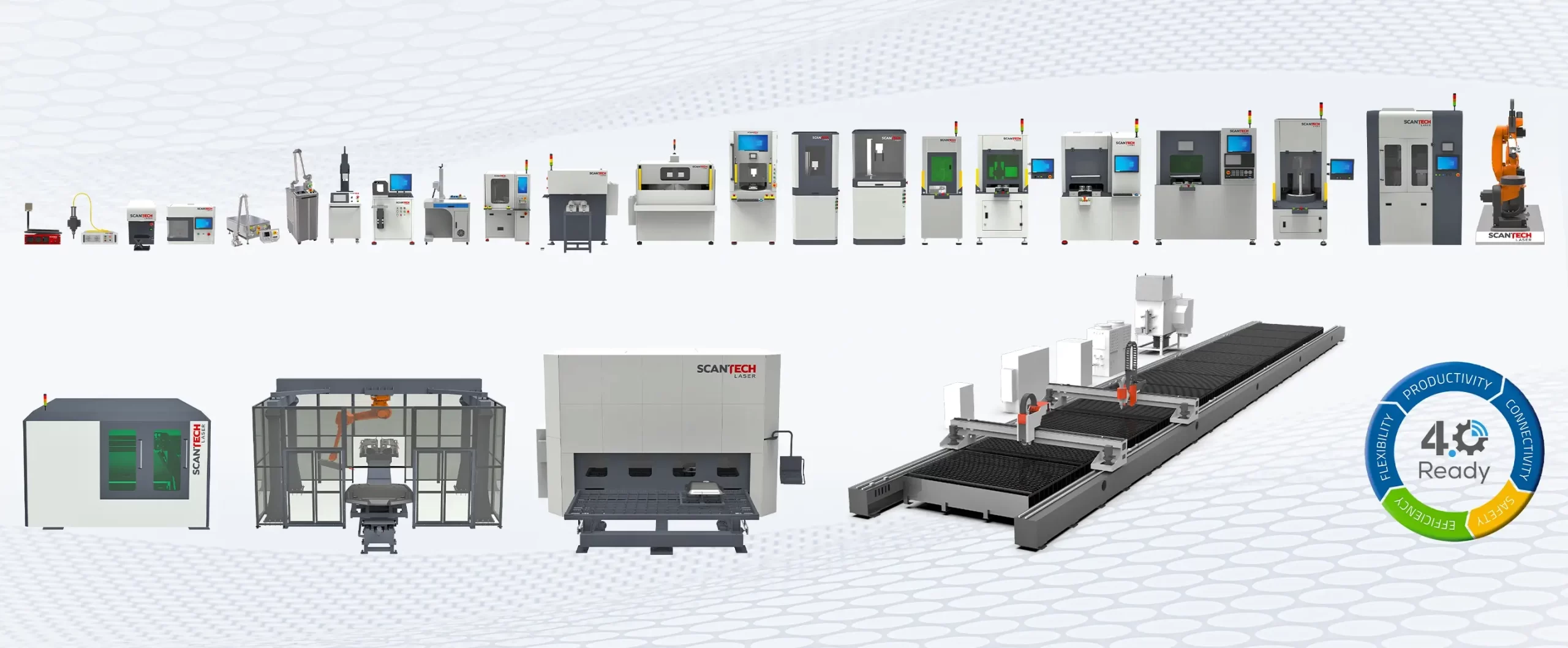
From ultra-compact OEM laser heads for inline cartoning machines to fully enclosed automated serialisation cells with integrated vision inspection, discover Scantech Laser's specialized packaging machinery line-up.

Engineered for high-density polyethylene (HDPE), coated aluminum cans, foil sachets, stainless steel aerosol cans, and metal closures. Features 20W to 100W MOPA/Q-switched fiber laser sources with adjustable pulse durations for crisp carbonisation or surface annealing without puncturing thin foil layers.

Operating at 355 nm ultraviolet wavelength, this cold-marking system utilizes photochemical ablation to mark sensitive packaging materials like PVC blister packs, white PE/PP bottles, IV bags, and delicate medical films with zero micro-thermal damage, scorching, or substrate pinholing.

Available in 9.3 μm, 10.2 μm, and 10.6 μm wavelengths, tailored specifically for clear PET beverage bottles, coated paperboard cartons, glass wine and beer containers, labels, and wooden crates. Delivers ultra-fast vector date coding, batch numbers, and high-contrast 1D/2D barcodes.

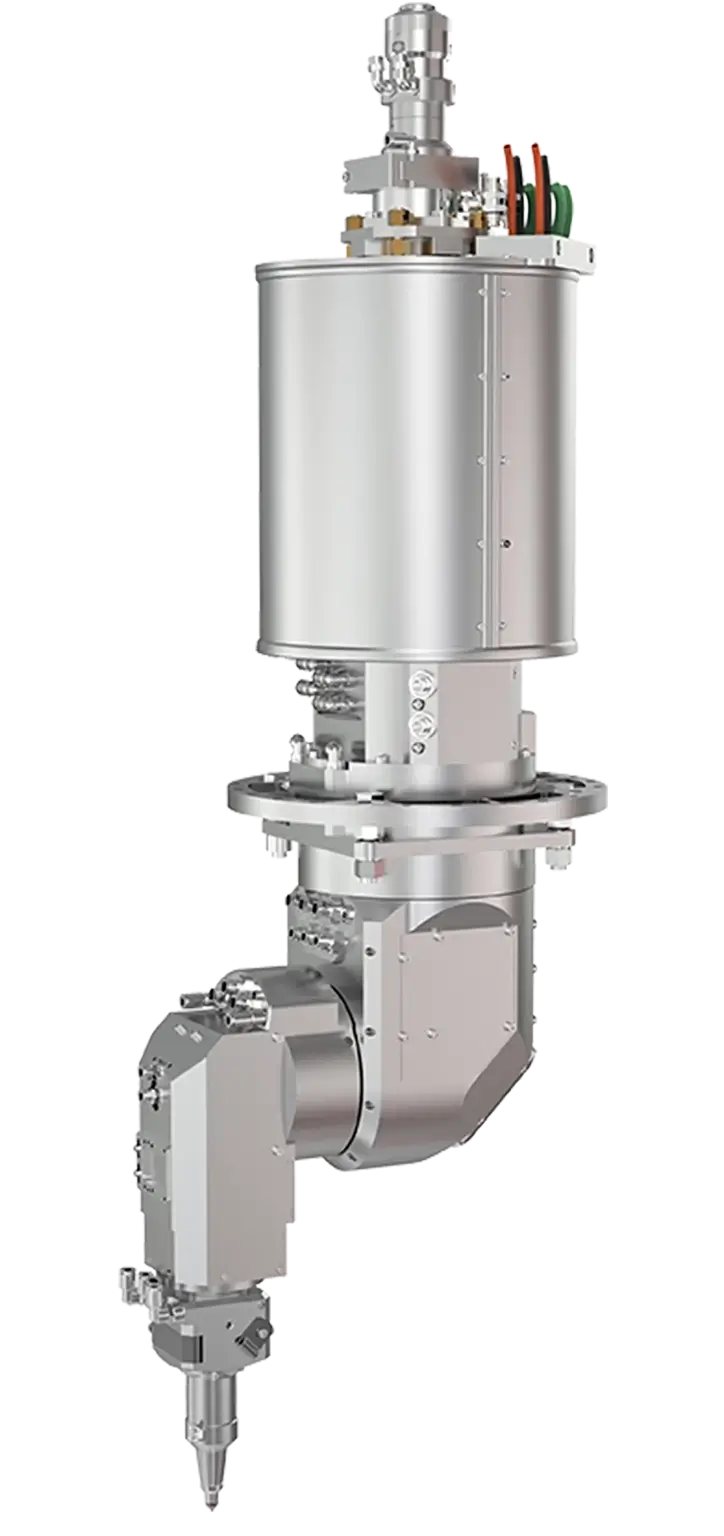
Integrated dynamic galvo deflection heads equipped with high-resolution quadrature optical encoders and laser photo-eyes. Seamlessly synchronizes laser beam trajectory with variable line speeds up to 150 meters/minute on continuous bottling, canning, and pouch filling lines.

Fully enclosed Class 1 laser machine with integrated high-speed 2D DataMatrix vision grading (ISO 15415/15426 compliance), reject mechanisms, and 21 CFR Part 11 compliant audit trail software. Designed specifically for pharmaceutical secondary and tertiary carton packaging.

Specialized green wavelength laser coder tailored for highly reflective foils, transparent polymers, silicon wafers, and delicate electronics packaging. Provides intense absorption rates where standard 1064 nm fiber or 10.6 μm CO2 wavelengths fail to produce sufficient optical contrast.
Selecting the correct laser source is a physics calculation based on photon energy absorption spectrums of the substrate. The table below outlines the primary operating parameters for industrial packaging laser coding:
| Packaging Material / Substrate | Optimal Laser Wavelength | Primary Interaction Mechanism | Typical Line Speed Capability | Contrast & Quality Characteristics |
|---|---|---|---|---|
| PET Bottles (Beverage / Oil) | CO2 (9.3 μm) | Surface Photothermal Micro-Foaming | Up to 120 m/min | Crisp frosted-white vector marks; no micro-cracking or wall burn-through. |
| Coated Paperboard / Cartons | CO2 (10.6 μm) / Fiber (1064 nm) | Color-Change Invalidation / Layer Ablation | Up to 150 m/min | High-contrast black/dark brown alphanumeric text and 2D DataMatrix codes. |
| HDPE / PE / PP Bottles & Caps | UV (355 nm) / Fiber (MOPA) | Photochemical Absorption / Foaming | Up to 90 m/min | Jet-black cold mark on white/colored plastics without thermal distortion. |
| Aluminum Cans / Foil Sachets | Fiber (1064 nm MOPA) | Surface Oxidation / Micro-Engraving | Up to 180 m/min | Permanent dark anneal or bare metal ablation; zero penetration into barrier foil. |
| Glass Bottles & Ampoules | CO2 (10.2 μm / 10.6 μm) | Micro-Fracturing / Surface Thermal Stress | Up to 80 m/min | Indelible micro-fractured code, impervious to alcohol washing or hot condensate. |
| PVC / Flexible Barrier Films | UV (355 nm) | Photochemical Molecular Chain Bond Breaking | Up to 100 m/min | Dark, high-contrast code without chemical off-gassing or film structural compromise. |
Industrial procurement managers require more than just off-the-shelf equipment; they demand proven process reliability, robust machine build quality, and comprehensive global technical validation.
Understanding the macro regulatory shifts, sustainability imperatives, and digital track-and-trace mandates shaping global packaging equipment investments over the next decade.
Escalating corporate Environmental, Social, and Governance (ESG) targets are accelerating the phase-out of Continuous Inkjet (CIJ) printers. Packaging plants are severely penalised for volatile organic compound (VOC) emissions from solvent inks. Laser coding provides an immediate 100% reduction in chemical consumables, eliminating hazardous waste disposal costs and reducing plant carbon footprints.
By 2027, the retail sector will complete its transition from legacy 1D UPC/EAN barcodes to 2D GS1 Digital Link QR codes. These data-rich codes allow consumers to scan for product origin and ingredients while enabling automated point-of-sale checkout. Printing dense 2D codes at high speeds requires the sub-micron edge crispness and vector precision delivered exclusively by galvo-steered laser coders.
The global mandate for Post-Consumer Recycled (PCR) plastics, mono-material PE pouches, and biodegradable PLA film packaging creates complex surface variations. Traditional inks struggle with adhesion and drying time on PCR surfaces. Advanced MOPA fiber lasers and UV cold lasers adjust pulse width on the fly, guaranteeing high-contrast codes on evolving eco-friendly packaging substrates.
Consult with our senior application engineers for a custom total cost of ownership (TCO) calculation and material sample trial report.
How breakthroughs in ultrafast laser physics, high-speed galvo dynamics, and AI vision alignment are defining the next generation of inline packaging machinery.
Continuous conveyor coding requires dynamic vector manipulation. Scantech Laser's proprietary MOTF firmware calculates conveyor speed fluctuations in real-time via optical quadrature encoders. The galvo mirrors continuously offset the laser spot coordinate matrix to eliminate skewing, distortion, or stretching of 2D DataMatrix codes, even when conveyors accelerate or decelerate suddenly.
Modern packaging lines cannot tolerate unreadable batch numbers or misaligned serialisation codes. Our laser coding stations integrate coaxial or downstream high-speed industrial smart cameras with deep-learning Optical Character Verification (OCV/OCR). Unreadable codes trigger pneumatically actuated high-speed blow-off or pusher rejection systems without stopping the main conveyor line.
Standard Q-switched fiber lasers feature fixed pulse durations (approx. 100 ns), which can overheat thin polymer films or foil sachets. Master Oscillator Power Amplifier (MOPA) architecture allows independent tuning of pulse width (from 2 ns to 500 ns) and frequency (up to 4 MHz). This allows precise control over thermal heat input, enabling dark carbonisation on delicate plastics without pinhole formation.
Scantech packaging lasers feature built-in OPC UA, MQTT, and Ethernet/IP protocols for direct handshake with line Programmable Logic Controllers (PLCs), Supervisory Control and Data Acquisition (SCADA) networks, and Enterprise Resource Planning (ERP) systems. For pharmaceutical applications, our software provides encrypted electronic audit trails, multi-level user authentication, and automatic batch generation.
Direct technical answers to the most critical questions asked by global procurement teams, line integration engineers, and plant operations directors.
While the initial capital expenditure (CAPEX) for a packaging laser coding system is typically higher than a CIJ printer, the operational expenditure (OPEX) of laser is virtually zero. Laser systems require no ink, solvents, makeup fluids, thermal ribbons, or ink filter replacements. In typical high-speed 24/7 packaging plants, the ROI payback period for a laser coder is achieved within 12 to 18 months through ink savings, reduced downtime, and zero hazardous solvent waste disposal costs.
PET (Polyethylene Terephthalate) absorbs light most efficiently at the 9.3 μm wavelength CO2 laser spectrum. Standard 10.6 μm CO2 lasers can burn through or weaken thin-walled PET bottle structures. The 9.3 μm wavelength produces a bright, frosted-white vector mark on the outer wall surface without damaging the structural integrity or risking bottle leakage during carbonated beverage pressurisation.
Yes. By utilizing a MOPA fiber laser with ultra-short pulse widths (2 ns to 10 ns) or a 355 nm UV cold laser, energy density is delivered extremely fast without deep thermal penetration. This allows high-contrast dark marks on aluminum foil laminates, blister packaging, and sachet films while preserving the moisture and oxygen barrier properties of the packaging material.
Scantech MOTF systems can mark dynamic text, expiry dates, and lot numbers at conveyor line speeds up to 150 meters/minute (approx. 500 feet/minute), depending on code complexity and substrate response. For complex 2D DataMatrix serialisation codes, typical production line speeds range between 60 to 100 meters/minute with 100% vision readability verification.
Our pharmaceutical laser packaging software includes secure, multi-tier user privilege management, automated timestamped electronic audit trails, database encryption, and seamless connectivity to central serialisation server software (e.g., Systech, Tracelink). The system guarantees zero duplicate serial numbers and supports IQ/OQ validation protocols.
Yes. Laser coding ablates or thermal-foams microscopic surface layers, generating airborne particulates, fumes, and organic vapors (especially when processing PVC, coated paperboard, or printed inks). Scantech supplies integrated multi-stage HEPA and active carbon fume extraction units that maintain clean optics, protect operator safety, and satisfy OSHA/CE environmental compliance.
Scantech fiber laser sources feature a Mean Time Between Failures (MTBF) exceeding 100,000 operational hours (equivalent to over 11 years of continuous 24/7 operation). CO2 laser tubes typically operate between 40,000 to 50,000 hours before requiring gas recharge or source replacement, while UV diode modules operate reliably for 20,000+ hours under recommended ambient cooling conditions.
Absolute precision integration is our core specialty. We manufacture compact IP65-rated laser marking heads and custom mounting brackets that drop directly into horizontal and vertical Form-Fill-Seal (FFS) pouching machines, rotary bottling monoblocks, high-speed cartoners, and labeling stations. Handshake signals are handled via standard industrial I/O, PROFINET, or EtherNet/IP.
Send us your actual packaging samples—whether PET bottles, barrier film sachets, aluminum cans, or printed cartons. Scantech application engineers will conduct wavelength absorption testing, run mark-on-the-fly trials, and deliver a comprehensive lab test report with line-speed validation.
Discover how Scantech Laser engineers, builds, calibrates, and validates industrial laser systems at our state-of-the-art facility in Navi Mumbai, India.
Engineering trust since 1991. Every Scantech packaging laser coder is manufactured under strict quality systems to guarantee seamless performance on global factory floors.
Standardized assembly procedures, optical beam quality verification, and rigorous burn-in testing protocols for every laser source.
Complete operator protection featuring failsafe interlock safety circuits, housing isolation, and certified laser safety glass viewing windows.
Encrypted data management software, audit trails, and multi-level password protection engineered for pharmaceutical serialisation lines.
Whether you require a standard offline laser batch coder or a fully customized online conveyor marking solution, our technical team is ready to evaluate your requirements.