Factory-direct laser systems configured with IPG, Raycus, and Max Photonics sources, fully certified under EU CE Machinery Directive 2006/42/EC and EN 60825-1 laser safety standards.
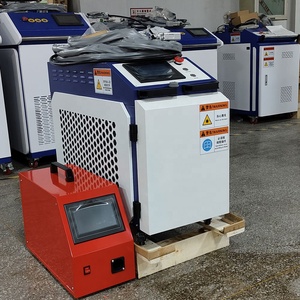
Versatile multi-process system featuring rapid conversion head for direct surface engraving, seam welding, oxide cleaning, and thin-sheet metal cutting in one compact unit.
Designed for tight workshop spaces and mobile service technicians across Sweden. Delivers stable 1064nm beam output for trace marking and metal rust removal.
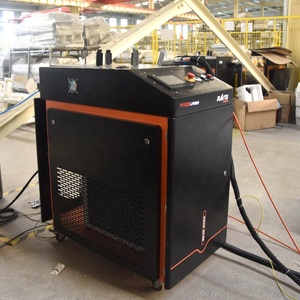
Engineered with wobbling galvo marking technology for high-repeatability corrosion-resistant metal identification, barcode etching, and structural micro-joining.
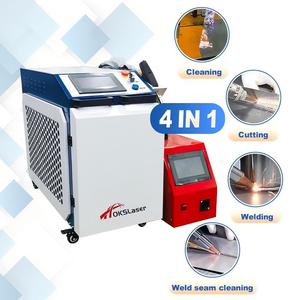
Built for 24/7 continuous operation in Nordic industrial environments. Optimized for deep metal engraving, weld bead cleaning, and stainless steel fabrication.
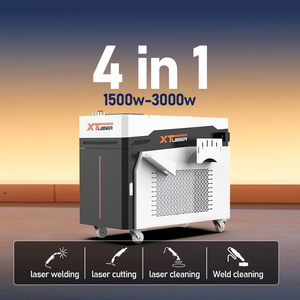
Features intuitive touchscreen controls with pre-set parameter libraries for Swedish steel alloys, aluminum, titanium, and brass marking or cleaning applications.
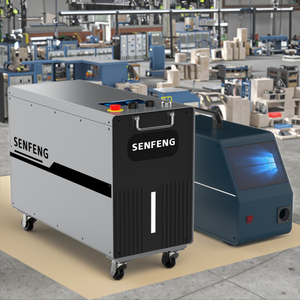
High-speed galvanometer drive paired with fiber laser delivery to achieve rapid serial number, DataMatrix code, and logo engraving on high-volume production lines.
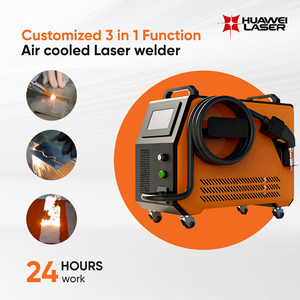
Zero water maintenance requirement. Lightweight design optimized for field installation, maintenance repair, and direct part marking in remote Nordic industrial sites.
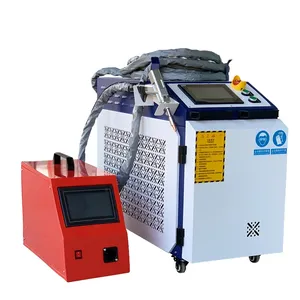
Max/BWT optical engine configured for maximum energy density. Available with rapid DDP shipping to Gothenburg, Stockholm, and Malmö industrial hubs.
How China's leading laser exporter delivers precision compliance for Sweden’s demanding automotive, mining, green steel, and medical technology sectors.
Sweden’s leading automotive OEMs require micro-annealed Direct Part Marking (DPM) for high-stress powertrain, chassis, and battery module components. Our fiber laser systems project laser pulses at 1064nm to alter the surface structure of cast iron and aluminum without inducing micro-cracks or weakening fatigue strength.
Key applications include high-speed VIN plate etching, QR code marking on lithium battery busbars, and oxide layer ablation prior to automated robotic welding cycles.
Equipment deployed in Sub-Arctic Nordic mining environments encounters extreme abrasion and thermal cycling. Laser marking on SSAB Hardox® and Strenx® structural steel requires deep contrast high-power pulses that remain legible under dirt, oil, and continuous wear.
Our 2000W–3000W fiber systems achieve deep vector engraving (> 0.25mm depth) that withstands abrasive shot-blasting, galvanizing, and extreme sub-zero weather conditions.
Marking high-carbon chromium bearing steel requires non-destructive thermal annealing. By controlling pulse duration between 20ns and 250ns, our laser sources induce a controlled sub-surface oxide layer (dark black or amber finish) without disrupting dimensional tolerances or surface roughness ($Ra < 0.1\mu m$).
Ensures total traceability for bearing outer rings, roller elements, and precision shaft couplings sold across the European Union.
Surgical instruments and orthopedic implants produced in southern Sweden must conform to strict UDI (Unique Device Identification) and ISO 13485 regulations. Marking must survive hundreds of autoclave sterilization cycles and nitric acid passivation baths without corroding.
Our Picosecond and MOPA fiber laser technology creates corrosion-free black annealing on surgical 316L stainless steel and grade 5 titanium without ablating protective chromium oxide layers.
For Sweden’s high-tech telecom equipment manufacturers, ultra-fine marking on heat-sensitive polymers, anodized aluminum enclosures, and gold-plated PCB contacts is vital. UV lasers (355nm wavelength) perform "cold marking" by breaking molecular bonds directly.
Eliminates thermal distortion, micro-charring, or micro-cracking on sensitive electronic modules, housing connectors, and fiber optic junction boxes.
Upcoming EU mandates require comprehensive lifecycle visibility for industrial products entering the European Single Market. Direct Part Marking of high-density GS1 DataMatrix 2D codes allows permanent scanability from raw material smelting to final recycling.
Our galvo scanning heads deliver optical resolution up to 1000 DPI, generating high-contrast 2D codes verifiable under ISO/IEC 15415 and AIM DPM quality benchmarks.
Understanding the macro-economic and environmental drivers transforming industrial surface treatment and marking across Scandinavia.
As Swedish metal giants (SSAB, LKAB, Vattenfall) transition to green hydrogen-reduced sponge iron, manufacturing facilities across Sweden require chemical-free processing equipment. Traditional ink-jet printing and chemical acid etching generate hazardous waste streams inconsistent with Sweden’s 2045 carbon neutrality target.
Information Gain Insight: Fiber laser marking and laser cleaning eliminate toxic chemical solvents, consumables, and micro-plastic inks entirely. The operational energy consumption of our solid-state fiber lasers is up to 70% lower than traditional CO2 or chemical processing lines.
Sweden maintains one of the highest industrial robot densities in Europe. Modern manufacturing plants in Västerås and Jönköping demand laser marking platforms that communicate directly with factory MES systems via Industrial Ethernet (PROFINET, EtherCAT, OPC UA).
Our smart laser controllers support real-time data input from automated vision software, enabling dynamically generated serial codes, automatic focus adjustments on variable-height components, and remote diagnostic telemetry.
The Swedish Work Environment Authority (Arbetsmiljöverket) enforces strict rules regarding operator noise, dust exposure, and heavy manual lifting. Traditional manual stamping or grinding creates acoustic fatigue and airborne particulate hazards.
Our hand-held 4-in-1 laser marking and cleaning machines feature ergonomic balanced heads (< 0.8 kg operating weight) with integrated high-vacuum extraction ports to capture all ablated fumes directly at the laser focal zone.
Mid-sized Swedish sub-contractors (underleverantörer) often perform small-batch, high-mix production where dedicated single-purpose machinery incurs excessive capital costs. There is a rapid market shift toward multi-function 4-in-1 units capable of switching between deep marking, rust cleaning, sheet cutting, and seam welding.
By replacing four separate machines with one modular laser workstation, Nordic factories reduce floor space expenditure and capital investment payback periods to under 9 months.
Bridging advanced Chinese laser optics manufacturing with Nordic quality expectations through rigorous R&D, certified safety engineering, and transparent export logistics.
We believe buying an export industrial laser is a process engineering decision, not a catalog selection. Our in-house R&D laboratory runs comprehensive sample trials on your specific part drawings and material samples before contract execution. We provide optical microscopic cross-sections, heat-affected zone (HAZ) measurements, and surface roughness reports ($Ra$) to verify process feasibility.
Our engineers utilize high-grade quartz field lenses, dual-red light focusing indicators, and high-efficiency galvo mirrors with reflectivity > 99.8%. Ensures minimum focal spot aberration and consistent beam power across the full marking field ($110\times110\text{mm}$ to $300\times300\text{mm}$).
Export models destined for Sweden incorporate dual-channel emergency stop circuits, pneumatic safety interlocks, OD6+ laser safety protective viewing windows, and fully enclosed Class 1 workstation options to ensure compliance with EU Directive 2006/42/EC.
We manage all export documentation, customs clearance, import VAT, and duty filings under DDP (Delivered Duty Paid) terms directly to your factory doors in Gothenburg, Stockholm, Malmö, Norrköping, or Umeå via express sea-freight or air transport.
Addressing compliance, logistics, thermal stability, and technical support queries for Nordic machine procurement.
All machines shipped to Sweden and the broader EU carry complete CE certification. This includes testing documentation under the Machinery Directive 2006/42/EC, Low Voltage Directive 2014/35/EU, and EMC Directive 2014/30/EU. Furthermore, laser safety systems comply with EN 60825-1 / IEC 60825-1 standards, including key-switch interlocks, optical density (OD6+) shielding windows, and safety circuit relays.
Our laser systems feature ambient thermal compensation circuits and dual-loop temperature-controlled chillers filled with glycol-water anti-freeze mixtures. For unheated workshops or mobile maintenance vans operating in northern Sweden (e.g., Norrbotten), air-cooled models function reliably down to operating temperatures of 0°C to +40°C. Internal storage protection circuits prevent thermal shock during sub-zero transit.
For corrosion-resistant dark annealing on stainless steel and metals, a 1064nm MOPA fiber laser with adjustable pulse duration (2ns to 500ns) is ideal because it creates controlled oxide layers without breaking surface passivation. For light polymers, ABS, PET, or white flame-retardant plastics, a 355nm UV cold laser is recommended as it directly severs polymer bonds without heat charring or thermal melting.
Standard configuration fiber laser marking machines ship within 5 to 7 business days from our factory. Air freight to Stockholm Arlanda (ARN) or Gothenburg Landvetter (GOT) takes 5 to 8 days. Ocean container shipping to Port of Gothenburg takes approximately 28 to 34 days under DDP terms. We also maintain buffer stock in European transit warehouses for urgent 3-day regional dispatch.
Yes. Our EZCAD3 and proprietary SmartHMI platforms support multi-language user interfaces including English, Swedish, German, and French. For automation integration, our controllers support TCP/IP, Modbus, PROFINET, and RS232 protocols, permitting direct control from Siemens S7, Beckhoff, or Omron PLCs common in Swedish factories.
We provide a 2-Year comprehensive hardware warranty on fiber laser sources and galvo heads. Technical support is backed by 24/7 remote diagnostic engineers who can assist with parameter tuning, firmware updates, and troubleshooting over TeamViewer or secure cloud link. Modular plug-and-play spare parts kits are provided for zero-downtime maintenance replacement.
Solid-state fiber laser engines (Raycus, Max, IPG) have a theoretical MTBF (Mean Time Between Failures) rating of 100,000 operational hours. This equates to over 10 years of continuous 24/7 industrial production with virtually zero optical maintenance or flashlamp replacements required.
Absolutely. You can mail your raw material samples or finished components directly to our applications laboratory. Our optical engineers will perform test engravings, capture high-resolution microscopic imagery, measure cycle times, and issue a full technical feasibility report free of charge.
Contact our senior optical application team today to request custom technical parameters, factory-direct pricing schedules, or a free sample marking evaluation.