Direct factory supply of state-of-the-art fiber & diode laser hardening, welding, cladding, and surface modification machinery engineered for Singapore's high-tech manufacturing ecosystems.
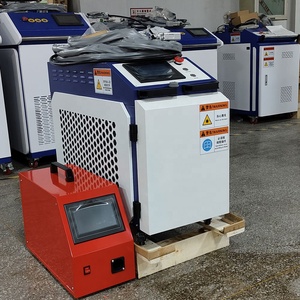
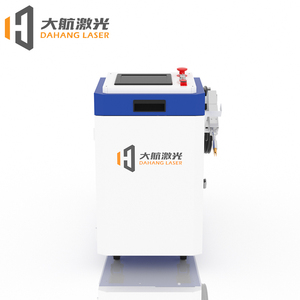
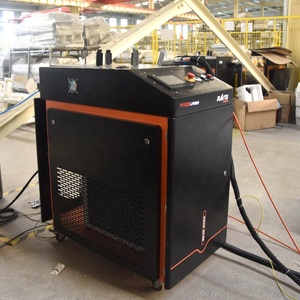
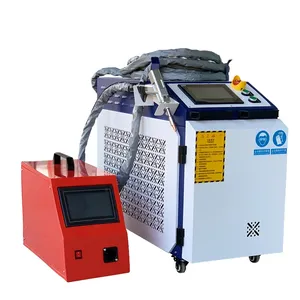
As Singapore accelerates its Manufacturing 2030 vision—aiming to grow its advanced manufacturing sector by 50%—precision engineering firms across Jurong Industrial Estate, Tuas Biomedical Park, and the Seletar Aerospace Park are facing unprecedented demands for mechanical component longevity, wear resistance, and dimensional accuracy. Traditional surface heat treatments, such as flame hardening, induction hardening, and conventional carburizing, frequently fall short when applied to tight-tolerance aerospace components, semiconductor tooling, and oil & gas drive trains due to high thermal distortion, lengthy cycle times, and substantial post-processing grinding costs.
Laser Surface Transformation Hardening (LSTH) has emerged as the definitive solution for high-precision metallurgical modification. Utilizing high-power direct diode lasers or continuous wave (CW) fiber lasers, the process delivers targeted thermal energy to carbon steels, alloy steels, tool steels, and cast iron. The laser beam rapidly heats the surface layer above the austenitizing temperature ($A_{c3}$), typically between 900°C and 1200°C. Because the laser heat input is localized and extremely rapid, the underlying cold bulk material acts as an infinite heat sink, inducing self-quenching via ultra-fast thermal conduction (rates exceeding 1000°C/s). This immediate heat transfer forms a refined, fine-grained martensitic microstructure characterized by exceptionally high hardness values (up to 68 HRC) and elevated compressive residual stresses without requiring water or polymer quench media.
| Process Parameter | Laser Surface Hardening | Induction Hardening | Flame Hardening | Carburizing / Nitriding |
|---|---|---|---|---|
| Heat-Affected Zone (HAZ) | Extremely Minimal (< 0.2mm - 2.5mm depth) | Moderate (1.5mm - 8.0mm) | Large and Uncontrolled (> 5mm) | Full Component Exposure |
| Thermal Distortion | Virtually Zero (< 0.01 - 0.03 mm) | Moderate to High | Severe Distortion | Significant Volumetric Growth |
| Quench Media Required | None (Self-Quenching) | Water, Polymer, or Oil | Water Spray or Air-Oil | Oil Quench / Salt Bath |
| Process Temperature Control | Closed-loop Pyrometer (± 5°C) | Indirect Power Control | Manual / Optical Estimate | Atmospheric Furnace Control |
| Selective Geometry Capability | Complex 3D Profiles, Internal Bores | Requires Custom Coils | Simple Flat / Cylindrical | Requires Masking / Stop-Off Paint |
| Post-Process Machining | Eliminated or Minimal Finish Polish | Heavy Grinding Required | Heavy Grinding Required | Finish Grinding / De-masking |
For Singaporean OEMs and precision mold makers, the primary technical hurdle in surface hardening is avoiding surface remelting while ensuring uniform case depth across intricate part geometries. Top Chinese original equipment manufacturers (OEMs) featured in our direct supply program integrate advanced closed-loop infrared pyrometer systems operating at sampling rates up to 1000 Hz.
The coaxially integrated infrared sensor continuously monitors the surface temperature within the laser spot. If the surface temperature approaches the solidus point, the closed-loop controller modulates the laser source power within milliseconds, ensuring perfectly stable grain transformation without melting edges or fine ribs.
Standard Gaussian laser beams create peak energy at the center, risking localized burning. Our systems utilize wide-field zoom homogenizers and optical integrators to generate uniform flat-top rectangular or line laser spots (ranging from 2x2mm to 40x10mm), ideal for treating tracks, gear teeth, and wide guide rails.
Equipped with industrial robotic arms (Fanuc, ABB, or KUKA) and synchronized multi-axis rotary tables, our laser hardening cells execute full 3D contour tracking. Path planning software enables smooth movement around complex tool contours, internal cylinder bores, and turbine blade roots.
Singapore's high-value manufacturing ecosystem requires tailored process setups that comply with strict global qualification standards. Chinese laser hardening factories supplying Singapore provide specialized machine configurations for key local industrial sectors:
Singapore handles approximately 10% of global commercial avionics MRO output. Component wear on landing gear actuators, main engine turbine shaft splines, and hydraulic flight control valves requires hard-facing and localized transformation hardening. Fiber laser hardening systems allow MRO engineers to re-harden worn component surfaces post-cladding restoration without exceeding thermal thresholds that alter the core metallurgical strength of aerospace-grade titanium (Ti-6Al-4V) and ultra-high-strength steel alloys (300M, 4340).
In Singapore’s silicon wafer fab equipment sector, high-speed pick-and-place mechanisms, ceramic-metal guide channels, and high-volume stamping dies experience rapid abrasive wear. Fiber laser hardening systems deliver precise hard tracks (0.3mm to 1.2mm depth) on D2, O1, and SKD11 tool steel components. By hardening only the contact surfaces while leaving the core ductile, tools sustain millions of high-frequency strike cycles without catastrophic cracking.
Marine propulsion shafts, offshore winch drum sheaves, mud pump liners, and valve seats operating in aggressive saltwater environments suffer from combined erosion-corrosion. Large-gantry robotic diode laser hardening systems enable localized hardening of stainless steel alloys (Duplex 2205, 17-4PH) and low-alloy forging steels, dramatically increasing surface hardness to 58-62 HRC while preserving corrosion resistance.
Medical device mold makers producing cleanroom consumable molds (syringes, micro-fluidic chips) require hard mold cores capable of resisting abrasive glass-filled resins. Selective laser hardening directly treats narrow mold shut-offs, core pins, and parting lines with zero thermal warpage, allowing mold makers to skip secondary electrical discharge machining (EDM) or hand-lapping operations.
Send your part drawings (STEP/IGES) and metallurgical requirements (target HRC, hardened depth, alloy specification) to our engineering application lab in China. Receive full micro-hardness profile analysis and cross-section micrographs before making procurement decisions.
The adoption of laser hardening technology among Singapore manufacturers is rapidly accelerating due to several macro-economic and regulatory shifts:
Chinese industrial laser manufacturers have achieved global leadership in fiber and diode laser application technology. When sourcing laser hardening machines, multi-functional handheld laser workstations, and robotic cladding systems from certified Chinese factories serving Singapore, buyers benefit from distinct strategic advantages:
Machines incorporate world-class optical and control sub-assemblies: Raycus/MAX fiber laser sources, Precitec optical processing heads, Schneider electronics, and intuitive CNC platforms (SmartRay / CypLaser) ensuring 99.8% operational uptime.
Every machine undergoes a rigorous 72-hour continuous laser emission burn-in test, interferometer laser axis calibration, and full metallographic hardness depth validation in compliance with ISO 9001, CE, and Class 1 laser safety enclosures.
Geographical proximity to Singapore allows sea shipping from Shenzhen/Shanghai ports to PSA Singapore in 7–10 days, or express Changi air cargo within 48 hours for urgent spare parts and optical replacements.
Contact our senior application engineering team to request detailed technical machine specifications, sample metallurgical hardening trials, or a factory-direct commercial quotation customized for your Singapore manufacturing plant.