High-efficiency fiber laser cladding, welding, cleaning, and multi-function processing systems customized for extreme Middle Eastern operating conditions.
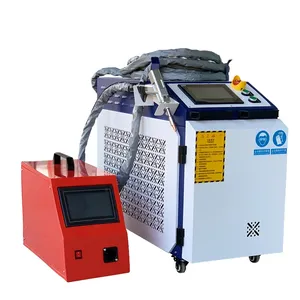
The industrial landscape of the State of Kuwait presents an unprecedented demand for resilient, high-performance mechanical components. Operating within harsh coastal desert biomes, oil and gas extraction fields such as Burgan and Ratqa, and coastal petrochemical refining complexes like Mina Al-Ahmadi and Mina Abdullah, metal machinery suffers from extreme tribological stress. Components are routinely exposed to combined sour gas corrosion ($H_2S$), sand erosion from violent dust storms (Shamal winds), high saline marine atmospheric conditions, and operating ambient temperatures exceeding 55°C during summer months.
Traditional surface modification methodologies—such as Thermal Spraying (HVOF/Plasma), Submerged Arc Hardfacing, and Subcontracted Electro-plating—are increasingly falling short of modern operational and environmental mandates. Hard chrome plating faces severe global regulatory bans due to carcinogenic Hexavalent Chromium ($Cr^{VI}$) emissions. Conventional welding overlays suffer from high heat input, resulting in excessive substrate thermal distortion, massive heat-affected zones (HAZ), and unacceptable dilution rates exceeding 15% to 25%. This necessitates thick, costly multi-layer deposits of expensive alloy powders such as Stellite, Inconel, and Nickel-Chromium-Carbide matrices.
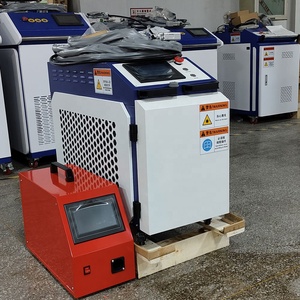
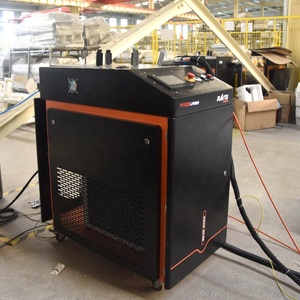
As China’s leading manufacturer and exporter of advanced high-speed laser cladding systems (EHLA - Extremely High-Speed Laser Cladding), we deliver state-of-the-art robotic and CNC laser metal deposition solutions engineered specifically to address these challenges. By melting alloy powder directly within a focused fiber laser beam *above* the substrate molten pool, our high-speed laser cladding systems achieve ultra-dense, metallurgical bonding with a micro-thin dilution rate below 3% to 5%, minimal thermal stress, and deposition speeds up to 100 to 500 times faster than conventional laser cladding.
In conventional laser cladding (Direct Energy Deposition - DED), the laser energy primarily heats the base material to create a molten pool into which metal powder is fed. This process yields excellent metallurgical bonding, but is inherently limited to processing speeds of 0.5 to 2.0 m/min, causing considerable thermal conduction into the core component. High-Speed Laser Cladding (EHLA) fundamentally shifts this energy interaction balance:
Over 80% of the fiber laser energy is absorbed by the airborne alloy powder particles *before* they strike the component surface. The powder arrives at the substrate in a liquid/semi-liquid state, drastically reducing required substrate melt energy.
Process linear speeds range from 20 m/min to over 50 m/min (compared to ~1 m/min for standard cladding). This reduces interaction time to milliseconds, preserving base material mechanical grain structure.
EHLA allows ultra-thin single-layer cladding down to 25–250 microns with pore-free density (>99.9%), drastically lowering high-cost Inconel 625, Hastelloy, or Tungsten Carbide material consumption.
For procurement directors and asset integrity engineers within Kuwait Oil Company (KOC), Kuwait National Petroleum Company (KNPC), and the Ministry of Electricity & Water (MEW), evaluating cladding equipment requires quantifiable metrics. The technical matrix below highlights the performance advantages of our High-Speed Fiber Laser Cladding equipment:
| Parameter / Feature | High-Speed Laser Cladding (EHLA) | Conventional Laser Cladding | HVOF Thermal Spray | Hard Chrome Plating |
|---|---|---|---|---|
| Bonding Mechanism | True Metallurgical Bond (>450 MPa) | True Metallurgical Bond (>400 MPa) | Mechanical Interlocking (40-80 MPa) | Adhesive / Electrolytic Bond |
| Dilution Rate (%) | < 2% – 5% | 5% – 10% | 0% (No Bond Melt) | 0% |
| Heat-Affected Zone (HAZ) | Minimal (< 0.1 mm) | Moderate (0.5 - 1.5 mm) | Negligible | None |
| Coating Thickness Range | 25 µm to 1.5 mm per pass | 0.5 mm to 4.0 mm per pass | 100 µm to 500 µm | 10 µm to 50 µm |
| Porosity & Micro-cracks | Near Zero (< 0.1%) | Low (< 0.5%) | 1% - 3% Porous | Micro-cracked Structure |
| Linear Processing Speed | 20.0 – 50.0 m/min | 0.5 – 2.0 m/min | N/A (Spray Rate limited) | Slow Electro-deposition |
| Environmental Impact | Green Technology (Zero Toxic Waste) | Green Technology | High Fume & Noise Output | Hazardous Cr(VI) Waste |
Our exported laser cladding and 4-in-1 multi-function laser processing machines directly integrate into maintenance, overhaul, and manufacturing workflows across key Kuwaiti sectors:
Downhole stabilizers, drill collars, jar shafts, and mud motor rotors operating in Kuwait's deep high-pressure, high-temperature (HPHT) sour wells undergo harsh abrasion and sour gas hydrogen embrittlement. Cladding Tungsten Carbide embedded in a Nickel-based matrix (Ni+WC) onto non-magnetic drill collars extends downhole component life by over 300% to 500%.
Kuwait’s Clean Fuels Project (CFP) at Mina Al-Ahmadi and Mina Abdullah demands flawless valve tightness under extreme pressure. Our automated robotic laser cladding systems apply Stellite 6 and Inconel 625 onto control valve seats, impellers, and centrifugal pump shaft sleeves, ensuring zero gas leakage and eliminating unplanned refinery shutdowns.
Providing freshwater across Kuwait requires Multi-Stage Flash (MSF) and Reverse Osmosis (RO) plants operated by MEW in Doha, Az-Zour, and Sabiya. High-salinity brine causes catastrophic pitting corrosion on duplex stainless steel pump components. Laser cladding hyper-dense Super Duplex or Hastelloy C276 layers eliminates chloride pitting and erosion-corrosion.
In mega-infrastructure projects under Kuwait Vision 2035 (e.g., Silk City, South Al-Mutlaa residential development), hydraulic rams on excavators and cranes are continually scoured by quartz-heavy desert sands. EHLA laser-clad iron-base or stainless alloy coatings provide superior wear resistance without micro-flaking.
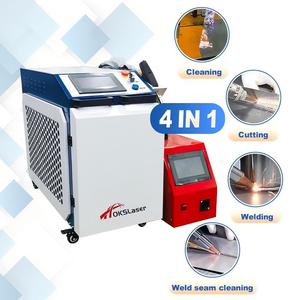
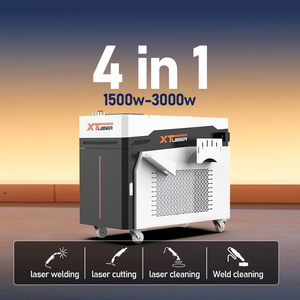
Propeller shafts, rudder stocks, and port crane hydraulic cylinders servicing Kuwait's Shuaiba and Shuwaikh commercial ports benefit from localized, in-situ laser cladding repair. Portable 4-in-1 laser systems enable rapid defect gouging, surface cleaning, laser cladding, and final weld seam finishing without part removal.
Kuwait's peak electricity demands force gas turbine power stations to operate continuously under maximum load. Laser cladding repair of nickel-based superalloy turbine blades restores eroded blade tips with absolute thermal control, preventing thermal fatigue or creep failures.
Kuwait's industrial roadmap is defined by Kuwait Vision 2035 ("New Kuwait"), which emphasizes sustainable economic diversification, localized manufacturing capability, and technological modernization of state assets. Key industry trends driving the adoption of laser cladding machines include:
Selecting a high-speed laser cladding machine supplier is a capital investment decision that hinges on technological reliability, engineering expertise, and robust post-sale support. Backed by over 35 years of dedicated industrial laser manufacturing heritage, our enterprise stands as a global leader in laser cladding and surface engineering automation:
We build our own proprietary high-speed cladding nozzle optics, anti-reflection fiber processing heads, and multi-axis synchronizing CNC controllers. Our systems integrate seamlessly with KUKA, ABB, and Fanuc industrial robotics.
Every machine platform undergoes rigorous Factory Acceptance Testing (FAT), including 72-hour continuous full-power thermal stress testing, beam caustic analysis, and metallographic cross-sectioning verification prior to Kuwait dispatch.
We don't just sell hardware; we deliver validated metallurgical recipes. Our applications laboratory tests your specific part geometry and alloy powders (Stellite, Inconel, WC/Ni), delivering full metallurgical hardness and bond reports.
Detailed engineering answers for workshop directors, procurement managers, and maintenance engineers in Kuwait.