As Hungary solidifies its position as a central European powerhouse for high-precision medical technology manufacturing—anchored by major industrial hubs in Budapest, Győr-Moson-Sopron, Debrecen, and Miskolc—the demand for compliant, permanent, non-destructive laser marking solutions has reached an all-time high.
Medical device OEMs manufacturing within or exporting to the European Union must satisfy rigorous Unique Device Identification (UDI) mandates under Regulation (EU) 2017/745. Marking high-density DataMatrix 2D barcodes, serial numbers, and expiry dates on stainless steel (AISI 316L, 17-4 PH, 420 grade), Titanium alloys (Ti-6Al-4V), and biocompatible polymers (PEEK, PTFE, Polycarbonate) requires zero thermal distortion and high contrast readability for machine-vision automated scanners.
Traditional laser engraving disrupts the passive chromium oxide layer of stainless steel, causing micro-rusting during repeated steam autoclaving (ISO 17664) or nitric acid/citric acid passivation (ASTM A967). Modern laser solutions supplied to the Hungarian market utilize ultrafast picosecond/femtosecond lasers or MOPA (Master Oscillator Power Amplifier) fiber lasers to produce dark black annealing without metal removal or surface structural degradation.
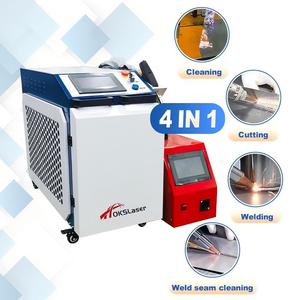
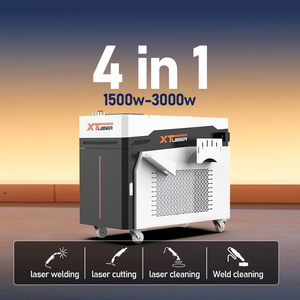
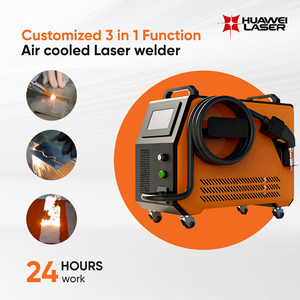
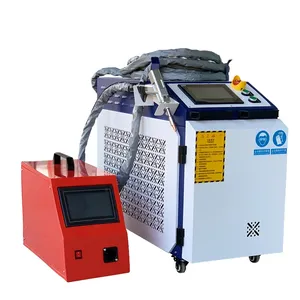
Versatile, high-precision laser systems optimized for medical components, micro-welding, precision cutting, and automated UDI surface processing in Hungarian manufacturing facilities.
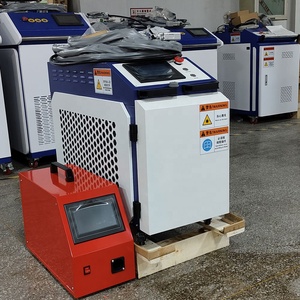
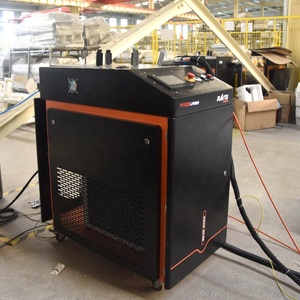
An objective technical comparison of leading global laser suppliers servicing Hungarian medical OEMs based on laser source technology, passivation resistance, vision integration, and regional support infrastructure.
| Manufacturer | Primary Wavelengths | Passivation Guarantee | Vision / OCR Integration | IQ/OQ/PQ Support | Hungary / EU Service SLA |
|---|---|---|---|---|---|
| Scantech Laser | 1064nm MOPA, 355nm UV, Femtosecond | Passed (ASTM A967 / ISO 15730) | High-Precision Galvo + Coaxial Vision | Full 21 CFR Part 11 Pack | < 24 Hours Direct / Regional |
| TRUMPF Medical Laser | 1064nm IR, 532nm Green, Femto | Passed (Standard Annealing) | Integrated VisionLine System | Comprehensive EU Documentation | Local EU Headquarters |
| FOBA (Veralto Group) | Fiber, UV, CO2 | Passed (IMP Annealing) | Help-in-Mark (IMP) Camera | Pharma & MedTech Focused | Central European Field Support |
| Keyence Europe | 3-Axis Fiber, UV, Green | Conditional (Requires MOPA Setup) | Auto-Focus Integrated Camera | Standard Validation Templates | Direct Hungary Sales Office |
| Coherent / Rofin | Picosecond, Femtosecond, Fiber | Passed (Cold Ultrafast Ablation) | Standalone / Custom PLC | High Level Custom Support | EU Regional Hub |
| Videojet Technologies | Fiber, CO2, UV | Standard Surface Engraving | Inline Barcode Verification | Standard Commercial Pack | Local Hungarian Distribution |
| Telesis Technologies | Dual-Head Fiber, UV | Passed (Black Annealing) | Merlin Software Vision Unit | Available on Request | Partner Network |
| IPG Photonics | Fiber Lasers, Ultrafast Systems | Passed (High Energy Density) | Custom Integration Needed | OEM Level Documentation | EU Warehouse & Lab |
| Trotec Laser | Flexx Fiber + CO2 | Basic Surface Marking | Vision Cut / Mark Option | General Industrial Focus | Direct Office in Vienna / HU |
| Laserline GmbH | High-Power Diode, Fiber | Industrial Heavy Surface | Third-Party Integration | Custom Engineering | German Hub Service |
While premium European manufacturers offer robust equipment, total cost of ownership (TCO) and agility in custom mechanical integration give vendors like Scantech Laser a significant edge in Hungary. Hungarian medical manufacturers operating under tight margin pressures benefit enormously from customized MOPA pulse-duration control parameters (adjustable from 2ns to 500ns) that prevent carbide precipitation and chromium depletion—critical for achieving corrosion-free black marks on surgical tools without incurring prohibitive initial equipment costs.
Understanding wavelength selection, pulse energy dynamics, and heat-affected zones (HAZ) for critical medical materials used in Hungarian cleanrooms.
Substrates: AISI 316L, 17-4PH, Nitinol, 420 Stainless Steel.
Black annealing relies on precise thermal oxide layer growth (Fe3O4 / Cr2O3) beneath the metal surface without melting the bulk material. By controlling pulse duration (4ns–200ns) and high repetition rates (up to 1 MHz), MOPA lasers avoid carbon migration, preserving corrosion resistance during autoclaving and nitric acid passivisation per ASTM A967.
Substrates: PEEK, PTFE, UHMWPE, Polycarbonate, ABS, Silicone Catheters.
Ultraviolet (355 nm) lasers utilize photo-chemical ablation rather than photo-thermal heating. The ultra-short wavelength breaks molecular bonds directly in biocompatible polymers without causing thermal charring, micro-foaming, or structural weakening—essential for delicate medical tubing, catheters, and implantable enclosures.
Substrates: Bio-resorbable polymers, Gold-coated stents, Thin-wall Titanium.
With pulse widths in the femtosecond regime (10⁻¹⁵ s), the laser energy is delivered faster than electron-phonon thermal relaxation times. This results in true cold machining with zero Heat-Affected Zone (HAZ), eliminating micro-cracking and leaving marks that withstand over 500 harsh sterilization cycles without fading.
Engineered to integrate seamlessly into Hungarian cleanrooms, high-volume production lines, and robotic cells.
In western Hungary’s medical engineering cluster, surgical scissors, scalpels, forcep handles, and micro-retractors require microscopic GS1 DataMatrix barcodes (down to 0.8mm x 0.8mm matrix size). Laser systems deployed here feature high-resolution galvo heads paired with automated vision inspection to read and verify barcodes in real-time according to ISO/IEC 15415 standards prior to cleanroom packaging.
Implantable medical items—such as titanium hip stems, bone screws, and dental abutments—demand non-contact marking that leaves zero toxic residues or particulate contamination. Utilizing 355nm UV or MOPA laser annealing ensures that marked surfaces maintain 100% biocompatibility (ISO 10993 compliant) without altering critical mechanical fatigue parameters.
In eastern Hungary’s pharmaceutical and medical tubing sectors, depth-scale markers and lot numbers are marked along flexible PEEK and silicone catheter shafts. UV laser cold marking produces high-contrast, indelible white or black marks directly inside the plastic matrix without breaching outer wall integrity or creating surface roughness where bacteria could colonize.
High-speed line-of-flight marking for diagnostic disposable cartridges, blood testing cassettes, and stainless steel fluidic valves requires seamless PLC handshake via PROFINET or EtherCAT interfaces, allowing Hungarian lines to process up to 120 units per minute with automated serialized serial number generation.
Key technological shifts driving equipment selection among Hungarian medical device manufacturers over the next decade.
Hungarian plants are rapidly phasing out manual post-mark visual inspection. Modern systems incorporate coaxial optical vision systems directly inside the galvo scan head. AI software auto-detects part orientation, compensates for positional tolerances up to ±3mm, marks the UDI code, and immediately grades barcode contrast (A or B rating per ISO 15415) in less than 200 milliseconds.
Traceability software must communicate natively with factory MES systems (SAP, Siemens Opcenter) to pull dynamic batch data and prevent duplicate serial numbers. Equipment installed in Hungary must generate cryptographically signed audit trail logs to comply with FDA 21 CFR Part 11 and EU Annex 11 digital record standards.
Cleanroom floor space in Hungarian facilities comes at a high premium per square meter. The market is shifting from bulky liquid-cooled cabinets to ultra-compact, air-cooled Class 1 laser enclosures featuring integrated HEPA fume extraction to maintain ISO Class 7 cleanroom air purity levels.
Over 35 years of dedicated industrial laser engineering, in-house optics design, and uncompromising quality standards.
Since 1991, Scantech Laser has pioneered advanced laser solutions for marking, cutting, welding, and cladding. Our deep R&D experience ensures optimized beam delivery and long-term laser diode stability exceeding 100,000 operational hours.
We supply complete Installation Qualification (IQ), Operational Qualification (OQ), and Performance Qualification (PQ) documentation packages tailored to European regulatory requirements, dramatically accelerating line validation for Hungarian manufacturers.
Beyond standard desktop systems, our engineering team designs automated rotary indexing tables, robotic loading cells, and inline conveyor laser marking systems built specifically around your part geometry and cycle time targets.
We provide complimentary sample trials for Hungarian medical manufacturers. Send us your stainless steel, titanium, or PEEK parts, and our applications lab will deliver a complete metallurgical, corrosion, and barcode readability report.
All enclosures feature certified optical density (OD 6+) observation windows, dual-channel interlock safety circuits (PLe / SIL3 standard), and motorized Z-axis focal positioning for effortless operator setup.
We ensure fast delivery, rapid spare parts availability, and 24/7 remote diagnostic support to guarantee maximum production line uptime across Central and Eastern Europe.
Technical and operational answers to assist engineering leaders and purchasing managers in evaluating laser marking equipment.
A MOPA (Master Oscillator Power Amplifier) fiber laser or a Picosecond ultrafast laser is recommended. MOPA lasers allow fine-tuning of pulse durations down to 2ns, creating a dark, non-destructive oxide layer (black annealing) that retains chromium at the surface, passing ASTM A967 passivation and repeated steam autoclave tests without corrosion.
Our systems generate ultra-high resolution GS1-compliant DataMatrix barcodes and human-readable text. Combined with our integrated vision cameras, the system verifies barcode geometry, cell contrast, and modulation to ensure grades of A or B per ISO/IEC 15415 standards, guaranteeing compliance under EU MDR regulations.
Yes. We engineer stainless steel Class 1 enclosed workstations with active HEPA filtering and sealed optical paths that eliminate particulate emissions, making them fully compliant with ISO 14644-1 cleanroom standards operating in Hungary.
Every system is delivered with complete electrical/pneumatic schematics, CE certification, laser safety conformity documents, operator manuals, and optional IQ/OQ/PQ validation templates with 21 CFR Part 11 audit trail capabilities.
Standard desktop laser marking workstations ship within 2 to 3 weeks from factory stock, while specialized automated cells require 6 to 8 weeks. We provide 24/7 remote diagnostic support and rapid field engineer dispatch across Central Europe.
Absolutely. Our applications laboratory conducts free sample trials on your supplied parts (stainless steel, titanium, PEEK, catheters). We provide a detailed technical report including microscope surface analysis, barcode readability scores, and process time optimization.
Elevate your medical device manufacturing in Hungary with corrosion-resistant, EU MDR-compliant laser marking systems. Speak with our Senior Application Engineers today to review your part drawings, cycle time targets, and validation requirements.