Engineered for high-duty continuous operation in Istanbul's automotive, naval, and sheet metal production hubs.
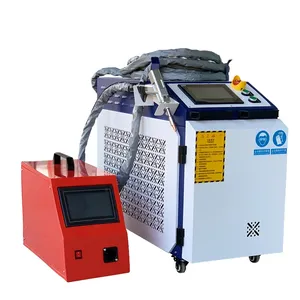
Istanbul stands as the industrial backbone of Turkey and the broader Marmara region, bridging European engineering standards with aggressive manufacturing output across the Gebze OSB, İkitelli OSB, Tuzla Shipyard Belt, and Dudullu industrial zones. As Turkish manufacturers face escalating pressure to expand export footprints into the European Union under strict quality benchmarks (ISO 3834-2, EN 1090), traditional manual arc welding technologies—specifically Tungsten Inert Gas (TIG) and Metal Inert Gas (MIG)—present severe economic and metallurgical bottlenecks.
This technical whitepaper examines the deployment of fully automated Robotic Laser Welding Systems as a transformative capital investment. By integrating high-power fiber laser sources (1064 nm wavelength) with 6-axis articulated industrial robotic arms, dynamic wobble optical heads, and closed-loop process monitoring, industrial facilities in Istanbul can achieve up to 400% throughput gains while virtually eliminating post-weld grinding and structural heat distortion.
To quantify the information gain for plant managers and automation directors in Turkey, the technical performance matrix below contrasts key operational metrics between conventional arc methods and robotic fiber laser cell systems:
| Process Parameter | Manual TIG Welding | Automated MIG Welding | Robotic Fiber Laser System |
|---|---|---|---|
| Linear Weld Speed | 0.15 - 0.3 m/min | 0.4 - 0.8 m/min | 1.5 - 6.0 m/min (up to 10x faster) |
| Heat-Affected Zone (HAZ) | Extensive (10 - 20 mm) | Moderate (5 - 12 mm) | Ultra-Narrow (0.5 - 2 mm) |
| Thermal Distortion | High (Requires straightening) | Moderate to High | Negligible / Near Zero |
| Post-Weld Processing | Heavy grinding & polishing | Slag removal & wire clipping | None to Minimal (Single-pass cosmetic joint) |
| Penetration Depth (SS/CS) | Shallow per pass (1.5 - 3 mm) | Medium (2 - 5 mm) | Deep Keyhole (Up to 8 mm single pass) |
| Operational Skill Dependency | Requires Master Welder | Requires Experienced Welder | Automated Program / Operator Level |
Robotic laser welding relies on high-energy-density keyhole optics. When a collimated fiber laser beam focuses to a spot diameter between 0.15 mm and 0.4 mm, power density exceeds 106 W/cm2. The metallic substrate instantaneously vaporizes, creating a capillary hole (keyhole) filled with metal vapor plasma. This keyhole absorbs up to 90% of laser radiation, driving keyhole deep-penetration welding deep into the joint interface with minimal lateral heat transport.
Historic laser welding suffered from strict fit-up joint tolerances (< 0.1 mm). Modern robotic laser welding heads supplied by export-leading factories integrate dual-axis galvanometric oscillation (wobble welding). By swinging the laser beam in circular, elliptical, or double-eight patterns up to 300 Hz, the effective beam width expands up to 5.0 mm. This overcomes gap misalignments common in large-scale structural assemblies across Istanbul's heavy machinery and automotive sub-component plants.
For complex 3D profiles in automotive chassis and naval aluminum structures, our robotic systems utilize high-speed laser seam trackers. The vision system scans the joint geometry 100 milliseconds ahead of the laser focal point, automatically adjusting the 6-axis robot trajectory in real time to guarantee flawless root fusion regardless of mechanical component tolerances.
The operational landscape of Istanbul presents distinct industrial clusters, each requiring customized robotic laser system configurations:
High-volume robotic fiber laser cells dedicated to EV battery tray enclosures, hairpin stator copper welding, exhaust manifolds, and high-strength alloy safety cages. Replaces multi-step spot welding with hermetic, continuous structural seams capable of resisting extreme vibrational fatigue.
Heavy-duty, long-reach 6-axis robotic arms mounted on linear gantries for welding stainless steel pressure vessels, naval defense aluminum superstructures, and marine heat exchangers. Delivers pore-free, X-ray validated weld seams that pass rigorous DNV-GL and Turkish Lloyd maritime certifications.
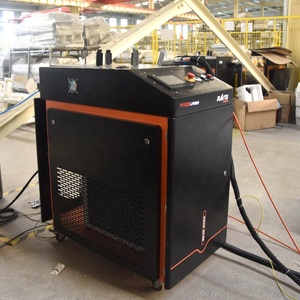
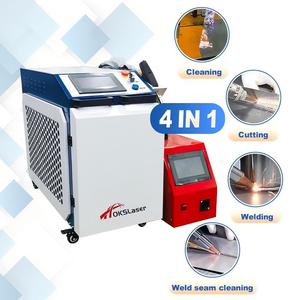
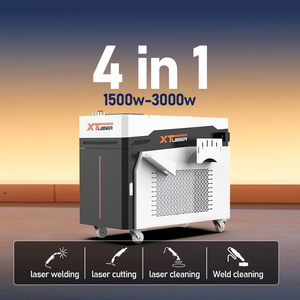
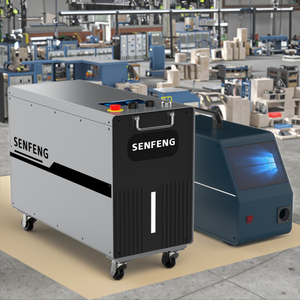
4-in-1 versatile laser systems and dedicated automated rotary laser positioners for mirror-finish stainless steel commercial sinks, industrial boilers, and heat exchanger tubes. Completely eliminates post-process mechanical grinding, preserving cosmetic mirror finishes.
The manufacturing ecosystem in Istanbul is undergoing a rapid technological migration driven by four main economic and geopolitical vectors:
With Turkey being the primary manufacturing exporter to the European Union, Turkish industrial plants must reduce energy consumption per unit produced. Fiber lasers operate at up to 45% wall-plug electrical efficiency—compared to under 15% for traditional MIG machines—substantially cutting factory electrical footprint.
The industrial regions of Marmara face an acute shortage of certified TIG/MIG manual welders. Robotic laser welding cells allow a single semi-skilled operator to oversee multiple automated workcells, reducing reliance on rare high-cost manual welding labor while achieving 100% repeatable joint quality.
Factories in Gebze and Dudullu OSB are adopting OPC-UA communication protocols. Our export robotic cells feature MES connectivity, transmitting real-time laser energy output, focal position drift, shielding gas flow rate, and weld seam status directly to centralized factory control rooms.
Modern engineering designs increasingly specify Advanced High-Strength Steels (AHSS), structural aluminum alloys (5000/6000 series), and titanium. Conventional arc welding degrades metallurgical tempers through excessive heat input; robotic laser keyhole welding maintains base material structural integrity.
Below are critical technical and logistics inquiries frequently addressed by our international export engineering desk when commissioning laser welding systems into Turkish industrial sites:
Building global trust since 1991 through engineering rigor, certified safety, and direct manufacturer accountability.
Free feasibility testing and metallographic weld validation on customer material samples before machine order.
All robotic laser cells designed with interlocked Class 1 optical safety enclosures, laser safety glass, and active fume extraction.
Custom tooling fixtures, indexing rotary tables, PLC integration, and robotic motion programming designed under one roof.
Pre-delivery FAT testing, onsite installation in Turkey, operator training, standard spare parts kits, and 24/7 remote diagnostics.
Consult with our senior laser applications engineering team. Provide your CAD drawings, substrate material specifications, and target cycle times for a customized process evaluation and formal quotation.