Delivering high-stability laser sources and 4-in-1 integrated processing heads customized for Swiss micro-engineering, medical device production, and horological manufacturing lines.
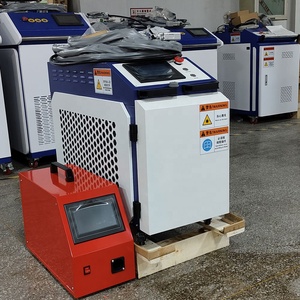
Multi-functional fiber laser system supporting precision welding, continuous cutting, surface rust removal, and seam cleaning with low thermal displacement.
Get a Quote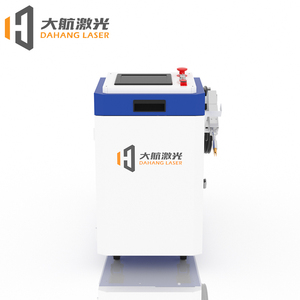
Compact footprint engineered for precise metal fabrication, fine surface restoration, and low-heat micro-joining on stainless steel and alloy structures.
Get a Quote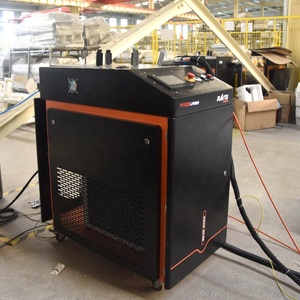
Integrated optical beam shaping and ergonomically optimized hand gun for consistent depth-to-width ratio in high-precision workshop tasks.
Get a Quote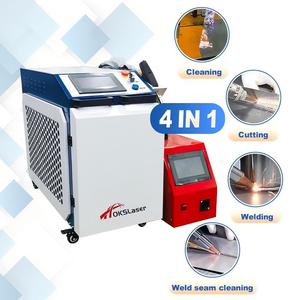
High-power density laser source designed for rapid sheet metal cut-outs, oxide removal, and gap-free seam welding across non-ferrous substrates.
Get a Quote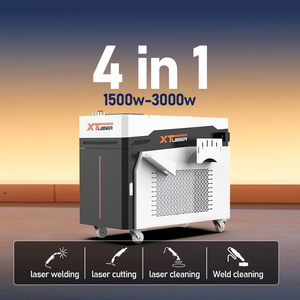
Enhanced digital beam controller with dynamic wobble parameters for high-repeatability manufacturing and minimal spatter contamination.
Get a Quote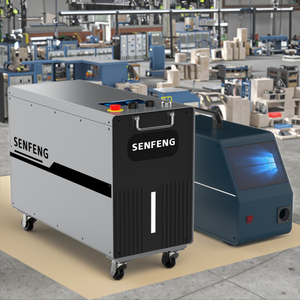
Heavy-duty continuous duty cycle laser unit built for high-throughput automated cells or precise manual operation in specialized industrial setups.
Get a Quote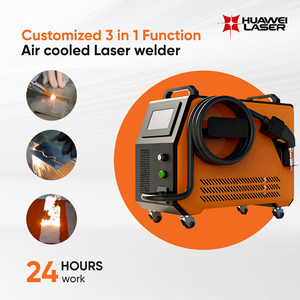
Chiller-free air-cooled design providing ultra-portable operation, zero fluid maintenance, and exceptional energy efficiency for delicate assembly environments.
Get a Quote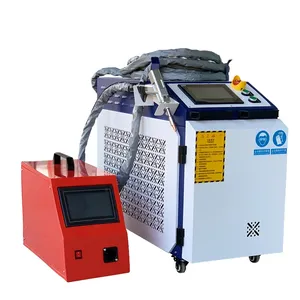
Industrial-grade laser power source combined with high-grade optical path components for thick-section metal joining, ablation, and clean slicing.
Get a QuoteSwitzerland’s industrial landscape demands unprecedented accuracy, absolute thermal control, and zero-defect reliability. Our laser sources and complete process machines are specifically engineered to integrate into Swiss manufacturing workflows.
Micro-laser welding and laser ablation on luxury watch movements, balance springs, titanium casings, and precious metal components. Our narrow laser spot sizes ensure sub-millimeter heat-affected zones (HAZ), preventing structural warping or aesthetic blemishes on gold, platinum, and grade-5 titanium components.
Hermetic seam sealing of implantable medical sensors, surgical tool marking, cannula cutting, and micro-drilling of transdermal drug delivery devices. Fully compatible with ISO 13485 cleanroom environments, utilizing chemical-free fiber lasers that eliminate residual oil or solvent contamination.
Ultrafast laser scribing and depaneling of ceramic substrates, printed circuit boards (PCBs), and silicon wafers. High pulse-to-pulse stability guarantees clean cut edges with zero burr formation, meeting the stringent quality criteria set by Swiss micro-technological centers in Neuchâtel and Lausanne.
Selective surface hardening of cutting tools, mold inserts, and linear guide systems without liquid quench media. Pyrometer-controlled closed-loop feedback maintains exact surface temperatures, preventing structural distortion while extending tool operational lifespan significantly.
Laser micro-drilling of cooling passages in turbine vanes, precision cladding of wear-resistant alloys on high-stress components, and direct optical marking for complete component traceability throughout aerospace supply chains.
Spatter-free wobble laser welding of copper busbars, aluminum battery housings, and hairpin motor stators. High-speed optical scanning overcomes reflective metal challenges, delivering gas-tight joints with exceptionally low electrical contact resistance.
Understanding the shift toward sustainable, automated, and high-efficiency photonic processing in Switzerland.
Switzerland’s environmental regulations and strict industrial waste disposal policies have accelerated the replacement of chemical etching, sandblasting, and solvent-based degreasing. Modern industrial facilities across Zürich, Basel, and Geneva are adopting continuous fiber laser cleaning machines. Operating solely on electrical power and compressed air, dry laser cleaning produces no secondary chemical sludge, drastically cutting hazardous waste disposal fees while reducing shop-floor energy consumption by up to 60% compared to traditional thermal cleaning systems.
With high labor costs in Switzerland, manufacturers demand automated production solutions. Scantech Laser systems feature standardized Fieldbus protocols (Profinet, EtherCAT, Modbus-TCP) allowing seamless integration with Staubli, ABB, and Fanuc multi-axis robotic arms. Closed-loop process monitoring, vision tracking, and automated focus adjustment allow Swiss factories to run unattended overnight shifts ("lights-out manufacturing") with 100% real-time quality logging.
Rising electricity tariffs across Europe have made energy efficiency a primary metric for capital equipment acquisition. Legacy CO2 lasers convert less than 10% of input electrical power into laser light, whereas modern fiber laser sources achieve wall-plug wall efficiencies exceeding 35% to 40%. This drastic efficiency improvement translates into direct operational cost savings for Swiss manufacturers while simplifying industrial chiller configurations.
The demand for cold ablation—removing material without thermal transmission—is expanding rapidly within Swiss MedTech and micro-electronics. By providing sub-nanosecond, picosecond, and femtosecond laser configurations, manufacturers eliminate micro-cracking, structural degradation, and surface discoloration, preserving the precise mechanical properties of sensitive alloys and bio-compatible polymers.
Detailed performance parameters for engineering, procurement, and quality assurance teams.
| Laser System Type | Wavelength (nm) | Beam Quality (M²) | Power Range | Cooling Method | Primary Swiss Application |
|---|---|---|---|---|---|
| CW Fiber Laser Source | 1064 nm ± 5 | < 1.2 (Single Mode) | 1000W – 3000W | Dual-Circuit Water | Deep penetration metal welding, sheet metal cutting |
| Air-Cooled Handheld Welder | 1080 nm ± 10 | < 1.4 | 800W – 1200W | Forced Air Cooling | On-site repair, light alloy joining, mobile maintenance |
| Pulsed Fiber Cleaning Laser | 1064 nm (MOPA) | < 1.5 | 100W – 500W | Air / Water Cooled | Mold cleaning, oxide removal, surface prep without base wear |
| Ultrafast Femtosecond Laser | 1030 nm / 515 nm | < 1.1 | 10W – 50W (Sub-ps) | Precision Water | Swiss watch movement scribing, micro-fluidic channel drilling |
| UV Solid-State Laser | 355 nm | < 1.1 | 3W – 15W | Thermoelectric / Water | Cold marking on MedTech polymers, non-charring identification |
Combining 35+ years of optical engineering expertise with rigorous quality assurance and custom system integration.
Since 1991, Scantech Laser has maintained fully integrated optics and application development facilities. Rather than assembling third-party off-the-shelf components without tuning, our optical engineers conduct sample material trials, thermal profiling, beam diagnostics, and metallurgical cross-section analysis prior to machine selection.
All machinery exported to Switzerland and the European single market strictly adheres to EN 60825-1 laser safety standards. Our enclosures feature redundant safety interlocks, certified optical density (OD) viewing windows, zero-leakage chassis construction, and integrated fume extraction controls ensuring Class 1 safe workplace operation.
Every manufacturing requirement presents unique thermal, mechanical, and surface properties. Our process engineering team provides custom optical setups (beam shaping, wobble geometries, specialized gas assist nozzles) and tailored control software recipes optimized for your exact alloy compositions and line speeds.
Direct answers regarding regulatory compliance, export logistics, commissioning, and technical validation.
All export-bound laser machinery undergoes factory acceptance testing (FAT) against CE standards, low voltage directives (LVD 2014/35/EU), and electromagnetic compatibility (EMC 2014/30/EU). Systems supplied to Switzerland are built with industrial-grade electrical components (Siemens, Schneider, Omron), standard CE compliance markings, complete schematics, and Class 1 laser enclosures fitted with dual-channel safety interlocks.
Yes. We operate an international application testing service. Swiss clients can dispatch raw material samples or component parts to our central applications lab in Navi Mumbai. Our engineers perform process testing (welding pull tests, microscopic surface inspection, cross-section metallography, optical profilometry), document optimal parameters, and provide a comprehensive application feasibility report alongside high-resolution video footage before machine finalization.
Standard portable 4-in-1 laser welders and air-cooled units ship within 2 to 3 weeks following Factory Acceptance Testing (FAT). Custom special-purpose machines (SPMs) or multi-axis automated laser cells typically require 6 to 10 weeks depending on customization complexity. Shipments are handled under DAP or DDP terms into Swiss cantons (e.g., Zürich, Bern, St. Gallen) via major air freight or direct ocean freight handlers, complete with customs documentation and preferential tariff compliance documentation.
Our machine control software includes encrypted remote diagnostics modules over Secure VPN. Our engineering desk can assist your technicians with parameter optimization, firmware updates, and fault diagnosis in real time during European business hours. Spare optical components (focus lenses, protective windows, nozzles, fiber connectors) are cataloged with standardized part numbers and shipped via international express delivery within 24 to 48 hours.
Fiber laser sources offer exceptional spatial beam quality (M² < 1.2), allowing light to be focused into tiny spot diameters. This results in significantly higher energy density at lower total wattage. For Swiss precision industries, this reduces heat input into the workpiece, prevents metallurgical phase degradation, eliminates thermal distortion, and removes the need for frequent optical realignment required by old lamp-pumped YAG systems.
Consult with our senior application engineers to discuss your laser process specifications, request a part trial evaluation, or receive an itemized commercial quotation tailored for the Swiss market.