Engineered for high-duty continuous operation across subsea energy equipment, aerospace tooling, structural steel, and medical manufacturing.
As the energy capital of the world and a premier hub for aerospace innovation, maritime logistics, and advanced medical engineering, the Greater Houston metropolitan area demands industrial machinery built to unforgiving tolerances. From the heavy fabrication shops along the Houston Ship Channel to subsea equipment rebuilders in the Energy Corridor and aerospace contractors supporting the NASA Johnson Space Center supplier network, operational reliability is non-negotiable.
Scantech Laser Pvt. Ltd. brings over three decades of precision laser machinery design, system integration, and global export expertise directly to Houston OEMs, job shops, and re-manufacturers. Rather than delivering off-the-shelf standard CNC frame builds, we engineer machine platforms around the exact metallurgical, mechanical, and throughput constraints of your target application.
Houston’s energy and subsea manufacturing sectors heavily utilize demanding alloys including Inconel 625, Inconel 718, Hastelloy C276, Duplex 2205, Nitronic 50, and 4130/4140 structural steels. Our laser welding, cladding, and hardening systems control thermal input to maintain grain structure integrity, prevent micro-cracking, and keep the Heat-Affected Zone (HAZ) virtually non-existent.
Unplanned machine downtime in high-rate oilfield tool production or structural fabrication costs thousands per hour. Scantech Laser systems integrate industrial-grade fiber laser sources (1064nm wavelength), heavy-duty granite or stress-relieved welded steel beds, closed-loop chillers, and dual-shielded optics engineered for continuous 24/7 duty cycles.
High-speed laser cladding (EHLA) deposits wear- and corrosion-resistant alloys (Stellite 6, Inconel 625) on valve stems, mud motor rotors, drill bits, and blowout preventer (BOP) components, achieving corrosion resistance compliant with NACE MR0175 / API Spec 6A standards.
Ultrafast picosecond and femtosecond laser scribing, micro-drilling, and 5-axis 3D laser cutting of Titanium 6Al-4V, high-temperature ceramic matrix composites, and thin-film solar arrays supporting NASA Johnson Space Center contractors and commercial space launch fabricators.
Micro-welding and high-contrast, non-corrosive UDI laser marking on 316L stainless steel cannula tubes, surgical instruments, and implantable devices. Cold UV (355nm) laser sources ensure passivated surfaces without thermal distortion or chemical dye requirement.
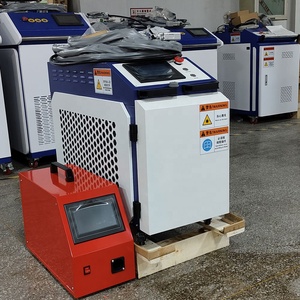
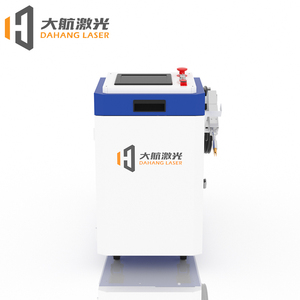
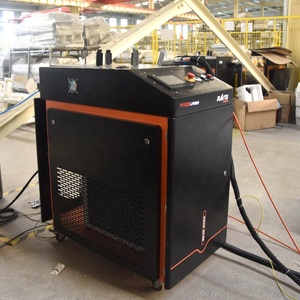
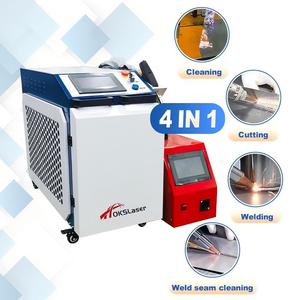
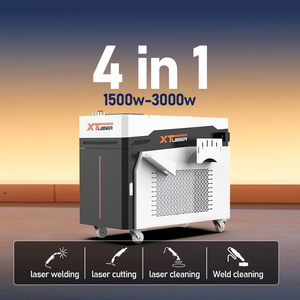
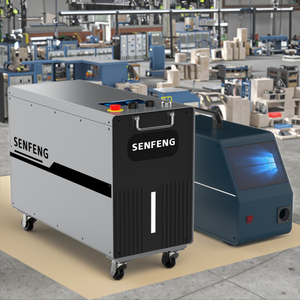
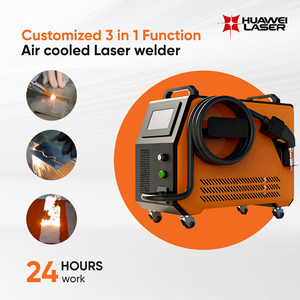
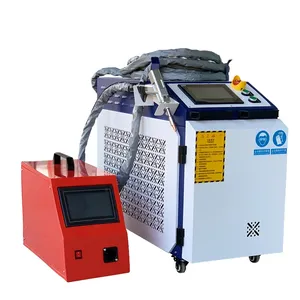
3000W 4-in-1 handheld fiber laser cleaning and welding units enable non-abrasive, chemical-free removal of heavy marine oxide, toxic paints, and scale along the Houston Ship Channel, followed immediately by seam welding using the same gun hardware.
Houston shops facing welder shortages are transitioning from traditional TIG/MIG welding to wobble-head handheld and robotic fiber laser welders. Wobble beam motion spreads the laser focal spot across a wide gap (up to 5mm wire feed integration), increasing joint tolerance while boosting linear welding speed by 4X to 10X compared to conventional arc processes.
To reduce non-exhaust particulates, corrosion degradation, and thermal stress on hydraulic rods and valve assemblies, Houston re-manufacturers are replacing hard chrome plating with extreme high-speed laser cladding. Dilution rates under 5% ensure pure alloy chemistry in a single thin layer, saving costly filler materials.
Integration of Industry 4.0 PLC communication protocols (OPC UA, Ethernet/IP), inline pyrometer thermal loop tracking, and automated vision alignment allows Houston OEMs to achieve full part traceability, automatic parameter logging, and zero-defect quality control for continuous batch processing.
Selecting an industrial laser machinery manufacturer requires evaluating technical authority, machine construction standards, and post-installation support infrastructure. Scantech Laser operates as an application-first laser system integrator, maintaining complete control over R&D, optical engineering, software development, and mechanical build.
We do not quote machinery based on theoretical calculations. Our internal application testing laboratory processes your actual part samples, measures metallurgical dilution, runs cross-sectional micro-hardness and pull tests, and delivers a complete engineering report prior to machine ordering.
All Scantech Laser systems destined for export to North America comply with Class 1 laser safety enclosures, dual-channel safety interlocks, optical viewing glass certified for correct optical density (OD 6+), integrated fume extraction, and ANSI Z136.1 / OSHA safety parameters.
From factory acceptance testing (FAT) at our facility to site acceptance testing (SAT) on your factory floor in Houston, we provide complete export documentation, customs coordination, operator safety training, and 24/7 remote diagnostic support.
Request an application review, submit your technical drawings for a complimentary sample trial, or speak directly with our senior laser system designers.