Engineered for precision cladding, structural laser welding, automated surface restoration, and heavy industrial coating.
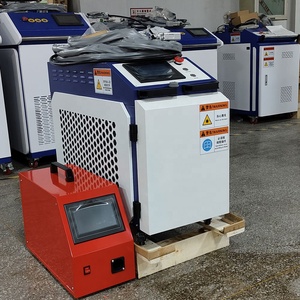
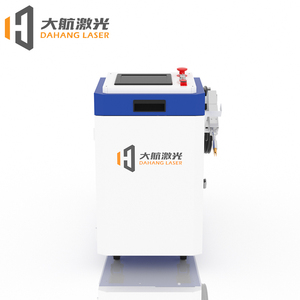
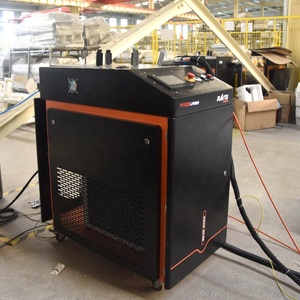
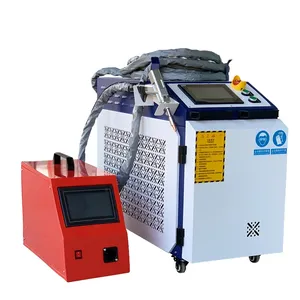
In the advanced manufacturing sectors across the Greater Los Angeles Area—ranging from aerospace propulsion labs in El Segundo to heavy-duty maritime transport hubs in San Pedro—component failure caused by extreme wear, high thermal stress, and aggressive corrosion costs local industries millions annually. Traditional surface coating technologies such as Thermal Spraying, Hard Chrome Plating, and Plasma Transferred Arc (PTA) welding are failing to satisfy modern performance and environmental benchmarks.
High-Speed Laser Cladding (often referred to as Extremely High-Speed Laser Metal Deposition or EHLA) represents a architectural leap in material science. By melting the metallic powder feed directly within the laser beam path above the molten pool, high-speed cladding achieves linear processing velocities between 20 to 500 m/min. This ultra-fast thermal cycle limits heat conduction into the underlying substrate, reducing the Heat-Affected Zone (HAZ) to microscopic depths and restricting substrate dilution to below 3%.
To assist procurement engineers and plant directors across Los Angeles county in making data-backed capital equipment decisions, the table below contrasts core metallurgical properties across competing surface treatment methodologies:
| Process Characteristic | High-Speed Laser Cladding | Hard Chrome Plating | Thermal Spray (HVOF) | PTA Welding |
|---|---|---|---|---|
| Bonding Mechanism | Metallurgical (Atomic fusion) | Electro-physical bond | Mechanical interlocking | Metallurgical (High melt) |
| Bond Strength (MPa) | > 400 - 600 MPa | ~ 60 - 80 MPa | ~ 40 - 90 MPa | > 300 MPa |
| Dilution Rate (%) | 0.5% - 3.0% | 0% | 0% | 10% - 25% |
| Heat-Affected Zone (HAZ) | 0.05 - 0.2 mm (Minimal) | None | None | 2.0 - 5.0 mm (High distortion) |
| Layer Thickness Range | 20 μm to 2.0 mm per pass | 5 to 50 μm | 50 to 300 μm | 1.5 to 6.0 mm |
| Environmental & CARB Compliance | 100% Green / Zero Hexavalent Cr | High Toxicity (Strict SCAQMD regulation) | High noise, dust emissions | Fume intensive |
Customized high-speed laser deposition solutions tailored to the stringent operational demands of Los Angeles manufacturing hubs.
Southern California remains the world capital of aerospace innovation. High-speed laser cladding systems are deployed locally to apply Inconel 625, Hastelloy, and Titanium carbide coatings onto turbine blade tips, rocket engine nozzle components, and landing gear actuators. The process maintains metallurgical purity while eliminating micro-cracking in high-nickel superalloys.
As North America’s busiest seaport complex, Port equipment operates under severe marine corrosion and high-friction loads. Our laser cladding systems provide rapid localized remanufacturing of massive hydraulic rams, propeller shaft sleeves, and winch components using Stellite 6 and Stainless Steel 316L powders, extending component operational life by up to 400%.
Driven by strict California environmental mandates, regional EV manufacturers utilize high-speed laser cladding for coating cast-iron brake discs with wear-resistant tungsten carbide matrix layers. This application virtually eliminates non-exhaust brake dust emissions, satisfying upcoming California Air Resources Board (CARB) and Euro 7 particulate limits.
How regulatory pressure, environmental laws, and automation are reshaping West Coast manufacturing.
The South Coast Air Quality Management District (SCAQMD) and California Air Resources Board (CARB) have established aggressive timelines to ban Hexavalent Chromium (Cr6+) due to severe toxicity concerns. High-speed laser cladding stands as the primary green alternative, producing zero hazardous chemical waste while offering superior wear properties.
Logistical disruptions have forced Los Angeles machine shops to prioritize asset repair over global component sourcing. High-speed laser cladding enables local machine shops to rebuild damaged bearing seats, pump impellers, and extrusion screws to original OEM tolerances within hours, radically shrinking lead times.
Decades of dedicated laser systems development, custom optics, and rigorous R&D validation.
Since 1991, our technical teams have specialized in industrial laser machine design, beam delivery systems, and process automation. We don't just assemble machinery; we design complete metallurgical thermal cycles tailored to your exact alloys.
Every equipment configuration undergoes rigorous trial runs in our dedicated applications laboratory. We conduct full cross-sectional metallography, micro-hardness profiling (Vickers), pull-testing, and porosity analysis on your sample parts prior to machine delivery.
Our high-speed laser cladding machines integrate multi-axis CNC gantries or 6-axis articulated robots paired with dynamic closed-loop pyrometers. Real-time temperature feedback maintains steady melt pool dynamics regardless of component geometry.
Technical and logistical insights for procurement managers and application engineers in Southern California.
Submit your component specifications, alloy requirements, and annual volume targets. Our senior laser applications engineers will provide a comprehensive metallurgical evaluation and turnkey quote.