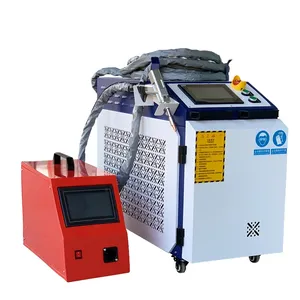
Technical White Paper: E-Mobility Battery Laser Welding Architecture in India
The rapid electrification of India’s automotive landscape—driven by government mandates such as the Production Linked Incentive (PLI) Scheme for Advanced Chemistry Cell (ACC) Battery Storage, FAME-II, and the PM E-DRIVE initiative—has placed unprecedented pressure on EV OEMs and Tier-1 pack builders. Transitioning from traditional mechanical fastening or ultrasonic wire bonding to high-speed fiber laser welding is no longer merely an option; it is the fundamental technological prerequisite for mass-scale EV battery production across India’s major automotive hubs (Pune-Chakan, Chennai-Sriperumbudur, Sanand, Hosur, and the NCR region).
Strategic Key Takeaway for Procurement & Engineering Teams: In electric vehicle battery pack manufacturing (covering 2W, 3W, 4W, and commercial bus applications), joint integrity directly dictates thermal performance, electrical impedance, safety, and operational longevity. Laser welding provides non-contact, high-energy-density joining capable of bridging highly conductive, dissimilar metals such as Copper (Cu) and Aluminum (Al) without destructive thermal impact on adjacent lithium-ion chemistry.
Localized Indian Manufacturing Challenges & Metallurgical Engineering
Operating EV battery packs under Indian ambient conditions requires addressing severe environmental and physical stressors. Ambient temperatures frequently exceeding 45°C during summer peak, combined with high humidity and intense road vibration profiles, mean that micro-cracks, high intermetallic compound (IMC) formation, or elevated contact resistance in busbar joints inevitably lead to catastrophic thermal runaway.
When joining tab materials—specifically nickel-plated copper, pure copper (C1020/C1100), and aluminum (Al 3003/Al 6061)—laser welding must navigate severe optical reflection and thermal dissipation disparities. Pure copper exhibits over 90% reflectivity at conventional 1064nm infrared laser wavelengths at room temperature. Without advanced beam modulation, high initial energy density causes violent keyhole instability, leading to spatter, blowout, and internal porosity.
High-Frequency Beam Wobble
Utilizes circular, figure-8, and spiral oscillation patterns up to 1000 Hz. Expands the melt pool, reduces gap-sensitivity, and stabilizes keyhole dynamics during copper-to-aluminum overlap joining.
Spatter-Free Micro-Keyhole
Controlled pulse shaping and dual-beam fiber optics (Center + Ring mode) suppress spatter generation, eliminating loose metal debris that could bridge battery cells and cause internal short circuits.
Closed-Loop Temperature Control
Integrated real-time pyrometer and vision tracking measure molten pool thermal emission, dynamically adjusting laser power in milliseconds to guarantee identical penetration depth across all tabs.
Primary Application Scenarios in Indian EV Battery Line Automation
Laser welding machines optimized for India's e-mobility suppliers cover four distinct cell-to-pack (C2P) and cell-to-module (C2M) assembly zones:
1. Cylindrical Cell Tab-to-Busbar Interconnects (18650, 21700, 4680 Formats)
Widely deployed in India's high-volume 2-wheeler and 3-wheeler electric fleets (such as Ather, Ola Electric, TVS, and Bajaj supply chains). High-speed fiber laser welders join nickel-plated copper tabs to aluminum busbars at speeds exceeding 60 joints per minute with mechanical shear strength exceeding 150 N per weld point.
2. Prismatic Cell Top-Cover Sealing & Terminal Pole Joining
Essential for energy-dense electric passenger cars (EV 4W) and commercial buses requiring heavy-duty LFP (Lithium Iron Phosphate) or NMC (Nickel Manganese Cobalt) chemistries. Continuous wave (CW) fiber lasers execute hermetic 360-degree perimeter welds on aluminum 3003 shell casings to prevent electrolyte leakage under intense 3G acceleration and vibration testing.
3. Pouch Cell Multi-Layer Foil Stack Welding
Joining 30 to 60 ultra-thin copper and aluminum anode/cathode current collector foils (6–12 µm thickness) to thick nickel-coated copper tabs without tearing or thermal degradation of the polymer separator layers.
4. Hairpin Stator & BMS Harness Assembly
Beyond battery modules, high-power fiber laser welders execute precise copper hairpin welding for high-torque EV traction motors and fine wire termination for Battery Management System (BMS) wiring harnesses.
| Joining Application | Material Combination | Optimal Laser Technology | Key Weld Quality Metric |
|---|---|---|---|
| Cylindrical Cell Tab (21700) | Ni-plated Steel / Copper to Al Busbar | Single-Mode Fiber with Wobble Head (1.5kW - 2kW) | Electrical Resistance < 0.04 mΩ; Pull Strength > 140 N |
| Prismatic Terminal Pole | Pure Copper (C1020) to Aluminum 1050 | Adjustable Ring Mode (ARM) Fiber Laser (3kW/3kW) | Zero Internal Porosity; Penetration Depth 1.8mm ± 0.05mm |
| Prismatic Shell Cap Sealing | Aluminum Alloy 3003 / 6061 | Continuous Wave (CW) Fiber Laser (2kW - 3kW) | 100% Hermetic Seal; Helium Leak Rate < 10⁻⁸ mbar·l/s |
| Pouch Cell Foil Stack | Multi-layer Cu/Al Foils (40 layers) to Tab | High-Peak Pulsed Fiber / Blue-IR Hybrid Laser | Zero Foil Tear; Homogeneous Intermetallic Phase |
Enterprise Strengths: Why Partnering with Scantech Laser Provides Competitive Advantage
With an established manufacturing and engineering heritage dating back to 1991 in Navi Mumbai (A-517 MIDC Mahape, Ghansoli), Scantech Laser offers unmatched localized technical capability combined with international safety and precision standards.
In-House Applications R&D Lab
Our dedicated laser application testing facility in Navi Mumbai conducts comprehensive pre-purchase trial runs on customer parts. We provide full metallurgical cross-sectioning, micro-hardness testing, and pull-strength reports before machine selection.
Class 1 Safety & Automation Integration
All custom battery laser welding stations are built with fully enclosed CE/ISO compliant Class 1 safety enclosures, optical density interlocks, fume extraction systems, and seam-tracking vision integration for conveyor and robotic lines.
Pan-India Service SLA & Rapid Spares
Direct field engineering support across major manufacturing hubs in Maharashtra, Tamil Nadu, Gujarat, Haryana, and Karnataka. Backed by 24/7 remote optical diagnostics and an extensive domestic spare-parts inventory.