Precision-engineered high-speed laser metal cladding systems, multi-axis automated cells, and heavy-duty processing solutions designed for European automotive and industrial manufacturing standards.
As Northern Germany's primary maritime hub and a crucial automotive logistics node connecting OEM plants across Lower Saxony, Bremen, and Schleswig-Holstein, the Hamburg market is experiencing a massive technological transformation. The automotive supply chain in Europe faces stringent environmental directives, most notably the upcoming Euro 7 regulations. For the first time in automotive history, Euro 7 extends emissions compliance beyond tailpipe gases to include brake particulate matter (PM10 and PM2.5) emissions and tire wear debris.
Standard grey cast iron brake discs (such as GJL-250), which have dominated automotive braking systems for over a century, suffer from severe atmospheric corrosion, rapid friction surface degradation, and excessive particulate shedding. When paired with heavy modern Battery Electric Vehicles (BEVs), where regenerative braking leaves physical friction brakes underutilized for extended periods, standard cast iron discs rust rapidly in humid maritime climates like Hamburg. This rust layer acts as an abrasive matrix upon hard braking, generating severe non-exhaust particulate emissions that violate Euro 7 limits.
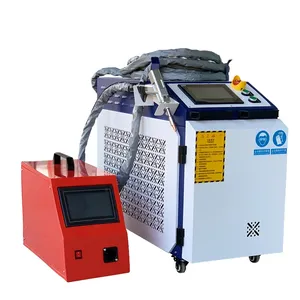
As a global OEM manufacturer and direct exporter of Brake Disc Laser Cladding Systems, Scantech Laser supplies high-throughput, turn-key laser metal deposition equipment engineered specifically to meet the rigorous quality standards of German automotive suppliers, fleet operators, and industrial machinery refurbishers in the Greater Hamburg Metropolitan Region.
Conventional Laser Metal Deposition (LMD) inputs laser energy directly into the base metal, creating a deep melt pool where metal powder is melted. This traditional approach delivers high heat input, deep heat-affected zones (HAZ), substrate dilution rates of 10% to 20%, and low linear processing speeds (0.5 to 2.0 m/min)—causing severe thermal distortion and micro-cracking in thin cast iron brake rotors.
Our Brake Disc Laser Cladding Systems utilize advanced Ultra-High-Speed Laser Cladding optics and powder delivery dynamics. In this refined process, high-intensity fiber laser light melts the alloy powder mid-air above the substrate surface. The liquid droplets then impinge upon a ultra-shallow melt pool on the rotating brake disc.
Achieves metallurgical bonding with substrate dilution rates controlled strictly below 1% to 3%. This preserves the pure anti-corrosive and wear-resistant chemistry of the cladding powder layer without iron contamination from the grey cast iron base.
Rotational surface speeds reach 50 m/min to 200 m/min (compared to 1-2 m/min in conventional laser welding). A dual-sided passenger vehicle brake disc can be fully cladded in under 60 seconds.
Ultrafast solid-liquid cooling rates (up to 10⁶ K/s) produce ultra-fine grain microstructures with zero porosity and superior hardness (HV 600 - HV 900 depending on carbide powder ratio), vastly extending service life.
To ensure perfect adhesion between grey cast iron (high carbon content) and hard friction surfaces, Scantech Laser cladding systems execute an automated two-layer deposition recipe:
For factory managers and technical buyers in Hamburg evaluating capital investments for Euro 7 production lines, the table below provides a rigorous engineering comparison across competing surface coating modalities:
| Performance Metric | Untreated Cast Iron (GJL-250) | HVOF Thermal Spraying | Galvanic Hard Chrome | Scantech High-Speed Laser Cladding (EHLA) |
|---|---|---|---|---|
| Bonding Mechanism | None (Base Metal) | Mechanical Interlocking | Electro-Chemical Bond | True Metallurgical Fusion Bond |
| Coating Porosity | N/A | 1.0% - 3.0% | Micro-cracked Structure | < 0.1% (Dense & Impermeable) |
| Brake Dust Reduction (Euro 7) | 0% (Baseline Benchmark) | 40% - 60% | 20% - 30% | 85% - 92% Reduction |
| Corrosion Resistance (Salt Spray test) | < 24 Hours (Red Rust) | 240 - 480 Hours | 480 Hours | > 1,500 Hours (Zero Rust) |
| Heat Input & Disc Distortion | None | Medium (150°C - 250°C) | Low (< 90°C) | Ultra-Low (Localized HAZ < 50µm) |
| Environmental & REACH Compliance | Compliant | Fume & Noise Heavy | Toxic Hexavalent Cr Ban | 100% Eco-Friendly (Zero Chemical Waste) |
| Powder / Material Utilization Rate | N/A | 40% - 55% | Chemical Sludge Loss | 85% - 95% Coaxial Recovery |
Our exported laser cladding machinery is customized to address specific regional industrial demands in Hamburg, ranging from passenger car OEMs to heavy port machinery operations:
Electric vehicles manufactured in Northern Germany rely on laser cladded discs to prevent brake pad drag and disc surface oxidation during prolonged regenerative coasting. Our systems deliver mirror-finish, rust-free aesthetics through aluminum alloy wheels while complying with Euro 7 particulate cutoffs.
The Port of Hamburg (Hamburger Hafen) operates thousands of container cranes, straddle carriers, and heavy duty diesel trucks. Saline air accelerates disc corrosion in heavy braking systems. Laser cladding heavy industrial rotors with nickel-chromium-carbide matrices extends component lifecycle by 400%.
In addition to automotive rotors, Scantech Laser cladding machines are deployed in marine engine repair workshops along the Elbe River to re-clad worn propeller shafts, hydraulic piston rods, and winch brake drums exposed to severe North Sea salt spray.
Since 1991, Scantech Laser Pvt. Ltd. has established itself as an international pioneer in industrial laser systems integration. Unlike regional machine assemblers or third-party resellers, we maintain complete in-house control over R&D, optical engineering, mechanical fabrication, software algorithms, and metallurgical testing.
Our standard Brake Disc Laser Cladding Line is engineered for seamless retrofitting into high-volume automotive production lines or flexible job-shop environments:
| System Module | Technical Specification & Standard Features |
|---|---|
| Laser Generator | High-brightness Fiber Laser (IPG / nLIGHT / Raycus) 2kW - 10kW; Wavelength 1070nm ± 10nm. |
| Cladding Head Optics | Custom Coaxial / Annular Laser Head with high thermal stability, internal water cooling & protective glass monitoring. |
| Powder Delivery System | Dual-bucket micro-feeder with carrier gas (Argon/Nitrogen) precise flow regulation (±0.1 g/min accuracy). |
| Motion Control & Robotics | Integrated CNC 5-Axis spindle fixture or synchronized 6-Axis industrial robot arm with 0.02mm repeatability. |
| Quality Control Hardware | Infrared closed-loop pyrometer for melt pool temp regulation + inline laser vision sensor for clad height tracking. |
Below are authoritative answers to common inquiries raised by automotive Tier-1 suppliers, plant managers, and technical buyers importing laser systems into Germany:
By bonding an ultra-hard, non-corrosive carbide and stainless steel layer (HV 600+) onto the cast iron rotor, the cladding eliminates the formation of brittle rust layers and prevents physical disc scoring. Wear volume is reduced by over 80%, keeping PM10 particulate levels well under the 7 mg/km Euro 7 threshold.
Utilizing a 4kW to 6kW laser power configuration with high-speed coaxial cladding optics, coating both friction faces of a standard 300mm passenger car brake rotor takes approximately 45 to 75 seconds, matching modern line cycle times.
All machines exported to the EU include CE Declaration of Conformity, Machinery Directive compliance documentation, EN 60825-1 Laser Safety Certification, complete electrical/pneumatic schematics, and operational manuals in German or English.
Scantech Laser provides on-site commissioning by our field service engineers, combined with remote diagnostic support. We coordinate FAT (Factory Acceptance Test) at our plant and SAT (Site Acceptance Test) at your facility in Hamburg or surrounding regions.
Yes. Due to the extremely low heat input of High-Speed Laser Cladding (EHLA), localized melt pools cool instantly without triggering martensitic embrittlement or micro-cracking in the underlying GJL-250 substrate, eliminating the need for expensive pre-heating ovens.
Our proprietary coaxial laser cladding heads achieve a powder capture efficiency of 85% to 92%. Oversprayed powder is collected via an integrated vacuum cyclonic filtration system for sifting and recycling, keeping material costs extremely low.
The buffer layer creates a gradient thermal expansion coefficient between cast iron and the carbide top coat. Thermal cycling tests demonstrate zero delamination or thermal spalling at surface temperatures exceeding 700°C.
Yes. Our laser cladding automation platforms communicate via standard industrial protocols (Siemens Profinet, EtherCAT, Ethernet/IP) to link seamlessly with pre-cleaning lathes and post-cladding fine grinding machines.
Planning Euro 7 brake disc production or upgrading industrial cladding infrastructure in the Hamburg market? Send us your part drawings, material specifications, and cycle time targets for a complete application assessment.
Inquire Now