Top Trusted Portable Laser Suppliers & Exporters

2026 Global Sourcing Whitepaper: Handheld Fiber Laser Welding, Cleaning & Multi-Process Systems

Featured Industrial Portable Laser Systems

Direct Factory Export Lineup: CE & ISO Certified Handheld Laser Welding, Cleaning, and Cutting Solutions
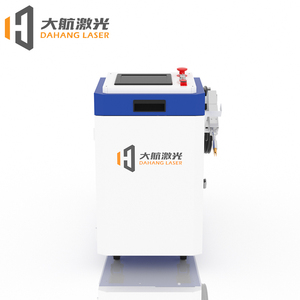
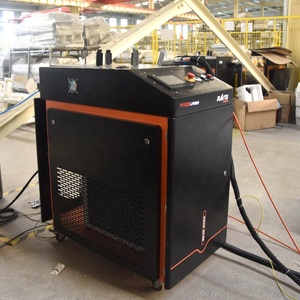
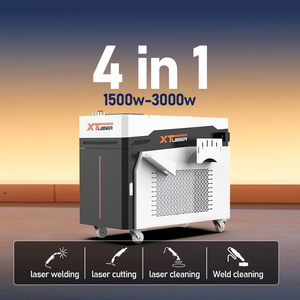
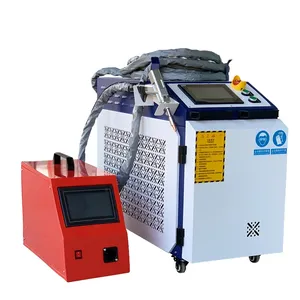
Flagship 4-in-1 Laser Welders 4 Functions 1500W 2000W 3000W 4 in 1 Handheld Machine
4-in-1 Handheld Fiber Laser Welder, Cleaner & Cutter (1500W - 3000W)
  • Power: 1500W / 2000W / 3000W Continuous
  • Functions: Weld, Clean, Cut, Rust Removal
  • Fiber Optics: Dual-Wobble Head System
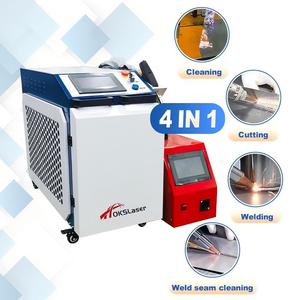
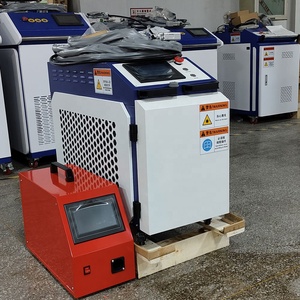
Compact Water-Cooled Cheapest Laser Welder Water Cooling 4 In 1 Small Portable Machine
Ultra-Portable Water-Cooled 4-in-1 Metal Laser Cleaning & Welding Machine
  • Cooling Architecture: Integrated Water Chiller
  • Chassis: Heavy-Duty Mini Mobile Caster Frame
  • Application: Thin Sheet Metal & Rust Stripping
Precision Optics Portable 1000w 1500w 2kw Handheld Fiber Optic Laser Laser Welding Machine
High-Precision Handheld Fiber Optic Laser Welder (1000W / 1500W / 2000W)
  • Laser Source: Raycus / Max / IPG Fiber
  • Wire Feeder: Auto Dual-Drive Wire Feeding System
  • Penetration Depth: Up to 5mm Stainless Steel
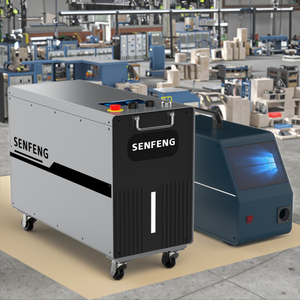
Industrial Heavy Duty Laser Welding Machine Price for Metal 4 in 1 1500w 2000w 3000w
Multi-Process Industrial Metal Laser Welder & Cleaner Workstation (3000W Max)
  • Operation Mode: Continuous & Pulsed Laser
  • Cleaning Width: 10mm - 120mm Adjustable Scan
  • Safety: Class 4 Optical Enclosure Interlock
2026 Next-Gen 2026 4in1 Handheld Laser Welding Machine 1500w 2000W 3000w Metal Welder
2026 Series Smart Handheld 4-in-1 Laser Welder-Cleaner-Cutter
  • Interface: 7-inch HD Smart Touch Screen
  • Process Library: 32 Pre-set Metal Parameter Recipes
  • Torch Weight: Ultra-Lightweight Ergonomic Gun (0.75kg)
High Productivity New 4-in-1 Laser Cleaner Welder Cutter Portable Hand-Held High Productivity
High-Efficiency Portable Fiber Laser Welding & Surface Treatment Unit
  • Speed: Up to 120 mm/s Welding Velocity
  • Efficiency: 4X to 10X Faster than Traditional TIG/MIG
  • HAZ Control: Minimal Thermal Distortion Beam Profile
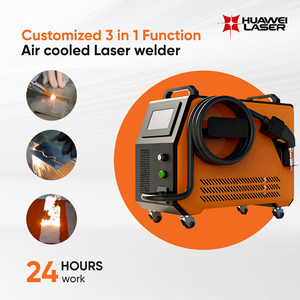
Air-Cooled Tech Mini Laser Welding Machine 800W 1200W Air Cooling Handheld Fiber Laser Welder
Air-Cooled Mini Portable Laser Welder (800W - 1200W Refrigerant-Free)
  • Cooling Type: Active Compressed Air Heat Exchange
  • Total Weight: Under 45kg Ultra-Portable Chassis
  • Power Input: Single Phase 220V Household/Jobsite Compatible
EU / US Direct Stock 3000W 4 In1 Fiber Laser Welding Cleaning Cutting Soldering Machine Handheld
3000W Max/BWT Fiber Laser Welding, Cleaning & Soldering Station
  • Stock Availability: EU / US Regional Warehouse Duty Paid
  • Fiber Laser Source: BWT / Maxphotonics 3000W Peak
  • Accessories: Complete Nozzle Set & Protective Lenses
35+
Years Laser Expertise
50+
Global Export Markets
10k+
Units Deployed Globally
<0.5%
Field Failure Rate

1. Technical Blueprint: The Engineering Advancement of Handheld Fiber Laser Processing

The global metalworking and manufacturing sector has reached a pivotal juncture in thermal joining and surface preparation technologies. Traditional Gas Tungsten Arc Welding (GTAW/TIG) and Gas Metal Arc Welding (GMAW/MIG), while historically foundational, present inherent operational bottlenecks: substantial Heat-Affected Zones (HAZ), severe thermal warping on thin gauge sheets (under 3.0mm), and high reliance on scarce, highly skilled certified welders.

As leading industrial laser machine developers and OEM exporters since 1991, our engineering labs have spearheaded the transition toward high-brightness, continuous-wave (CW) and modulated handheld fiber laser architectures. Modern 4-in-1 portable laser systems combine precision laser welding, surface rust/paint laser cleaning, narrow-kerf laser cutting, and pre-weld oxide stripping into a unified, mobile electro-optical platform.

Information Gain Technical Insight: Traditional TIG welding delivers an energy density of approximately 10^4 W/cm², generating deep thermal dissipation into adjacent base metals. In contrast, a 2000W handheld fiber laser focused through a dual-axis wobble optical head achieves energy densities exceeding 10^6 W/cm². This localized energy input creates keyhole-mode welding with up to 80% reduced heat dissipation, eliminating workpiece post-grinding requirements and thermal distortion.

Technical Comparison: Handheld Fiber Laser vs. Conventional Joining Methods

Performance Metric Handheld Fiber Laser (1.5kW - 3kW) TIG Welding (GTAW) MIG Welding (GMAW)
Processing Velocity 120 mm/s – 250 mm/s (4X–10X faster) 15 mm/s – 35 mm/s 25 mm/s – 60 mm/s
Heat-Affected Zone (HAZ) Microscopic (< 0.3mm) Extensive (3.0mm – 8.0mm) Moderate to High (2.0mm – 5.0mm)
Post-Weld Processing None required (Clean aesthetic bead) Pickling, acid cleaning & grinding Deslagging & heavy bead grinding
Thin Sheet Capability Excellence down to 0.5mm without burn-through High risk of burn-through & warping Difficult on sheet < 1.2mm
Operator Skill Requirement 1–2 Days Training (Preset CNC Recipes) Years of certified trade experience Moderate apprentice level
Process Versatility 4-in-1 (Weld, Clean, Cut, Passivate) Joining only Joining only

2. Development Trends in Portable Laser Systems

Analyzing international trade flows and global production line upgrades reveals four critical technological vectors shaping the portable handheld laser industry through 2026 and beyond:

1. Air-Cooled vs. Water-Cooled Migration

While high-power 2kW–3kW lasers rely on closed-loop active refrigeration chillers for continuous 24/7 heavy industrial cycles, new 800W–1200W air-cooled systems utilize direct refrigerant gas-to-air heat exchangers. This reduces total machine weight under 45kg, expanding field-repair and jobsite mobility.

2. Dual-Axis Wobble Optical Scanning

First-generation laser welders suffered from strict gap tolerances. Modern exporters integrate dual-motor galvo optics in the handheld torch, oscillating the laser beam in circle, triangle, line, and double-ellipse patterns up to 5.0mm width. This bridges wider fit-up gaps effortlessly.

3. Quad-Process Quick-Change Optics

Procurement teams increasingly request versatile 4-in-1 multi-process machines. By swapping out the copper protective nozzle and selecting preset touch-screen firmware, operators instantly switch from seam welding to high-frequency laser rust removal or thin-plate kerf cutting.

3. Future Procurement Trends & Global Sourcing Strategic Framework (2026–2030)

When evaluating global suppliers and OEM exporters for portable laser machinery, international procurement directors must look beyond upfront capital cost ($ USD) and evaluate the Total Cost of Ownership (TCO), optoelectronic reliability, and regional compliance standards.

A. Optical Core Interoperability & Component Transparency

Top-tier exporters provide transparent optical sourcing bill of materials (BOM). Premium handheld laser systems utilize recognized fiber laser sources—such as Raycus, Maxphotonics, IPG Photonics, or BWT—paired with quartz protective windows featuring multi-layer anti-reflective coatings (1064nm wavelength). Buyers should ensure suppliers specify beam quality metrics ($M^2 < 1.2$ for single-mode or regulated multi-mode cores) to maintain focal spot consistency over long optical cable runs (standard 10m to 15m armored fibers).

B. Compliance with International Laser Safety Standards

Portable laser welders operate under Class 4 (Class IV) laser risk classifications due to near-infrared (1064nm – 1080nm) invisible radiation. Reputable global suppliers must provide comprehensive safety interlocks:

  • Loop Guard Interlock: Torch triggers only function when the copper nozzle establishes a physical electrical ground circuit with the metallic workpiece.
  • Dual-Channel Emergency Stop & Key Switch: Compliant with ISO 11553-2 laser processing safety standards.
  • OD6+ Optical Protection Glasses: Certified shielding against scattered near-IR radiation for operators and surrounding personnel.

C. Regional Stocking & Spare Parts Supply Chains

Leading exporters now maintain overseas logistics hubs (EU warehouses in Germany/Poland, US warehouses in California/Texas). This ensures local delivery of consumable copper nozzles, protective focusing lenses, wire feeder drive rolls, and gas ceramic rings within 24 to 48 hours, eliminating costly manufacturing downtime.

4. Enterprise Advantages: Why Partner with Our OEM/ODM Laser Platform

With decades of industrial innovation originating from our established R&D facilities, our industrial laser platforms represent the benchmark for exported manufacturing equipment. We engineered our portable laser lineup with rigorous quality management protocols matching stringent global audit standards:

In-House Optics & Firmware R&D

We design our own galvo control algorithms, smart touch-screen GUIs, and ergonomic lightweight welding torches to minimize wrist fatigue.

ISO 9001 & CE Compliance Quality Control

Every exported unit undergoes a continuous 72-hour burn-in laser power stability test and high-voltage insulation check prior to shipping.

Remote Diagnostics & Telematics

Integrated IoT controller modules enable remote parameter updates, fault diagnosis, and software calibration worldwide.

Turnkey Global Export Packaging

Custom vacuum-sealed anti-moisture wrapping packed in ISPM 15 certified export wooden crates ensuring pristine ocean/air delivery.

5. Technical Procurement FAQ: Global Buyer's Guide

Below are technical answers to key questions asked by international B2B buyers, factory managers, and import distributors regarding portable handheld laser systems:

1. What laser source power (1500W, 2000W, or 3000W) is recommended for specific metal thicknesses?
For stainless steel, carbon steel, and galvanized sheet joining: a 1500W system comfortably welds up to 3mm–4mm single-sided penetration; a 2000W unit handles up to 5mm; while a 3000W laser platform achieves up to 8mm penetration on steel and up to 6mm on highly reflective alloys such as aluminum and brass. For laser cleaning, higher power directly correlates with wider scan width and faster square-meter-per-hour coating removal rates.
2. How does a 4-in-1 handheld laser machine switch between welding, cleaning, and cutting modes?
Mode switching requires under two minutes. The operator changes the front quick-release copper nozzle head (e.g., swapping a V-groove wire welding nozzle for a wide flat-beam cleaning nozzle or narrow cutting tip), changes the optical focus sleeve setting if required, and selects the corresponding preset recipe on the digital control screen (adjusting laser output frequency, wobble mode, and assist gas type).
3. What assist gases are required for operation, and what are consumption rates?
For stainless steel, titanium, and high-spec metal welding: Argon or Nitrogen (purity 99.99%) is used to prevent seam oxidation, operating at 10-15 L/min flow rates. For mild/carbon steel joining, industrial Nitrogen or Compressed Air can be utilized. When cutting thin sheets, High-Pressure Nitrogen provides bright, burr-free cuts, while Oxygen assists mild steel cutting speed.
4. What consumables are required and what is their expected operating lifespan?
Primary consumables consist of: (1) Protective Lenses: Replaceable quartz windows shielding the internal optics, lasting approximately 200–300 operational hours depending on shop environment cleanliness; (2) Copper Welding/Cleaning Nozzles: Long-lasting heavy-duty alloys requiring replacement only upon mechanical impact or wire-jam splatter damage; (3) Wire Guide Tubes: Swapped periodically when changing wire diameters (0.8mm, 1.0mm, 1.2mm, 1.6mm).
5. What international electrical voltage standards do the systems support for export?
Air-cooled 800W–1200W models and water-cooled 1500W units are configured for single-phase 220V ±10% (50/60Hz) power grids, making them directly operational in EU, Asian, and Latin American shops. For US, Canadian, or Japanese industrial grids, machines are supplied either with native 110V/220V split-phase wiring or paired with custom-engineered industrial step-up transformers. Heavy-duty 3000W platforms typically utilize 3-Phase 380V/415V primary power.
6. What warranty, technical support, and export shipping terms (Incoterms) are available?
We provide a standard 2-Year Comprehensive Factory Warranty on the core fiber laser source and 12 months on optical control components. Technical support includes lifetime 24/7 video diagnostics and global field technician dispatch. Standard export shipping terms include FOB, CIF, DDP (Delivered Duty Paid with local door delivery), and EXW for client-designated freight forwarders.

Request Factory Direct Technical Quotation & Process Evaluation

Connect with our senior application engineers today to discuss your material specifications, request sample laser trial reports, or receive direct export FOB/DDP pricing for your region.