Explore our flagship lineup of Master Oscillator Power Amplifier (MOPA) laser solutions. Optimized for high-contrast stainless steel color marking, anodized aluminum blackening, and ultra-fine plastic engraving.
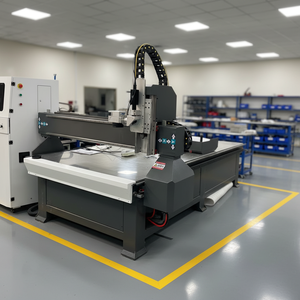
Water-cooled architecture built for continuous heavy industrial deep engraving, foil stripping, and matte metal finishing.
Inquire Now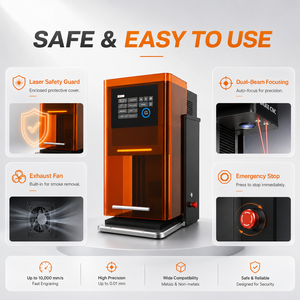
Combines MOPA fiber precision with 450nm blue light laser for versatile processing across metals, reflective copper, and sensitive polymers.
Inquire Now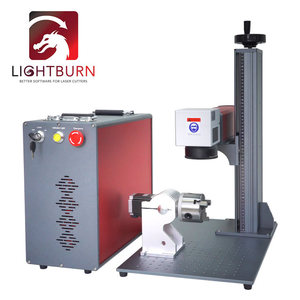
Compact bench-top workstation featuring high peak power for precision cylindrical engraving and large field metal marking.
Inquire Now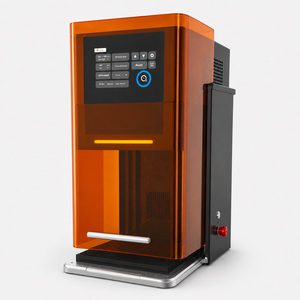
Engineered for mixed production lines, allowing seamless switching between organic non-metal marking and high-contrast metal laser treatment.
Inquire Now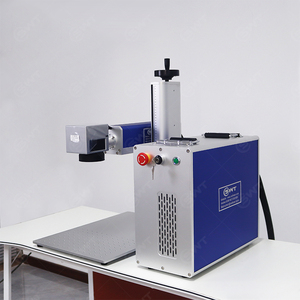
Master of physical spectrum oxide color creation on stainless steel and intense dark marking on anodized aluminum frames.
Inquire Now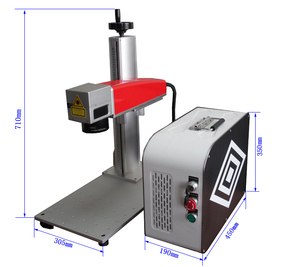
Integrated 3D galvo dynamic focus system designed for intricate relief carving, curved coin embossing, and complex mould geometry.
Inquire Now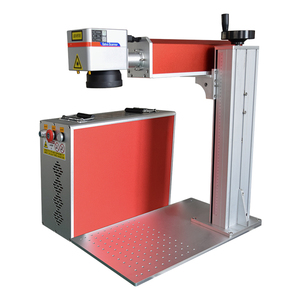
Cost-effective industrial workhorse providing ultrafast vector coding and raster engraving with broad graphic format compatibility.
Inquire Now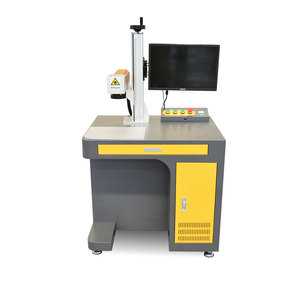
Fully customizable laser station configurations with options for enclosed safety cabinets, inline conveyor integration, and vision positioning.
Inquire NowSince 1991, our manufacturing infrastructure has bridged laser physics innovation with factory-floor reliability. Every MOPA system undergoes rigorous application trial validation before export shipment.
We operate a specialized optical and applications engineering lab. Prior to machinery selection, our engineers analyze your specific substrate, measure metallurgical response, and optimize laser pulse parameters to guarantee line speed and quality compliance.
Every exported MOPA laser machine adheres strictly to international laser safety protocol. Features include fully interlocked Class 1 protective enclosures, optical density OD6+ vision windows, integrated fume extraction ports, and CE-certified emergency stop circuits.
Our dedicated export division manages international crate packing, customs compliance, and remote or onsite setup. Every installation is backed by standard Factory Acceptance Testing (FAT), Site Acceptance Testing (SAT), and operator maintenance training modules.
Understanding Master Oscillator Power Amplifier architecture and how pulse duration control eliminates thermal deformation in precision electronics and thin-metal processing.
| Technical Parameter | Standard Q-Switched Fiber Laser | Advanced MOPA Fiber Laser (JPT M7 / M8) | Industrial Impact |
|---|---|---|---|
| Pulse Duration Range | Fixed (~100 ns to 120 ns) | Tunable (2 ns to 500 ns) | Enables micro-fine heat control without charring or melting substrates. |
| Pulse Frequency Range | 20 kHz – 80 kHz | 1 kHz – 4000 kHz (4 MHz) | Allows high-speed overlapping pulses for intense color & dark black contrast. |
| Anodized Aluminum Marking | Grey/Rough surface finish | Deep, Smooth, Non-Tactile Black | Essential for premium consumer electronics, smartphone housings, and logos. |
| Stainless Steel Color Engraving | Limited, inconsistent oxide layer | Vibrant Spectrum Color Control | Creates stable, repeatable oxide layer colors without chemical additives. |
| Heat-Affected Zone (HAZ) | Moderate to High (Thermal deformation risk) | Minimal to Zero (Cold Ablation capability) | Safe for thin metal foils, semiconductor wafers, and delicate plastic keycaps. |
In conventional Q-switched fiber lasers, pulse width is fixed and locked to pulse frequency. When frequency increases, pulse energy drops dramatically, restricting material interaction choices. In contrast, MOPA technology decouples pulse width from repetition rate.
This optical freedom allows laser technicians to deploy short nanosecond pulses (2ns–10ns) at ultra-high frequencies. Short pulses restrict heat conduction into surrounding material, achieving precise vaporization (ablation) without melting surrounding zones.
When processing stainless steel or titanium, MOPA lasers adjust pulse durations to control heat penetration into the surface layer. By generating a controlled optical oxide layer of exact nanometer thickness, light refraction produces vibrant colors (blues, reds, golds, greens) on the surface.
Because the coloration is a physical optical interference phenomenon rather than a chemical dye, it remains corrosion-resistant, non-fading, and biocompatible for medical tools and luxury hardware.
Strategic market dynamics driving global procurement strategies across automotive, electronics, and medical device manufacturing value chains.
While early MOPA applications focused on 20W–30W desktop marking, global buyers are rapidly shifting procurement toward high-wattage sources (JPT M8 100W/200W). Higher power combines short-pulse precision with rapid surface coating removal, battery foil cleaning, and high-speed deep mold engraving.
Modern manufacturing assemblies frequently combine metal brackets, polymer insulators, and glass windows. Procuring dual-source workstations—combining a 1064nm MOPA fiber laser with a 355nm UV or 450nm Blue laser—allows factories to process heterogeneous materials on a single indexing station.
Industrial buyers no longer accept manual part positioning. Procurement specifications now mandate automated CCD vision camera software, dynamic depth auto-focus, and industrial PLC/MES integration (Profinet, Ethernet/IP) for full 2D DataMatrix code serialization.
Engineered for extreme repeatability across demanding global industries.
In electric vehicle (EV) battery pack manufacturing, MOPA fiber lasers remove ultra-thin insulation enamel coating from copper hairpins without damaging the conductive copper core. Additionally, 100W MOPA lasers execute permanent VIN plate marking and micro-welding of battery busbars with minimal heat conduction.
Achieving non-tactile, high-contrast black logos and regulatory text on anodized aluminum laptop bodies and smartphone frames requires short pulse durations (<10ns). MOPA lasers vaporize the surface oxide layer without exposing raw aluminum underneath, preserving corrosion resistance.
FDA and EU MDR regulations require Unique Device Identification (UDI) codes on surgical instruments, orthopedic implants, and catheters. MOPA dark-annealing creates dark, easily readable barcodes on stainless steel scalpel blades and titanium bone screws that withstand hundreds of autoclave sterilization cycles.
Equipped with 3D dynamic galvo focal tracking, high-power MOPA workstations layer-by-layer ablate precious metals (gold, silver, platinum, brass) to generate coins, jewelry dies, and injection moulds with depth resolution reaching 0.005mm.
Direct answers to key technical, quality control, and export logistics questions asked by industrial purchasing teams.
Black marking on anodized aluminum requires ultra-short pulse widths (typically 2ns to 15ns) and high repetition rates (over 400kHz). Short pulses limit the thermal diffusion depth, allowing the laser beam to micro-modify the refractive properties of the anodic oxide layer without cracking or melting the underlying aluminum substrate. The result is a smooth, high-contrast matte black finish suitable for consumer electronics.
The JPT M7 series is the industry benchmark for standard MOPA fiber lasers, offering excellent beam quality ($M^2 < 1.3$) and pulse adjustment from 2ns to 500ns up to 100W power. The JPT M8 series represents the next-generation high-power architecture, optimized for higher peak power, faster pulse rise times, and power levels reaching 120W–200W. The M8 excels in high-speed sheet metal stripping, deep 3D carving, and high-throughput production lines.
Yes. This is one of the primary procurement advantages of MOPA technology. By tuning the pulse duration to low nanoseconds, the thermal load drops significantly, mimicking "cold laser" processing. This allows high-contrast marking on heat-sensitive polymers (ABS, PC, Nylon, PBT) without melting or foaming, while also handling deep engraving and color marking on stainless steel, titanium, brass, and aluminum.
Every exported MOPA laser machine undergoes a standardized Factory Acceptance Test (FAT) prior to dispatch. This includes a 48-hour continuous burn-in test, galvo alignment verification, optical output power meter calibration, and sample trial validation using the buyer's material drawings. Upon delivery, we provide full technical documentation, electrical schematics, CE certificates, and optional Site Acceptance Testing (SAT) support via remote live video or field engineer deployment.
For MOPA laser configurations between 20W and 100W, air-cooled systems are highly efficient, compact, and require zero routine fluid maintenance, making them ideal for standard factory temperatures. For high-power MOPA systems (120W to 200W) or environments with ambient ambient temperatures exceeding 35°C (95°F), an integrated dual-circuit water chiller is mandatory to maintain optical source temperature stability (±0.5°C) during continuous multi-shift production.
Standard bench-top and enclosed MOPA laser workstations ship within 10–15 business days from order confirmation. Custom automated robotic cells require 30–45 days. All export machinery is vacuum-sealed against moisture, wrapped in anti-static film, and encased in ISPM-15 compliant fumigated wooden crates built for ocean freight and air cargo transport.
Send us your material specifications, drawings, and required cycle times. Our applications engineering team will conduct sample testing and return a detailed process report with technical recommendations.