Industrial surface preparation is experiencing a monumental paradigm shift. As environmental regulations restrict chemical solvents and high-maintenance abrasive blasting, high-precision fiber laser cleaning systems have taken center stage. This comprehensive B2B buyer's guide evaluates top-tier laser cleaner factories, technology platforms, pulse energy dynamics, and multi-functional 4-in-1 laser systems engineered for heavy manufacturing, automotive e-mobility, aerospace, and general precision engineering.
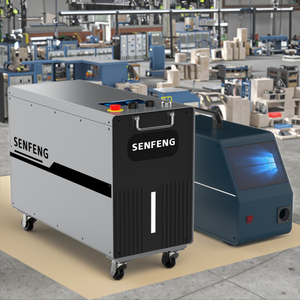
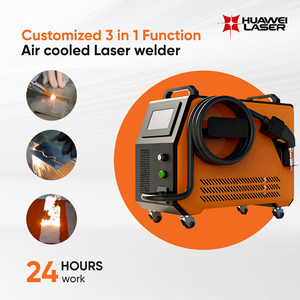
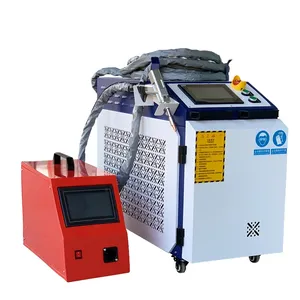
Explore our vetted collection of high-output handheld laser cleaners, 4-in-1 multi-functional systems, and compact air-cooled fiber laser units.
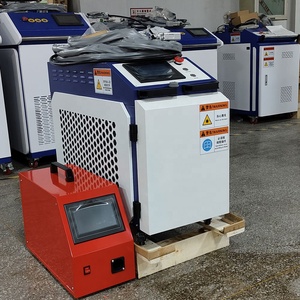
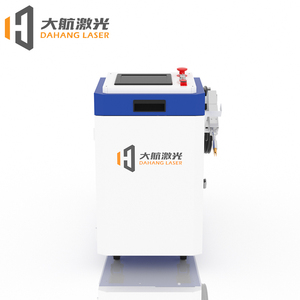
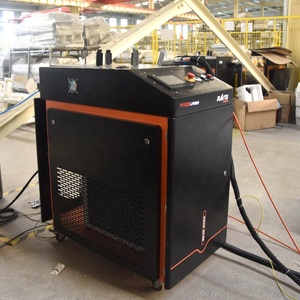
When evaluating laser cleaning equipment suppliers, procurement engineers must look beyond basic system specifications to analyze the OEM’s structural engineering capabilities, optics integration expertise, and quality assurance framework. Grounded in over three decades of optical technology leadership (pioneered by industry leaders like Scantech Laser), top-tier manufacturers distinguish themselves through rigorous design standards.
Prior to machine recommendation, sample parts undergo rigorous lab trials to benchmark beam fluence ($J/cm^2$), ablation threshold, depth profile, and heat-affected zones (HAZ).
Every system is built under ISO-aligned manufacturing processes at state-of-the-art facilities (such as the MIDC Mahape industrial corridor), ensuring complete traceability and compliance.
Engineered with double-interlocked safety circuits, optical density (OD6+) protective viewing windows, and automated fume extraction interlocks for safe operator environment.
Laser surface cleaning operates on the fundamental principle of selective laser ablation. When high-peak-power coherent light impacts a contaminated surface, the laser energy is selectively absorbed by the contaminant layer (rust, paint, oxide, oil, or mill scale) while being reflected or thermally conducted safely by the underlying base metal.
Depending on whether a Continuous Wave (CW) or Pulsed (MOPA / Q-switched) fiber laser source is utilized, the cleaning action occurs through two distinct thermodynamic mechanisms:
| Parameter | Engineering Significance | Typical Operational Range | Impact on Substrate Integrity |
|---|---|---|---|
| Beam Fluence ($J/cm^2$) | Energy delivered per unit surface area. Must exceed contaminant threshold but stay below base metal damage threshold. | 1.5 – 12.5 $J/cm^2$ | Zero melting when tuned within substrate safety window. |
| Pulse Duration ($\tau$) | Governs heat diffusion length ($L_d = 2\sqrt{D\tau}$). Shorter pulses confine heat exclusively to contaminant layer. | 10 – 500 ns (Pulsed) / Continuous | Pulsed eliminates micro-structural phase changes in metal. |
| Scan Wobble Frequency | High-speed galvanometric mirror movement sweeps beam to prevent local hot-spot formation. | 20 Hz – 300 Hz (Line/Circle pattern) | Ensures homogeneous surface texture and zero striping. |
| Wavelength ($\lambda$) | 1064 nm fiber laser fundamental wavelength offers optimal absorption across iron oxides and organic paints. | 1064 nm Ytterbium Fiber | High reflection on Cu/Al protects substrate from over-absorption. |
As industrial manufacturing transitions toward Industry 4.0 and stringent ESG (Environmental, Social, and Governance) targets, global buyers are evaluating laser cleaners under new sourcing frameworks:
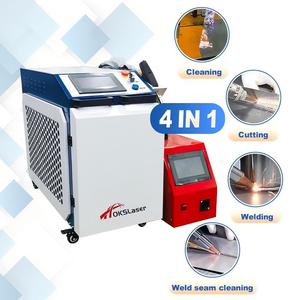
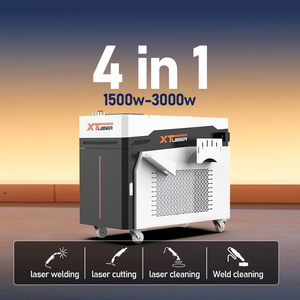
Factories are moving away from single-purpose machines. Handheld 4-in-1 platforms (Cleaning, Welding, Cutting, and Weld Seam Passivation) maximize capital utilization for small-to-medium metal fabricators.
Traditional 1500W+ systems required heavy water chillers. Modern 800W–1200W direct air-cooled fiber systems drastically reduce system footprint, power consumption, and job-site transport barriers.
In high-volume lines (e.g., e-mobility battery tray cleaning, brake disc preparation for Euro 7 compliance), laser cleaning heads are mounted on 6-axis cobots with integrated vision inspection feedback.
Technical and commercial clarity for sourcing officers, process engineers, and plant directors.
CW Fiber Lasers (1000W - 3000W): Emit a uninterrupted continuous laser beam. They deliver tremendous energy per second at a lower price point, making them ideal for heavy structural steel descaling, ship hull rust removal, and thick paint stripping where high area throughput is required.
Pulsed MOPA Lasers (100W - 500W): Emit discrete energy pulses with variable pulse widths. They generate high peak power with virtually zero heat conduction into the substrate. They are necessary for injection mold cleaning, historical artifact restoration, automotive wiring connectors, and polished stainless steel where base material integrity must remain untouched.
Laser cleaning is a 100% dry, chemical-free, non-abrasive process. Unlike sandblasting, it creates no media waste stream, eliminates grit disposal fees, causes zero mechanical wear on precision tolerances, and protects operator health by eliminating hazardous chemical vapors. Operating costs are typically 80% lower as electricity is the only primary consumable.
Yes. A 4-in-1 handheld system utilizes a quick-change focal nozzle optic and programmable galvo firmware. By simply swapping the nozzle tip and selecting a preset on the touchscreen interface, operators can switch from cleaning surface rust to wire-fed metal welding, thin metal cutting, or post-weld cleaning within under 60 seconds.
Because handheld fiber lasers utilize Class 4 laser sources (1064 nm wavelength), operators MUST wear OD6+ rated laser safety eyewear certified for 1064 nm. Additionally, the workspace should be enclosed with laser safety curtains, equipped with emergency interlocks, and supported by a dedicated industrial fume extractor with HEPA and activated carbon filtration to collect vaporized particulates.
Fiber laser generators are solid-state and virtually maintenance-free with diode lifespans exceeding 100,000 hours. The primary low-cost consumable items include protective optical cover windows (quartz glasses that protect the internal lens from spatter) and occasional replacement of fume extractor filter elements.
Request a customized technical evaluation, Part Sample Test Report, or direct factory pricing quotation from our senior laser applications engineering team.