Explore our export-grade laser machine portfolio engineered in ISO 9001 certified facilities. Combining cutting-edge fiber optics, 4-in-1 multi-process capabilities, and high-durability air and water cooling systems.
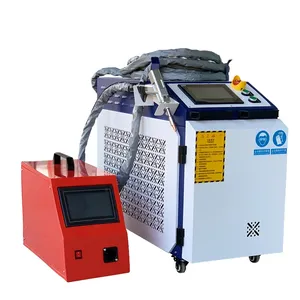
As global manufacturing shifts toward ultra-high precision, micro-traceability, and environmentally sustainable production standards, industrial laser etching, engraving, marking, and multi-functional surface processing have emerged as pivotal foundational technologies. Modern industrial laser etchers are no longer simple surface-marking units; they are complex electro-optical mechatronic systems capable of modifying materials at the micro- and nano-scale without mechanical force, chemical reagents, or consumable wear.
When selecting a leading China laser etcher manufacturer and exporter, global enterprise procurement teams must evaluate optical beam quality ($M^2$ factor), pulse frequency modulation ranges, thermal management configurations (air cooling vs. water cooling), and long-term system stability. China's industrial laser manufacturing ecosystem has evolved into a powerhouse of innovation, offering high-efficiency fiber laser sources, MOPA (Master Oscillator Power Amplifier) pulse control, UV cold-laser systems, and 4-in-1 multi-functional workstations (etching, cleaning, welding, and cutting) that rival traditional European and North American machinery at significantly optimized total cost of ownership (TCO).
Understanding the interaction between laser radiation and target substrate materials is critical for specifying the correct machinery. Laser etching and marking operate primarily under two distinct physical mechanisms:
Utilizes nanosecond pulsed fiber lasers (1064 nm wavelength) to rapidly heat the metal substrate past its melting or vaporization threshold. This process causes localized phase changes, thermal oxidation, or micro-melting, ideal for deep engraving, surface texturing, and high-contrast metal dark marking.
Employs short-wavelength ultraviolet lasers (355 nm) with high photon energy to directly break chemical molecular bonds within sensitive polymers, glass, and semiconductor wafers. Photoablation produces negligible Heat-Affected Zones (HAZ), eliminating thermal deformation, micro-cracks, and edge charring.
MOPA technology allows independent adjustment of pulse duration (2 ns to 500 ns) and frequency (1 kHz to 4000 kHz). This flexibility enables delicate color marking on anodized aluminum, black annealing on medical-grade stainless steel, and precise etching on thin foil materials.
To assist procurement directors, application engineers, and OEM buyers, the table below provides a rigorous technical comparison of primary laser source technologies manufactured and exported by leading Chinese producers:
| Parameter / Technology | Standard Fiber Laser | MOPA Fiber Laser | UV Cold Laser | CO2 Laser |
|---|---|---|---|---|
| Operating Wavelength | 1064 nm (Near-IR) | 1064 nm (Near-IR) | 355 nm (Ultraviolet) | 9.4 - 10.6 µm (Far-IR) |
| Pulse Duration | Fixed (approx. 100 ns) | Tunable (2 ns - 500 ns) | Short Pulse (< 15 ns) | Continuous / Pulsed |
| Heat-Affected Zone (HAZ) | Moderate to High | Low to Ultra-Low | Negligible (Zero Thermal Impact) | High Thermal Impact |
| Primary Substrates | Stainless Steel, Carbon Steel, Aluminum, Brass | Anodized Al, Stainless Steel, Plastics, Thin Metal | Glass, Silicon, PCB, Sensitive Polymers, PET | Wood, Acrylic, Leather, Organic Materials, Paper |
| Beam Quality ($M^2$) | < 1.5 | < 1.3 | < 1.2 | < 1.1 |
| Diode Lifespan (MTBF) | 100,000 Hours | 100,000 Hours | 20,000 - 30,000 Hours | 15,000 - 20,000 Hours |
Selecting an OEM/ODM manufacturing partner in China provides distinct strategic advantages in terms of manufacturing scalability, supply chain integration, customization flexibility, and international compliance. Our manufacturing infrastructure integrates decades of optical-mechanical engineering experience with stringent quality control standards.
Our state-of-the-art R&D laboratories specialize in optical path design, galvo scanner calibration, dynamic 3D focusing heads, and proprietary software development. We provide tailored solutions ranging from standalone tabletop etchers to fully automated 6-axis robotic laser welding and cleaning cells.
By sourcing premium components from top-tier tier-1 partners (such as Raycus, MAX, IPG, JPT, S&A, and BWT) and performing precision machining of mechanical frames in-house, we eliminate intermediate markups, offering export customers factory-direct pricing with uncompromised build quality.
All exported machinery complies fully with international safety and quality standards, including ISO 9001 quality management, CE mark directives (Low Voltage & Machinery Safety), FDA accessions for laser radiation safety, and Class 1 laser enclosure safety design principles.
We support overseas distributors and factory buyers through IoT-enabled remote diagnostic modules, structured spare parts distribution centers (with stock across EU and US hubs), and multi-lingual technical support engineers available for on-site commissioning and operator training.
The industrial laser machine sector is undergoing rapid technological convergence. Procurement executives must align their equipment acquisition strategies with upcoming market developments to maintain long-term competitive advantages.
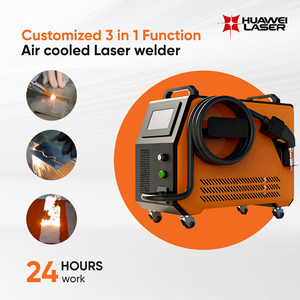
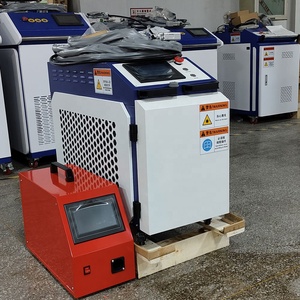
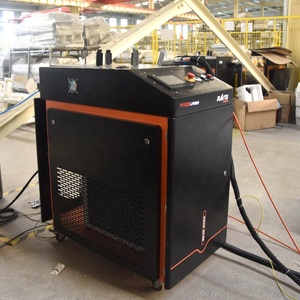
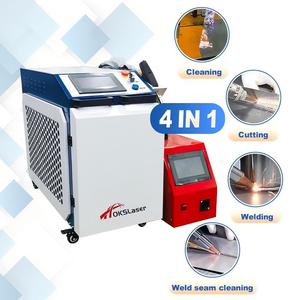
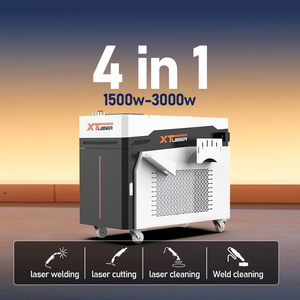
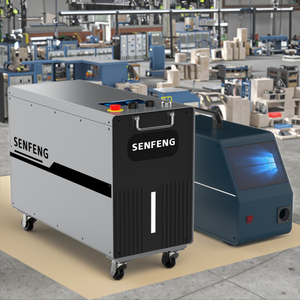
Traditional single-function machines are being rapidly replaced by portable handheld 4-in-1 workstations capable of seamless switching between laser welding, laser surface cleaning, laser cutting, and laser wire-feed soldering. This trend dramatically lowers equipment footprint and capital expenditure for sheet metal fabricators and repair shops.
Advancements in fiber laser pump module conversion efficiency have made air-cooled laser systems (800W to 1200W) highly reliable. Eliminating external water chillers reduces system weight by up to 60%, removes coolant maintenance routines, and prevents freezing issues in cold climates.
Smart manufacturing lines are adopting optical vision alignment systems, coaxial pyrometers, and acoustic emission sensors. Real-time feedback loops dynamically adjust laser power, focal offset, and scanning speed to guarantee 100% zero-defect etching and welding on automated assembly lines.
Key operational, technical, and procurement questions answered by our application engineering team to support global purchasers during machine selection:
Connect with our senior application engineers today for factory-direct quotes, technical parameter matching, custom OEM inquiries, and complimentary sample testing reports.
Inquire Now