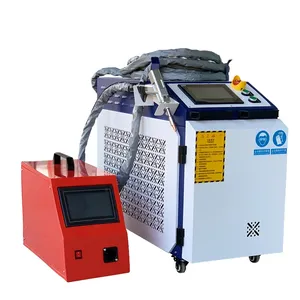
High-efficiency, multi-functional fiber laser processing platforms engineered for global industrial deployment.
The global market for industrial laser systems has undergone a structural transformation over the past decade. China has emerged as the global epicenter for fiber laser research, optoelectronic manufacturing, and supply-chain integration. For international procurement managers, plant directors, and OEM automation integrators, selecting qualified China fiber laser manufacturers requires looking beyond superficial price points and examining core optoelectronic integration capabilities, beam quality factor (M²), duty-cycle thermal stability, and long-term technical reliability.
Modern industrial fiber lasers utilize semiconductor laser diodes to pump active optical fibers doped with rare-earth elements (typically Ytterbium, Yb³⁺). The resulting 1064 nm wavelength beam delivers high absorption across ferrous and non-ferrous metals, making it the gold standard for welding, cutting, surface cleaning, cladding, and marking. As top tier Chinese manufacturers transition from low-power processing to ultra-high-power kilowatt architectures (1kW to 30kW+), understanding the structural differences between system assemblers and true optoelectronic manufacturers has become essential for managing total cost of ownership (TCO).
Leading manufacturers maintain in-house cleanrooms for optical fiber splicing, beam combiner manufacturing, and galvo scanner tuning, eliminating component-level bottlenecking.
Advanced Ytterbium fiber pumps achieve electro-optical conversion efficiencies exceeding 35-40%, dramatically lowering plant power draw compared to legacy CO2 lasers.
Full CE compliance, Class 1 housing enclosures, dual-channel interlocks, and OD6+ optical protective windows engineered to meet stringent Western safety regulations.
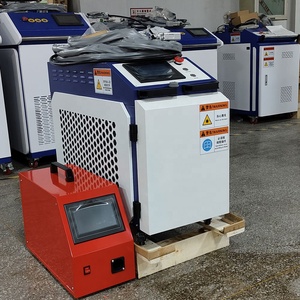
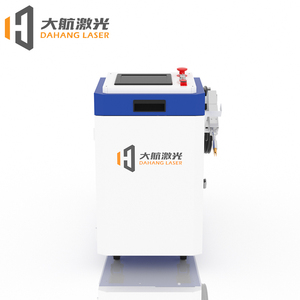
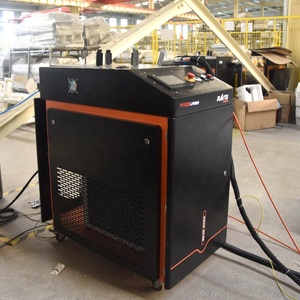
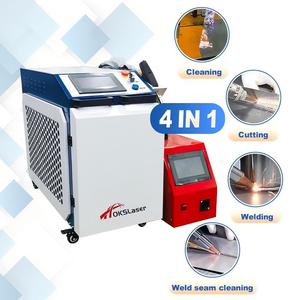
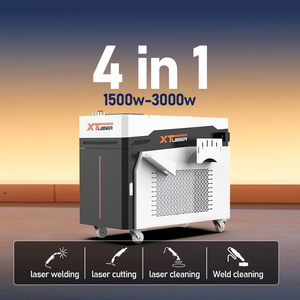
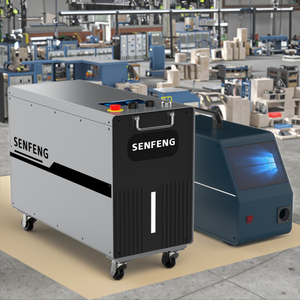
The introduction of 4-in-1 multi-function fiber laser units (combining welding, rust cleaning, sheet cutting, and weld-seam conditioning into a single portable head) represents a major shift in shop-floor versatility. Industrial buyers must evaluate how these versatile systems perform against single-purpose machines under continuous high-duty-cycle conditions.
| Evaluation Parameter | 4-in-1 Handheld Laser System | Dedicated CNC Laser Machine | Traditional TIG/MIG Welding |
|---|---|---|---|
| Primary Functions | Weld, Clean, Cut, Weld-Seam Prep | High-Precision Single Function (Cut/Weld) | Manual Joining Only |
| Heat Affected Zone (HAZ) | Minimal (< 0.5mm) | Ultra-Low (< 0.2mm) | Extremely High (Risk of Warp) |
| Operator Skill Requirement | Low (1-Day Training) | Medium (CNC Programming) | Very High (Certified Welder) |
| Cooling Architecture | Air-Cooled (800-1200W) / Water (1.5-3kW) | Industrial Water Chiller System | Air / Ambient Cooling |
| Processing Speed | 4x - 10x Fast vs TIG | High-Velocity Automated | Baseline (1x) |
| Consumable Overhead | Protective Lenses & Nozzles Only | Assist Gas & Nozzles | Electrodes, Wire, Shielding Gas |
As international supply chains emphasize sustainability, localized maintenance, and automated integration, top China fiber laser manufacturers are driving major technological updates across four core areas:
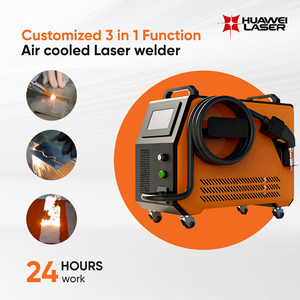
1. Air-Cooled Handheld Architectures: Traditional high-power fiber lasers require bulky external dual-circuit water chillers, limiting mobility. Modern phase-change heat pipe cooling and high-density optical packing now allow 800W to 1200W handheld fiber lasers to operate entirely air-cooled. This slashes machine footprint by 50% and eliminates chiller fluid maintenance in outdoor or job-site fabrication.
2. Intelligent Wobble Beam & Optical Scanners: Early handheld laser welders produced extremely narrow focal spots (~0.2mm), making them intolerant to joint gaps. Contemporary fiber laser heads integrate dual-motor galvo wobble mechanisms, enabling circle, line, double-triangle, and figure-eight beam sweeps up to 5.0mm wide. This allows robust gap bridging without sacrificing metallurgical penetration depth.
3. High-Speed Laser Cladding for Environmental Standards: Industrial laser applications are rapidly moving beyond simple cutting and joining. Ultra-high-speed laser cladding (EHLA) deposits wear-resistant coatings onto cylindrical components (such as brake discs and hydraulic rods) with metallurgical bonding and dilution levels below 5%. This directly supports global environmental mandates like Euro 7 by drastically reducing non-exhaust brake dust emissions.
4. Smart Factory MES & IoT Diagnostics: Next-generation Chinese fiber laser generators feature built-in EtherCAT and Modbus communication protocols, streaming real-time operational data including pump temperature, optical feedback power, back-reflection alerts, and gas pressure metrics directly into plant MES networks for predictive maintenance.
A machine is only as good as the underlying process recipe. Prior to machine configuration, application engineers analyze material chemistry, part geometry, and required mechanical specifications (tensile strength, corrosion resistance, cross-sectional grain structure).
Every production unit undergoes strict factory acceptance testing (FAT), including 48-hour continuous power loading, beam quality profiling, and environmental thermal cycling. This process ensures plug-and-play installation for global buyers.
Consult Engineering Team
Different industrial sectors require distinct optical parameters, gas delivery, and motion control configurations. Below is how top Chinese suppliers tailor fiber laser equipment to meet demanding global manufacturing standards:
Copper busbar welding, battery tray cleaning, stator hairpin joining, and brake disc cladding require tailored beam shapes to manage high reflectivity and ensure crack-free welds.
Ink-free tablet marking, blister package coding, and titanium implant micro-welding utilize cold UV and fiber laser sources meeting 21 CFR Part 11 audit trails and GMP requirements.
High-power flatbed cutting and 5-axis 3D laser profiling deliver burr-free edges across carbon steel, stainless steel, aluminum, and brass alloys at high feed rates.
Essential guidance for international buyers evaluating Chinese fiber laser manufacturers and equipment choices.
Air-cooled systems (typically 800W–1200W) are exceptionally compact, lightweight, and ideal for on-site fabrication, maintenance, and lighter metals (<3mm). Water-cooled systems (1500W–3000W) offer higher power outputs for continuous 24/7 heavy industrial manufacturing, deeper weld penetration (>4mm), and consistent heat dissipation under high ambient temperatures.
Selection depends on application requirements and target market locations. IPG leads in absolute thermal stability and worldwide brand recognition. Raycus and Maxphotonics offer exceptional cost-to-performance ratios with extensive global market share. BWT excels in compact optical module designs. Leading manufacturers build systems compatible with all major laser sources based on client preference.
Standard machines ship within 7–14 business days, while custom robotic automation lines take 30–45 days. Reputable manufacturers provide a 2-year comprehensive warranty on the laser generator, keep spare parts in regional warehouses (EU/US), and support real-time remote diagnostics via secure IoT gateways.
For sheet metal fabrication under 6mm thickness, handheld fiber lasers outperform TIG/MIG welding by 4x–10x in speed, cut downstream grinding costs by over 80%, and require far less operator skill. However, for ultra-heavy structural steel (>12mm) requiring heavy groove filling, conventional submerged arc or heavy MIG welding remains standard practice.
Send us your material specs, drawings, and daily production targets. Our applications engineering team will deliver a process feasibility report, metallographic sample tests, and an optimized machine proposal.
Contact Us