Direct factory supply of multi-functional handheld laser welders, air-cooled fiber cutters, and high-precision laser cleaning systems engineered for global exports.
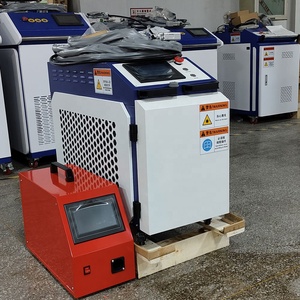
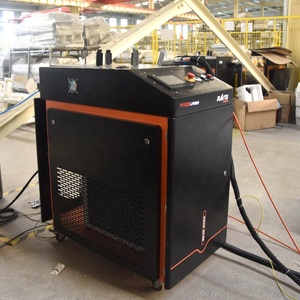
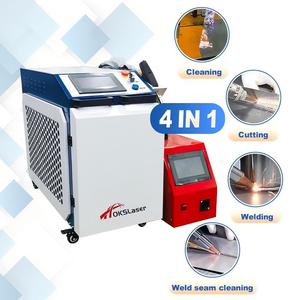
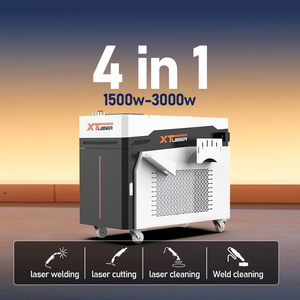
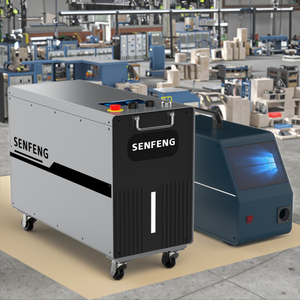
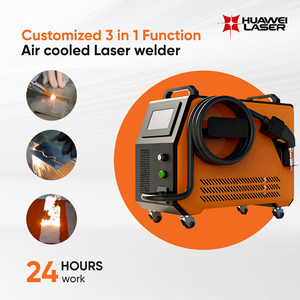
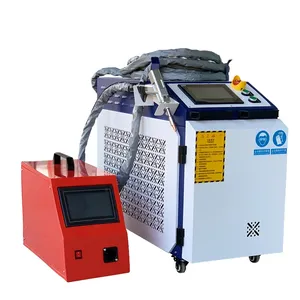
A comprehensive evaluation of the world’s leading optical fiber diode module manufacturers based on Beam Parameter Product (BPP), Electro-Optical Efficiency, MTBF reliability, and OEM/ODM integration support.
| Rank & Manufacturer | Primary Optical Wavelength | Beam Quality (M²) | Cooling Architecture | Wall-Plug Efficiency | Key Target Application |
|---|---|---|---|---|---|
| 1. IPG Photonics (USA) | 1064nm - 1070nm Fiber | 1.05 - 1.3 (Single Mode) | Water Chilled / Air Cooled | 40% - 45% | Ultra-High Power Heavy Plate Cutting |
| 2. TRUMPF Laser (Germany) | 515nm Green / 1030nm Disk | 1.1 - 2.0 Disk/Fiber | Closed-Loop Deionized Water | 35% - 40% | E-Mobility Copper Busbar Welding |
| 3. Scantech Laser (India) | 1064nm NIR / 355nm UV | 1.1 - 1.4 Fiber Optics | Direct Refrigerant / Chilled | 38% - 42% | Pharma Printing, 5-Axis Cut & Cladding |
| 4. Coherent / Lumentum (USA) | 808nm / 976nm / 1064nm | Single & Multi-mode | High-Flow Microchannel | 38% - 42% | Semiconductor & Medical Scribing |
| 5. nLIGHT Inc. (USA) | 1070nm Programmable Fiber | Variable Corona (M² 1.1-6) | Liquid Cooled Baseplate | 40% - 44% | Thick Metal Piercing & Aerospace |
| 6. Maxphotonics (China) | 1060nm - 1080nm Fiber | 1.2 - 1.5 Multi-mode | Dual-Circuit Water Chiller | 34% - 38% | 4-in-1 Handheld Welders & Cutters |
| 7. Raycus Fiber Laser (China) | 1080nm Continuous Wave | 1.3 - 2.2 Industrial | Water Cooled Cabinet | 35% - 38% | Sheet Metal Cutting & Descaling |
| 8. BWT Laser (China) | 450nm Blue / 976nm Fiber | High-Brightness Diode | Air-Cooled & Conduction | 36% - 40% | Non-Ferrous Metal Laser Processing |
| 9. JPT Optoelectronics (China) | MOPA Pulsed 1064nm / UV | 1.1 - 1.3 Gaussian | Thermoelectric / Air Cooled | 38% - 42% | Precision Black Annealing & Plastics |
| 10. Laserline (Germany) | 900nm - 1030nm Direct Diode | Top-Hat Beam Profile | Active Liquid Cooling | 45% - 50% | Hardening, Brake Disc Cladding |
Evaluating laser modules goes beyond raw wattage. Buyers must analyze optical conversion efficiency, beam geometry, thermal dissipation overhead, and controller interface protocols.
Modern 976nm pump diode architectures achieve wall-plug optical conversion efficiency exceeding 40%. This drastically cuts electrical power draw and reduces chiller refrigeration requirements by up to 30% compared to legacy 915nm optical pumps.
Integrating dual-axis galvo wobble optics in handheld welding guns allows adjustable oscillation frequencies up to 300Hz. This bridge gaps up to 2.5mm without filler wire, preventing keyhole collapse and pore formation in aluminum alloys.
Processing highly reflective non-ferrous metals like copper, brass, and polished gold risks optical feedback destroying diode emitters. Advanced modules incorporate optical isolators and real-time reflection monitoring circuits to instantly shut down optical pumps upon sensing back-scatter.
Over the past decade, the global laser material processing market has transitioned from rigid, fixed-gantry industrial CO2 systems to modular, high-brightness Ytterbium-doped continuous-wave (CW) fiber modules. In 2026, the primary catalyst for industrial procurement is operational flexibility. Fabricators no longer seek single-purpose machinery; they demand multi-functional laser processing engines that seamlessly interchange between deep-penetration keyhole welding, rust and oxide descaling, fine metal sheet cutting, and solder seam finishing.
The primary technological leap responsible for this paradigm shift is the miniaturization of high-brightness optical pumps and the integration of high-frequency dual-axis galvo scanning heads into handheld form factors. Weighing under 0.75 kg, contemporary handheld laser guns house collimating lenses, focusing double-elements, protective quartz slide cartridges, and microscopic oscillation motors capable of projecting spiral, linear, and circular beam trajectories at the joint interface.
Information Gain Insight: Selecting a 4-in-1 laser welder with an integrated DSP controller allows operators to dynamically switch process recipes on a single touchscreen. A 2000W fiber module can instantly reconfigure its pulse width and beam oscillation width from a 1.5mm tight seam weld profile on stainless steel to a broad 120mm raster sweep for non-destructive laser cleaning.
When evaluating total cost of ownership (TCO) for structural fabrication, post-weld grinding, pickling, and heat treatment represent substantial labor overheads. Conventional Tungsten Inert Gas (TIG) and Metal Inert Gas (MIG) welding deposit massive thermal loads into metal workpieces, triggering metallurgical phase changes, thermal distortion, micro-cracking, and extensive heat-affected zones (HAZ).
In contrast, high-power fiber laser modules concentrate coherent photons into tiny focal spot diameters ranging from 50μm to 150μm. This concentration generates energy densities exceeding 10^6 W/cm², initiating instant metal vaporization and establishing a narrow keyhole vapor cavity. As the laser optics traverse along the seam, molten metal flows around the keyhole and freezes rapidly. Because the thermal energy is localized, the heat-affected zone is up to 85% narrower than TIG welds, eliminating workpiece warping and preserving tensile strength in heat-treated alloys.
As procurement managers look toward the second half of the decade, two decisive technological vector shifts are redefining equipment acquisition strategies across global manufacturing hubs:
A. Air-Cooled Portable Architectures: Traditional high-power fiber lasers rely on heavy, maintenance-intensive water chillers filled with deionized coolant. Emerging 800W to 1200W air-cooled handheld units replace liquid heat exchangers with high-performance copper heat-pipe radiators, phase-change materials, and variable-speed brushless fans. This reduces overall machine weight below 40 kg, allowing field repair teams to transport industrial laser welders in standard service vehicles for oil pipeline maintenance, shipbuilding repair, and structural steel installation.
B. Blue (450nm) and Green (532nm) Hybrid Beam Delivery: Near-infrared fiber lasers (1064nm) face physics-based absorption limitations when joining pure copper and gold. At 1064nm, polished copper absorbs less than 5% of incident laser radiation, reflecting 95% of energy back into the optical delivery fiber and risking catastrophic diode breakdown. To solve this, leading suppliers are coupling blue diode lasers (450nm) with NIR fiber lines. At 450nm, copper absorption jumps to nearly 65%, allowing smooth keyhole formation at fractionally lower optical power while completely eliminating spatter in EV battery tab and busbar manufacturing.
Established in 1991, Scantech Laser operates an ISO-compliant laser integration complex featuring dedicated optical assembly cleanrooms, 5-axis CNC machining centers, and an advanced application validation laboratory.
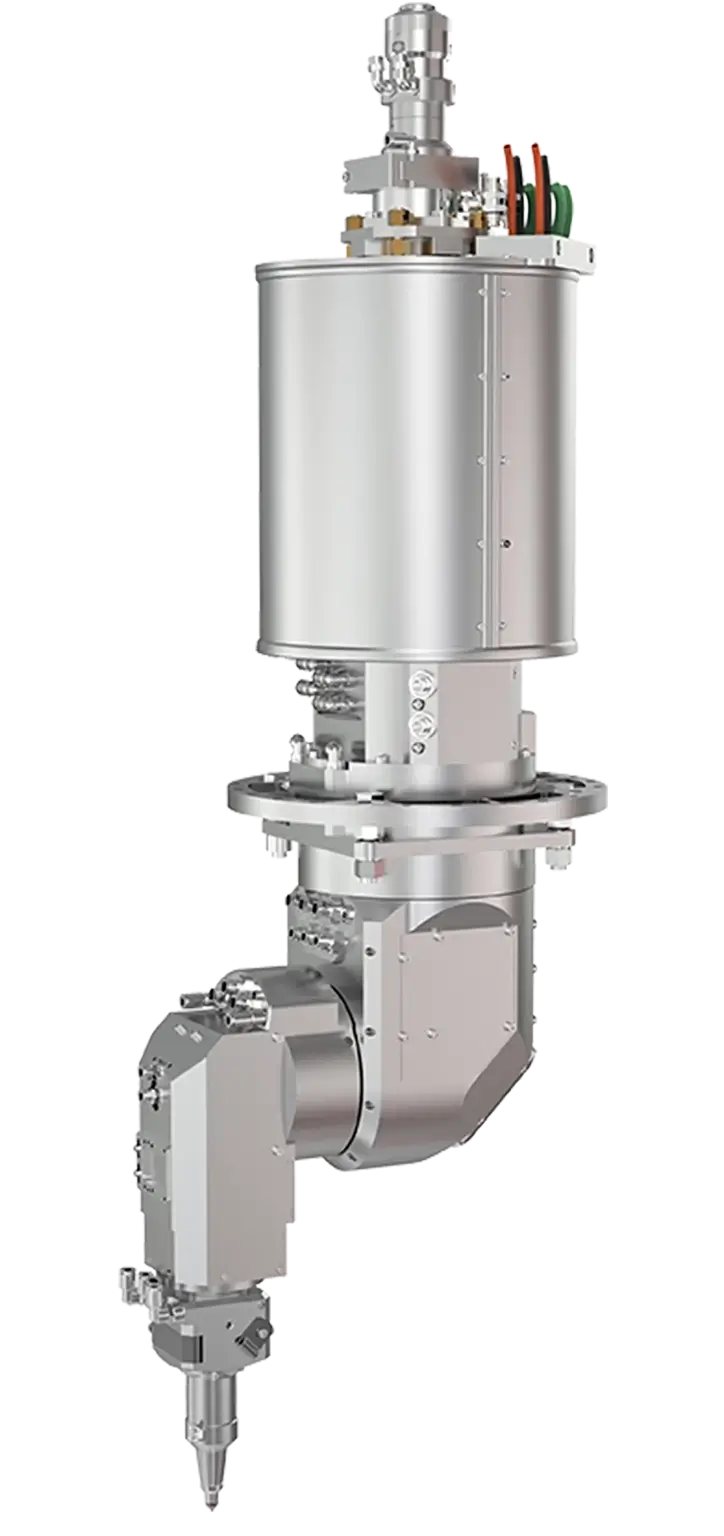
Technical, logistical, and maintenance queries answered by senior optical design engineers to assist industrial purchasing teams.
Contact our application engineering desk today for a detailed technical evaluation, material trial sample report, or custom quotation on OEM laser modules.