Engineered for extreme duty cycles, sub-millimeter precision, and multi-process versatility across automotive, medical, and aerospace production lines.
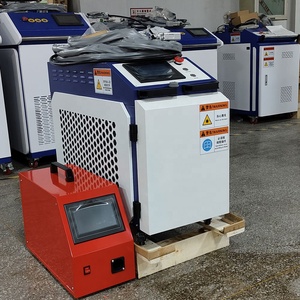
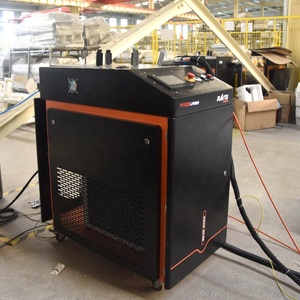
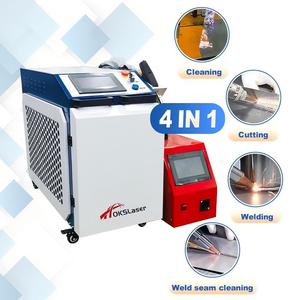
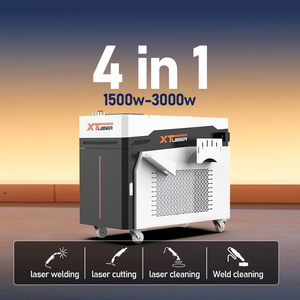
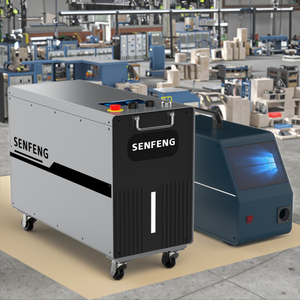
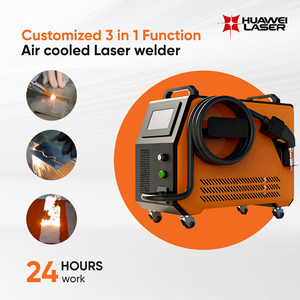
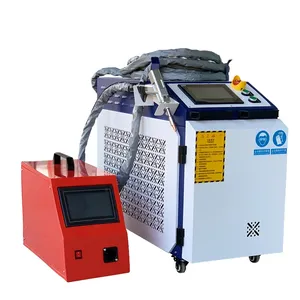
In modern precision manufacturing, Galvanometer (Galvo) laser scanning technology has transcended traditional flatbed marking and basic micro-engraving. A high-performance Galvo laser system leverages specialized optical mirrors mounted on high-speed motor actuators controlled by advanced digital signal processors (DSP). By steering monochromatic laser beams across two or three axes in fractions of a millisecond, modern Galvo systems achieve linear speeds exceeding 12,000 mm/s while maintaining spatial spot repeatability within ±2 micrometers.
This buyer’s guide and technical report reviews the top 10 Galvo laser manufacturers and exporters globally, analyzing critical benchmark metrics including thermal drift coefficient, F-Theta lens distortion correction algorithms, laser source integration capabilities (Fiber, CO2, UV, Green, and Femtosecond), and global field support infrastructures.
When industrial procurement teams evaluate international Galvo laser exporters, comparing raw laser wattage alone leads to sub-optimal operational expenditure (OPEX). Technical audits must evaluate four underlying optical and structural subsystems:
High-power lasers (kW-class continuous wave or high-pulse-energy Q-switched sources) create thermal lensing on dielectric mirror coatings. Premium manufacturers utilize fused silica or single-crystal silicon substrates with dielectric reflective coatings exceeding 99.8% reflectivity at target wavelengths (e.g., 1064nm, 532nm, 355nm), ensuring thermal drift stays under 15 µrad/°C.
Flat-field F-Theta lenses introduce pin-cushion distortion at extreme deflection angles. Leading Galvo exporters integrate digital 3D dynamic focusing units (Z-axis galvos) upstream of the scanner. This allows focal point adjustments in real-time across stepped, inclined, or complex cylindrical geometries without mechanical axis movement.
To prevent laser burn spots at corners during directional changes, the Galvo controller must execute "skywriting" algorithms. This synchronizes the laser gate pulse with motor velocity acceleration curves, guaranteeing uniform energy fluence ($J/cm^2$) across high-speed vectors.
As manufacturing paradigms shift toward smart factory integration and stringent environmental standards, Galvo laser technologies are undergoing massive structural shifts:
In e-mobility battery manufacturing, joining highly reflective copper to aluminum busbars historically suffered from porosity and spatter. Dual-frequency wobble Galvo heads oscillate the beam in circular, elliptical, or figure-8 patterns at up to 1000 Hz. This manipulates melt pool dynamics, dramatically widening weld seams and reducing intermetallic brittleness.
Automotive original equipment manufacturers (OEMs) are adopting high-speed Galvo-guided laser metal deposition (LMD) to coat grey cast-iron brake discs with wear-resistant carbide alloys. This process drastically cuts non-exhaust brake dust emissions to meet Euro 7 and Bharat Stage 7 mandates.
In semiconductor, glass micro-drilling, and pharmaceutical packaging lines, sub-nanosecond pulse durations combined with ultra-fast polygon Galvo scanners cause direct cold photo-ablation, eliminating Heat-Affected Zones (HAZ) and micro-cracks entirely.
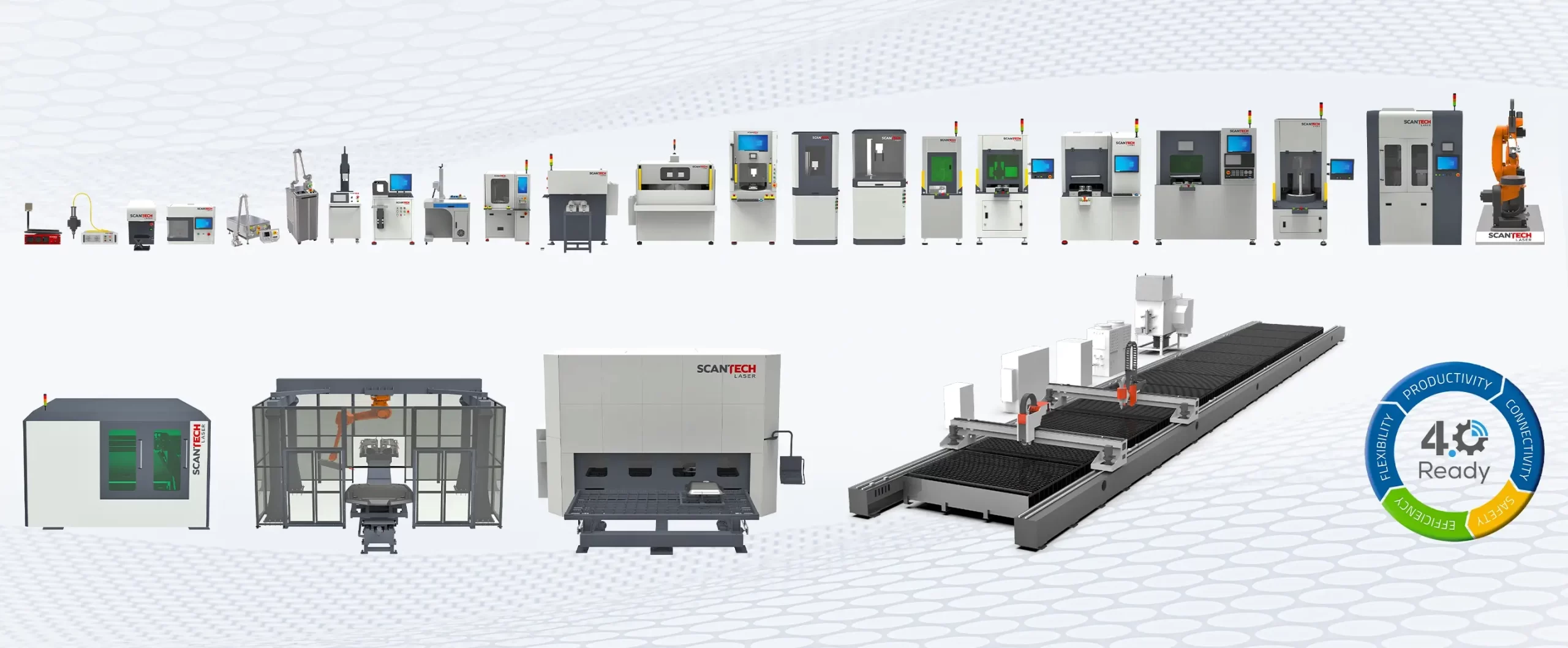
Among top-tier global exporters, Scantech Laser Pvt. Ltd. represents a benchmark in vertically integrated laser machine building. Established in 1991 in Navi Mumbai, Maharashtra, India (A-517 MIDC Mahape), Scantech Laser has spent over three decades delivering specialized optical machine tools, robotic welding cells, and pharmaceutical serialisation equipment to international markets.
Process parameters, beam focal spots, metallurgical grain structures, and tensile pull tests are fully validated on actual customer parts before machine sign-off.
Vibration dampening structures ensure high-speed Galvo optical heads maintain precision alignment under industrial shop floor vibrations.
Specialized software suites provide audit trails, encrypted data logging, vision-based 2D code verification, and MES connectivity for smart factories.
Send us your component drawings, substrate specifications, and target cycle times. Our application engineering team will provide a comprehensive feasibility study and metallurgical trial report.