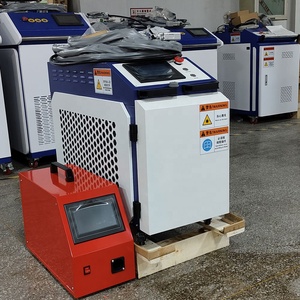
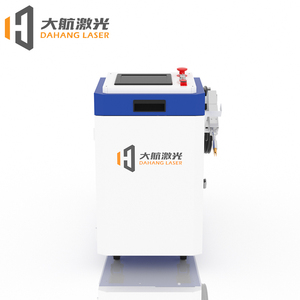
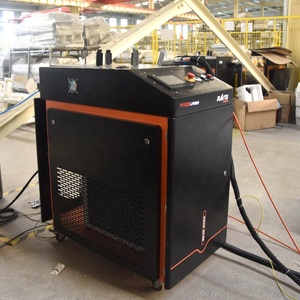
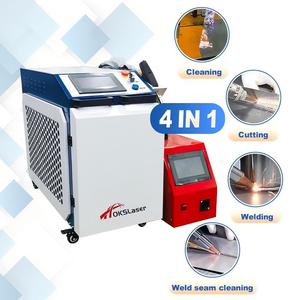
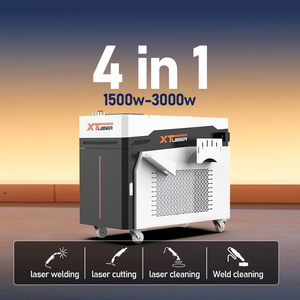
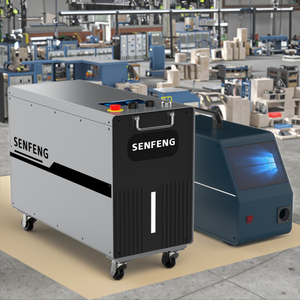
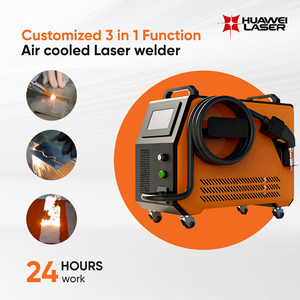
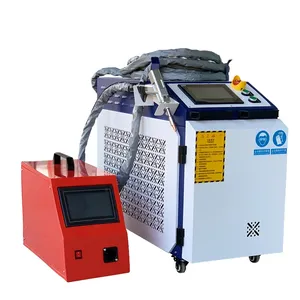
Modern industrial surface preparation is undergoing a fundamental technological shift. Traditional oxide removal methodologies—such as chemical acid pickling, sandblasting, and wire brushing—are rapidly being phased out across global manufacturing ecosystems due to severe environmental compliance burdens, micro-structural substrate damage, and excessive operational expenditure. As an established OEM/ODM Laser Descaling Manufacturer & Supplier, we engineer state-of-the-art laser ablation systems designed to deliver non-contact, high-throughput oxide layer removal for carbon steel, stainless steel, aluminum, and exotic aerospace alloys.
The core physics of laser descaling relies on thermo-optical laser ablation. High-peak-power fiber laser pulses (continuous wave CW or pulsed regimes) transmit focused photons onto the metallic surface. Oxide scales (Fe₃O₄, Fe₂O₃, TiO₂ layers) possess distinct optical absorption coefficients compared to the underlying base metal. Upon radiation, the oxide film absorbs laser energy instantaneously, experiencing extreme thermal expansion, localized phase-change vaporization, and micro-plasma expansion. The mechanical recoil pressure breaks the chemical bonds between the mill scale and the metal matrix, cleanly ejecting contaminants without causing thermal distortion or micro-cracking on the base metal substrate.
Key Engineering Gain: Unlike mechanical abrasives that alter substrate roughness profiles uncontrollably, fiber laser descaling maintains substrate integrity while achieving a surface cleanliness standard of Sa 2.5 / Sa 3 under ISO 8501-1, ideal for direct pre-weld preparation and automotive primer coating adhesion.
In heavy steel structural engineering, shipbuilding, and automotive sheet manufacturing, hot-rolled steel plates develop a dense, brittle mill scale layer during cooling. If left untreated, this oxide layer causes severe weld porosity, seam cracking, and premature paint delamination. Laser descaling offers a precise, selective ablation window. By adjusting the laser beam parameter product (BPP), duty cycle, and galvo scanning pattern (linear, wobble, 2D spiral), operators can strip heavy scale up to 100 μm thick at linear speeds exceeding 15 m/min without altering the mechanical properties of underlying high-strength alloys.
Procurement teams and plant managers evaluating capital equipment acquisitions require clear quantitative ROI metrics. Below is an engineering comparison between modern high-power fiber laser descaling equipment and traditional industrial surface prep methods:
| Performance Metrics | Fiber Laser Descaling | Chemical Acid Pickling | Grit / Sandblasting | Dry Ice Blasting |
|---|---|---|---|---|
| Environmental Impact | Zero Chemical VOCs / Dry Process | Toxic Sludge & Acid Fumes | High Airborne Dust & Particulates | CO₂ Emissions / Medium |
| Substrate Integrity | No Damage / Micro-Tuned Roughness | Risk of Hydrogen Embrittlement | Substrate Wear & Micro-Pitting | Zero Damage / Low Ablation Power |
| Consumable Costs | Electricity & Protective Gas Only | Acid Neutralizers & Water Disposal | High Volume Grit / Sand Media | Continuous Pelleted Dry Ice Supply |
| Automation Integration | Seamless PLC / Robotic Cell Ready | Complex Batch Tank Handling | Messy Enclosure Maintenance | Manual / Semi-Automated Only |
| Operating Noise Level | < 70 dB (Quiet Operation) | Silent / Chemical Risk | > 105 dB (Hearing Protection Req.) | > 110 dB (Extreme Noise) |
| Surface Cleanliness Standard | ISO 8501-1 Sa 3 (Near White Metal) | Variable / Residue Risk | ISO 8501-1 Sa 2.5 | Surface Degreasing Only |
As a vertically integrated industrial laser machine manufacturer operating from our dedicated engineering plants, we provide comprehensive OEM (Original Equipment Manufacturer) and ODM (Original Design Manufacturer) services for global equipment distributors, brand owners, and Tier-1 system integrators. We understand that standard off-the-shelf equipment rarely satisfies specialized manufacturing environments.
Integration with premier laser optical engines including IPG Photonic, Maxphotonics, and Raycus. Powers range from 100W pulsed air-cooled systems to 6000W continuous wave heavy descalers.
Proprietary galvo scanning optics supporting 2D, 3D, wobble, and multi-axis cleaning beams. Lightweight ergonomic handheld torches weighing under 0.8kg for fatigue-free operation.
Full brand engineering including customized sheet metal enclosures, localized HMI software UI (supporting 15+ languages), customized paint colorways, and bespoke packaging.
For high-volume production lines (e.g., automotive EV chassis manufacturing, steel pipe rolling mills, ship container maintenance), we engineer robotic end-of-arm tooling (EOAT) laser descaling assemblies. Our engineering team designs custom communication protocols (Profinet, Ethernet/IP, Modbus TCP) to interlock laser firing sequences directly with FANUC, KUKA, ABB, and Yaskawa industrial robotic arms. Integrated height-tracking capacitive sensors and vision alignment systems ensure constant focal plane alignment across contoured 3D metal geometries.
As global manufacturing shifts toward strict ESG compliance, carbon-neutral manufacturing, and Industry 4.0 automation, the industrial surface treatment market is undergoing rapid evolution. Key strategic purchasing trends include:
While continuous wave (CW) lasers dominate heavy descaling due to low cost-per-watt ratios, next-generation nanosecond and picosecond MOPA fiber lasers are rapidly capturing high-value procurement sectors. Ultra-fast pulsed laser descaling eliminates thermal heat-affected zones (HAZ) completely, making it essential for thin-gage battery enclosures, precision aerospace turbine blades, and semiconductor mold cleaning.
Future laser descaling cells will feature real-time spectrographic feedback loop systems. By analyzing plasma spark emissions during ablation via high-speed visual spectrometers, the AI-driven control system dynamically adjusts laser power, pulse frequency, and scan speed on the fly. Once the oxide layer is fully stripped and pristine metal is detected, power output automatically throttling back to prevent unnecessary substrate removal.
Bulky water-chiller systems are being replaced by highly efficient semiconductor pump architectures and advanced heat-pipe cooling systems. Air-cooled 800W–1500W handheld laser descalers now achieve weight reductions of over 50%, enabling field operators in bridge construction, offshore oil rigs, and rail track maintenance to perform heavy-duty rust descaling in remote, constrained locations.
Selecting an OEM partner requires verifying rigorous manufacturing credentials, technical reliability, and field support capabilities. Building on decades of precision optical engineering expertise, our production facility adheres to strict international compliance standards:

Common technical and commercial questions answered by our application engineering team:
Continuous Wave (CW) Lasers (1500W - 3000W): Best suited for heavy, thick oxide scale, heavy rust, and large surface area steel structures (shipbuilding, pipelines, structural beams) where high processing speed is the primary target and slight thermal input is acceptable.
Pulsed / MOPA Lasers (100W - 1000W): Designed for micro-precision surface preparation, injection molds, aerospace parts, and thin sheet metal where zero thermal distortion, zero HAZ, and strict surface finish parameters are mandated.
Laser descaling machines feature solid-state fiber optics with no moving internal laser components, resulting in virtually maintenance-free light source operation (>100,000 hours MTBF). Daily maintenance is limited to checking and cleaning the protective focal lens quartz window, ensuring proper water coolant levels (for water-cooled models), and emptying the dust collector bin on the fume extractor.
Standard model configurations ship within 7–10 business days. Custom OEM orders featuring specialized brand colorways, localized software interfaces, and tailored sheet metal enclosures typically ship within 20–30 days following FAT (Factory Acceptance Testing) and sign-off on design drawings.
All our laser descaling cleaning heads are equipped with integrated coaxial or directional suction nozzles connected to industrial-grade HEPA fume extractors. The system traps sub-micron metal oxides, soot, and particulate matter at the point of ablation, maintaining clean air in accordance with OSHA and CE safety standards.
Yes. We regularly build custom ODM inline laser descaling modules for steel strip processing, wire drawer lines, and pipe welding systems. Our controllers support encoder inputs for speed-proportional laser power scaling, ensuring uniform oxide removal even as line speeds fluctuate.