Engineered for OEM custom integration and direct factory deployment. Our fiber laser architectures deliver maximum energy efficiency, sub-millimeter precision, and robust operational uptime.
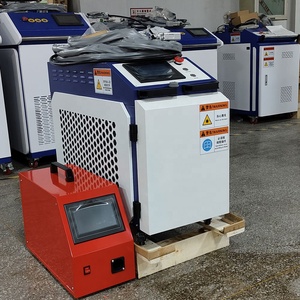 Industrial Grade
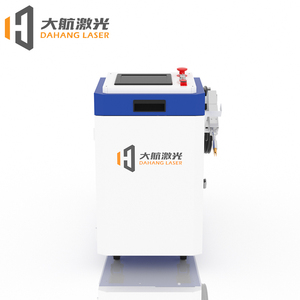 Portable OEM
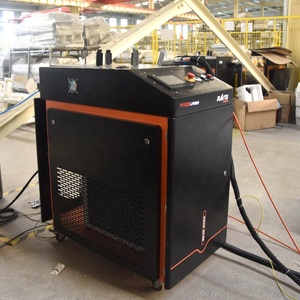 High Precision
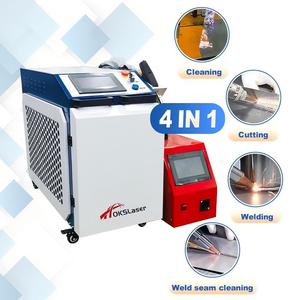 Factory Choice
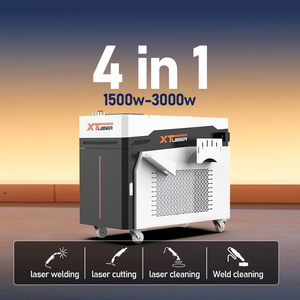 2026 Next-Gen
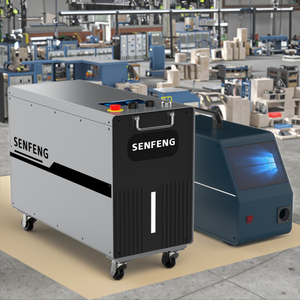 High Productivity
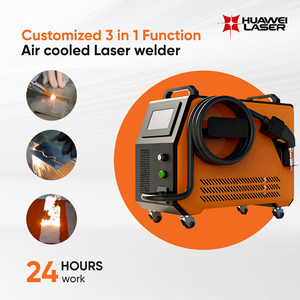 Air Cooling
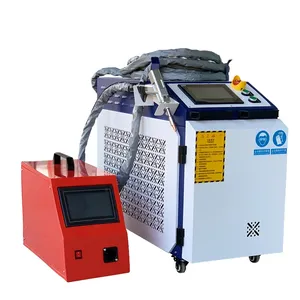 Global Stock
Modern industrial manufacturing demands an unprecedented convergence of flexibility, throughput, and sub-millimeter precision. As global OEMs shift toward Smart Manufacturing and Industry 4.0 architectures, standard off-the-shelf machinery frequently fails to satisfy specialized production parameters. Custom OEM robotic laser system engineering has emerged as the structural benchmark for tier-1 automotive, e-mobility, aerospace, and heavy machinery fabricators.
Integrating multi-axis articulated industrial robots (such as 6-axis Fanuc, KUKA, or ABB arms) with high-brightness fiber lasers requires rigorous optical simulation, dynamic beam shaping, and synchronized trajectory control. By replacing rigid dedicated CNC portals with flexible robotic cells, custom OEMs can execute complex 3D contouring, deep-penetration keyhole welding, localized surface cladding, and selective insulation coating removal within a unified production footprint.
High-speed CMOS seam tracking sensors compensate for part tolerances in real-time, dynamically adjusting the laser focus position with sub-50µm tracking accuracy.
Programmable dual-axis wobble optics (linear, circular, figure-8) bridge fit-up gaps up to 1.5mm without filler wire, eliminating spatter and porosity in high-speed welding.
In-line pyrometric monitoring continuously samples weld pool infrared emission, adjusting laser power up to 10,000 times per second for uniform thermal distribution.
| Performance Metric | Custom OEM Robotic Laser | Conventional TIG / MIG Welding | 5-Axis Gantry CNC Laser |
|---|---|---|---|
| Heat Affected Zone (HAZ) | Minimal (< 0.2mm) | Extensive (2.0mm - 5.0mm) | Minimal (< 0.3mm) |
| Processing Velocity | Very High (up to 12 m/min) | Slow (0.2 - 0.8 m/min) | High (up to 8 m/min) |
| Kinematic Flexibility | 360° Articulated 6-Axis Movement | Manual / Limited Automation | Restricted to Linear Envelope |
| Consumable Overhead | Shielding gas only (No wire needed) | Heavy (Filler wire, electrodes) | Shielding gas & high nozzle wear |
| Automation Protocol Integration | Profinet, EtherCAT, OPC-UA Native | Hardwired Discrete I/O | Proprietary CNC Controllers |
Selecting the optimal fiber optic core diameter (from 20µm single-mode to 600µm multi-mode) fundamentally dictates energy density ($W/cm^2$) at the workpiece focal plane. For deep keyhole welding in EV battery busbars, a small fiber core with a high-intensity core-ring beam profile drastically mitigates spatter while achieving joint tensile strength exceeding 220 MPa.
As corporate sustainability directives tighten and energy prices fluctuate globally, industrial procurement teams must evaluate total cost of ownership (TCO) beyond initial equipment acquisition. Strategic procurement of OEM robotic laser systems is undergoing several macro shifts:
Backing your production lines with over three decades of optical engineering expertise, rigorous ISO compliance, and a dedicated applications laboratory.
We perform full process recipe validation, cross-sectional micro-etching, shear strength testing, and porosity analysis on your sample parts prior to machine design finalized approval.
From custom gantry sizes and specialized rotary indexers to PLC-integrated safety enclosures and robotic end-of-arm tooling (EOAT), every line is tailored to your cycle-time target.
Equipped with encrypted IoT gateways, our technical support engineers provide remote optical health monitoring, laser power degradation alerts, and 24/7 global field dispatch.
All automated laser systems are designed around ISO 11553-1 laser equipment safety standards, featuring interlocked enclosures, OD6+ protective viewing glass, and integrated dual-stage fume extraction.
Standard 1064 nm fiber lasers are ideal for carbon steel, stainless steel, and titanium due to high absorption coefficient rates. However, highly reflective metals like pure copper (C10100/C11000) and aluminum alloys reflect up to 95% of 1064 nm energy at room temperature. For copper, we recommend either a 532 nm Green Laser, a 450 nm Blue Laser source, or an Adjustable Beam Mode (ABM) fiber source that combines a central high-intensity core beam with a ring beam to stabilize keyhole physics and eliminate spatter.
Our OEM processing heads feature multi-channel gas solenoids controlled via software recipes. During welding, the system supplies high-purity Argon or Nitrogen at 15–25 L/min to prevent oxidation of the melt pool. When switched to laser surface cleaning mode, the head automatically routes compressed dry air or Nitrogen through a wide-angle cross-jet nozzle to blow off ablated oxides while protecting the protective cover slide from particulate debris.
Standard handheld fiber laser processing units ship within 10 to 14 business days. Custom robotic cells and Special Purpose Machines (SPM) typically require an 8-to-12 week build cycle. Every custom platform undergoes a mandatory FAT protocol (verifying electrical schematics, optical beam waist alignment, emergency stop response times, and sample part macro-sectioning). SAT (Site Acceptance Test) is supervised by our regional engineers upon delivery, including complete operator training and maintenance certification.
Yes. All custom robotic laser control cabinets are engineered with native fieldbus interfaces including Profinet, EtherNet/IP, EtherCAT, and Modbus TCP. This enables seamless bidirectional handshake communication with master PLCs (Siemens, Allen-Bradley, Omron) and higher-level MES systems for full part serial number tracking, laser power telemetry logging, and automated fault reporting.
Routine maintenance centers on protective lens window inspection and thermal management hygiene. The protective slide lens must be inspected daily and replaced in a cleanroom environment if thermal lens-drawing contamination is detected. Water-chilled systems require deionized water exchange every 3 months and conductivity monitoring (< 5 µS/cm). Optical fiber connector (QBH) face inspection should be performed using an optical microscope whenever decoupling laser heads.
Connect directly with our senior applications engineering team for a complimentary part sample feasibility trial, cycle time evaluation, and detailed CAD configuration proposal.