Precision-engineered laser systems designed for high-throughput cutting, welding, marking, cleaning, and pharmaceutical processing. Optimized for direct integration into Industry 4.0 production environments.
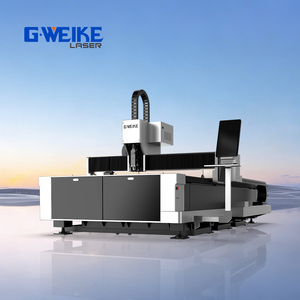
Features Yaskawa AI/BMP auto-focus cutting head, 3015 heavy-duty platform for high-speed precision cutting of carbon steel, stainless steel, and aluminum sheet metal.
Contact Us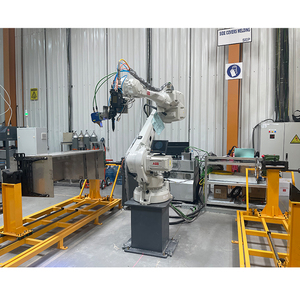
Multi-axis articulated robotic welding cell engineered for automotive, EV battery pack, and aerospace structural component joining with ultra-low thermal distortion.
Contact Us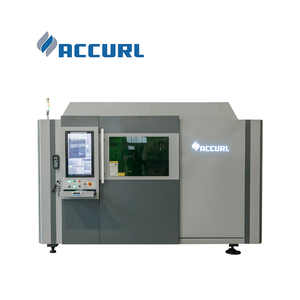
Heavy-duty fiber laser system equipped with Raytools intelligence laser head, closed-loop motion feedback, and AI nesting support for maximum sheet yield.
Contact Us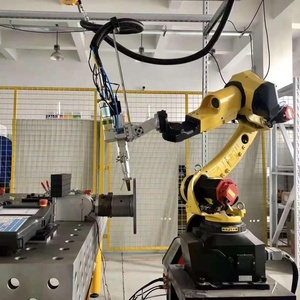
Turnkey 6-axis robotic workstation featuring wobble seam tracking, integrated fume management, and Class 1 safety enclosure for complex 3D metal assemblies.
Contact Us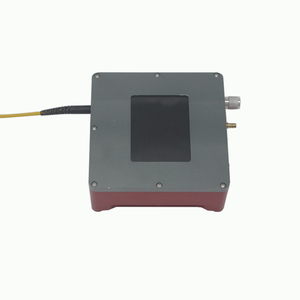
Advanced single-mode blue laser system with TEC active thermoelectric cooling and software parameter tuning, designed for semiconductor & non-ferrous metal micro-machining.
Contact Us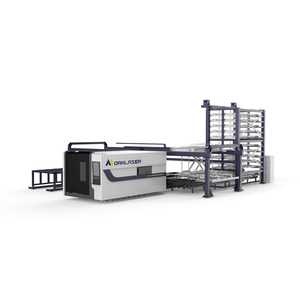
Fully integrated FMC (Flexible Manufacturing Center) featuring automatic tower loading/unloading, automatic nozzle cleaning, and MES network communication.
Contact Us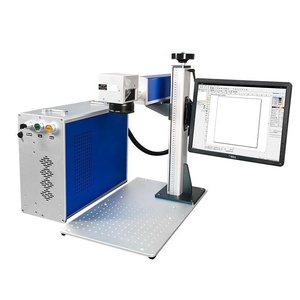
Adjustable pulse duration fiber laser featuring Sino-Galvo high-speed scanner heads and AI vector format processing for high-contrast stainless steel color marking and anodized aluminum striping.
Contact Us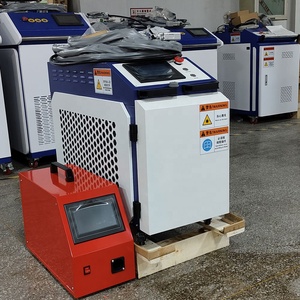
Versatile 1.5kW to 3kW fiber laser system combining continuous seam welding, rust/oxide cleaning, weld bead cleaning, and manual sheet metal cutting in one portable unit.
Contact UsDesigning custom laser automation is not simply assembling components—it requires fundamental optical physics mastery, precise closed-loop motion control, and deep metallurgical process understanding.
Established in 1991, our applications engineering lab conducts rigorous empirical sample trials before recommending hardware. We analyze material absorption spectrums, measure thermal-affected zones (HAZ), perform cross-section metallography, and run destructive pull-tests to establish non-negotiable process windows.
All custom OEM automated workstations are engineered natively for smart factory integration. Utilizing OPC UA, Modbus TCP, and Ethernet/IP protocols, our laser units stream real-time operational telemetry—including diode current, optical back-reflection, gas pressure, and galvanometric mirror temperature—directly to plant-wide MES systems.
Safety is integral to high-power industrial laser delivery. We design and manufacture Class 1 light-tight enclosures featuring safety-rated dual-channel interlocks, active optical sensor curtains, certified optical density viewing windows, and custom high-efficiency particulate air (HEPA) and gas fume extraction units.
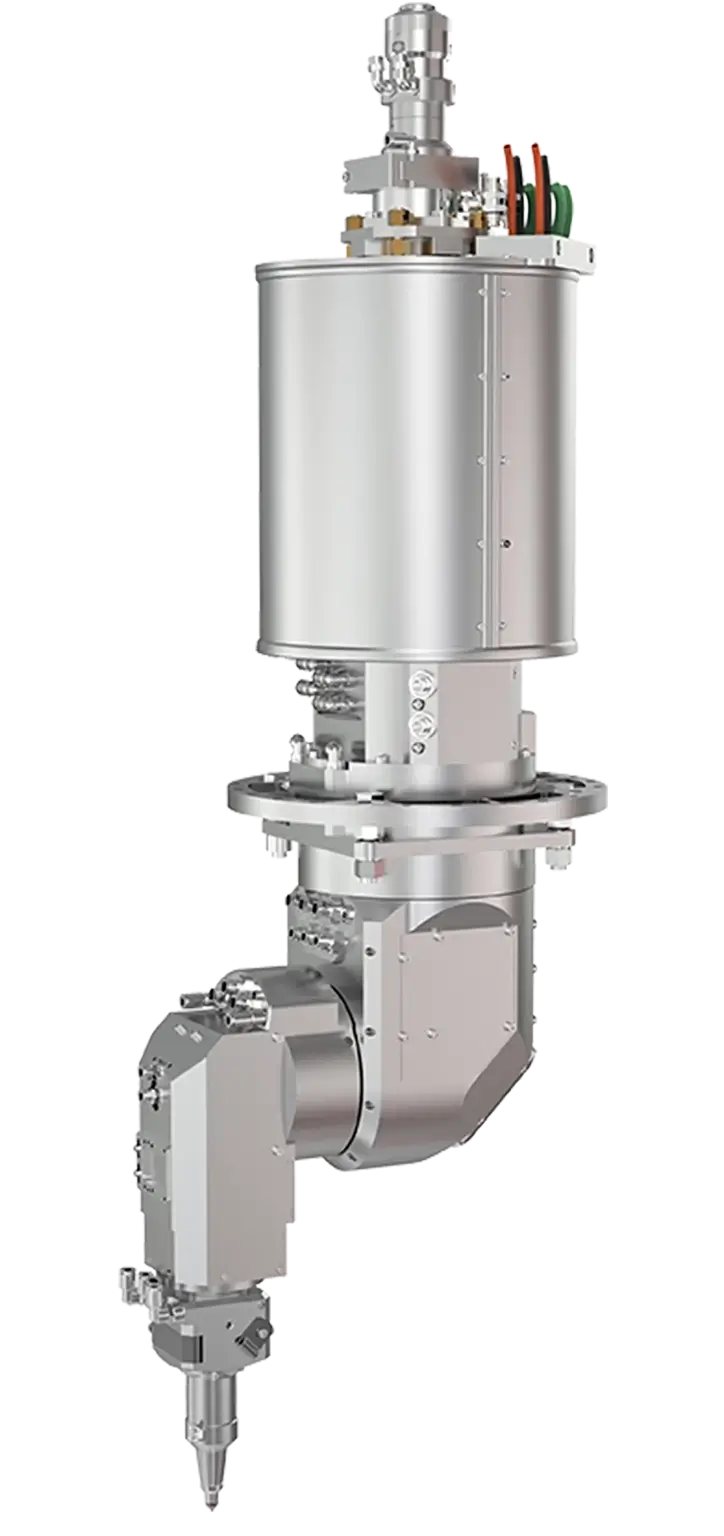
For complex 3D sheet metal profiles, hydroformed tubes, and aerospace turbine components, linear 3-axis motion falls short. Our 5-axis laser cutting and welding systems incorporate dynamic optical head tilt, capacitive height tracking, and real-time focal point compensation to execute multi-angle bevel cuts and continuous 3D contour welds in a single setup.
The industrial laser landscape is undergoing a radical paradigm shift driven by decarbonization, e-mobility expansion, and semiconductor miniaturization. Here are the critical technology vectors shaping future OEM laser procurements.
Infrared lasers (1064 nm wavelength) suffer from high optical reflectivity when processing non-ferrous metals like pure copper and gold, often leading to process instability, keyhole blowouts, and spatter during EV busbar and battery cell tab welding. Short-wavelength lasers—specifically Blue (450 nm - 488 nm) and Green (532 nm)—demonstrate up to 8x higher absorption in copper at room temperature. This enables spatter-free conductive welds with zero porosity, revolutionizing electric vehicle power-electronics assembly.
Nanosecond pulsed lasers rely heavily on photothermal ablation, which transfers residual heat into surrounding substrate material, generating a heat-affected zone (HAZ), micro-cracks, and recast layers. Modern semiconductor wafer scribing, medical stent cutting, and display glass depaneling increasingly demand Femtosecond (< 500 fs) lasers. These ultra-short pulse duration sources bypass thermal diffusion entirely through photo-ablative ionization, ripping chemical bonds apart before heat can propagate.
Environmental regulations like Euro 7 and Bharat Stage 7 introduce strict non-exhaust emission limits, targeting brake dust particulates generated by automotive cast-iron brake discs. Extreme High-Speed Laser Cladding (EHLA) deposits a dense, wear-resistant, anti-corrosive metallurgical coating (e.g., carbide-reinforced stainless steel alloys) onto cast-iron discs at surface speeds exceeding 50 m/min. This reduces brake wear dust by over 90% while preventing structural disc oxidation.
Future OEM laser systems no longer run open-loop pre-set recipes. Next-generation systems integrate coaxial photodiode sensors, pyrometers, and high-speed CMOS machine vision cameras directly inside the optical processing head. Deep learning algorithms evaluate weld pool melt stability, keyhole depth, and thermal radiation in real time (at 10 kHz sample rates), automatically dynamically adjusting laser power, focal distance, and robot travel speed on-the-fly to guarantee zero-defect output.
Technical Insight for Buyers: When evaluating OEM laser suppliers, ensure your technical evaluation includes Beam Parameter Product ($BPP$) and M² factor analysis. A lower M² value (< 1.1 for single-mode fiber lasers) signifies tight focusing capabilities and high power density, allowing lower overall wattage equipment to achieve deeper keyhole penetration while consuming less electrical power.
| Laser Source Technology | Wavelength ($\lambda$) | Primary Material Compatibility | Key Process Advantages | Typical OEM Applications |
|---|---|---|---|---|
| Industrial Ytterbium Fiber | 1064 nm | Carbon Steel, Stainless, Titanium, Alloys | High wall-plug efficiency (>40%), low maintenance, high power scalability | Sheet Metal Cutting, Heavy Structural Welding, Deep Engraving |
| Direct Blue Diode Laser | 450 nm - 488 nm | Pure Copper, Brass, Gold, Aluminum | 8x absorption in copper, zero spatter conduction welding, melt stability | EV Battery Busbars, Hairpin Stator Welding, Micro-Electronics |
| Ultraviolet (UV) DPSS | 355 nm | Polymers, PET, Glass, Silicon, PCB | Cold light photo-ablation, ultra-small spot size, minimal HAZ | Pharma Tablet Marking, Medical UDI Coding, PCB Depaneling |
| Femtosecond Ultrafast | 1030 nm / 515 nm | Ceramics, Sapphire, Nitinol, Thin Films | Pulse duration < 400 fs, zero thermal stress, micro-scale accuracy | Stent Micro-Drilling, Semiconductor Scribing, Display Glass Cutting |
B2B procurement teams are moving away from evaluating equipment solely on initial purchase price (CapEx). Sustainable procurement models mandate a comprehensive Total Cost of Ownership evaluation spanning a 10-year operational lifecycle.
Legacy CO2 lasers operated at meager wall-plug efficiencies of 8% to 12%, consuming massive electrical power and requiring heavy-duty water chillers. Modern OEM solid-state fiber lasers achieve wall-plug efficiencies exceeding 40%. Over 20,000 operating hours, transitioning a 6kW cutting line from CO2 to fiber cuts electricity costs by over $65,000 while significantly paring factory carbon footprints.
In surface cleaning and pretreatments, traditional chemical pickling, sandblasting, and dry-ice blasting generate hazardous chemical waste, continuous abrasive media costs, and severe operator hazards. OEM fiber laser cleaning systems eliminate chemical consumables entirely, operating solely on electricity and compressed air with active HEPA filtration, slashing consumable expenses by 95%.
Leading procurement organizations insist on modular OEM architectures utilizing globally serviceable, non-proprietary sub-components. By integrating industry-standard laser sources (Raycus, JPT, IPG), optical heads (Raytools, Precitec), and motion control (Yaskawa, Siemens), manufacturers prevent vendor lock-in and guarantee immediate global spare-parts availability.

For pharmaceutical manufacturers, ink-based printing poses ongoing contamination risks, solvent storage issues, and nozzle clogging downtime. Our custom OEM pharmaceutical laser printing systems provide non-contact, ink-free, high-speed tablet and capsule marking designed strictly in compliance with GMP standards.
Expert insights addressing common engineering, operational, and integration queries raised by procurement leads and system integrators.
For metals (stainless steel, titanium, brass, carbon steel), a 1064 nm Fiber laser or MOPA laser is optimal for permanent engraving, etching, and corrosion-resistant annealing. For polymers, PET, HDPE, and sensitive electronics packaging, a 355 nm UV laser or 532 nm Green laser is required. UV lasers utilize photolytic "cold marking" to alter chemical bonds without generating heat, eliminating charring, melting, or surface foaming on plastics.
Our engineering team designs laser automation systems using modular mechanical and electrical interfaces. We supply compact galvo optical scanning heads or multi-axis robotic arms coupled via flexible optical fibers to remotely located laser generators. System communication is handled seamlessly via industrial fieldbus (Profinet, Ethernet/IP, EtherCAT), allowing the master line PLC to control laser triggering, recipe loading, and safety interlocks.
MOPA (Master Oscillator Power Amplifier) fiber lasers allow independent tuning of pulse duration (from 2 ns to 500 ns) and pulse repetition frequency (up to 4000 kHz). Standard Q-switched lasers have fixed, locked pulse widths. MOPA flexibility allows precise heat control, making it possible to achieve true black annealing on medical-grade stainless steel without altering corrosion resistance, as well as high-contrast color marking on titanium.
Hard chrome plating faces global regulatory phase-outs due to hazardous hexavalent chromium emissions. Thermal spraying creates mechanical bonds that are prone to delamination under impact. High-speed laser cladding creates a true metallurgical bond between the substrate and cladding alloy with extremely low dilution (< 5%) and minimal heat input, preventing part warping while delivering superior bond strength and wear resistance.
All OEM automated systems are designed in strict accordance with international safety standard IEC/EN 60825-1 (Laser Safety Performance Standard), ISO 13849-1 (Safety-related parts of control systems), and CE directives. Fully enclosed Class 1 systems include dual-redundant safety interlocks, optical density (OD) protective viewing windows, and integrated active safety circuitry to prevent any operator exposure to hazardous laser radiation.