Exploration of MOPA (Master Oscillator Power Amplifier) and Q-switched pulsed fiber laser technologies. Engineered for non-destructive rust removal, substrate paint stripping, precision mold refurbishment, and automated surface preparation across global manufacturing supply chains.
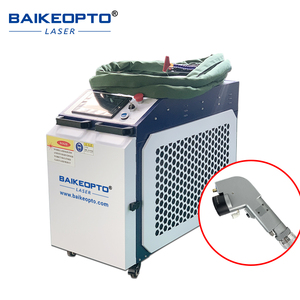
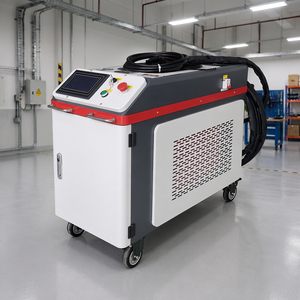
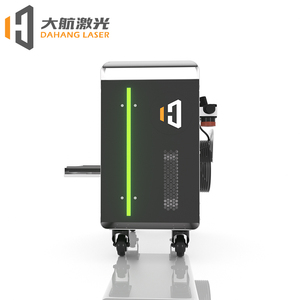
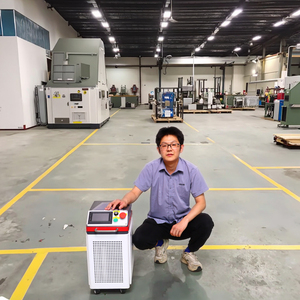
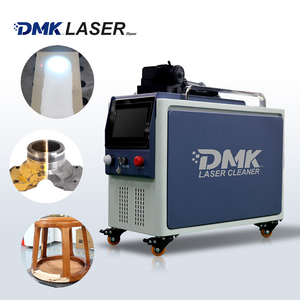
As industrial manufacturing pivots toward eco-friendly, non-abrasive, and high-precision surface engineering, China’s pulsed laser exporters have consolidated their position as global leaders. Grounded in over three decades of optical technology engineering, our manufacturing partnerships combine advanced in-house R&D laboratories with ISO9001-compliant production workflows.
Unlike continuous wave (CW) lasers which clean via thermal melt and ablation—often risking thermal deformation, micro-cracking, or substrate melting—modern short-pulse MOPA fiber lasers utilize transient peak power density. By delivering laser power in nanosecond pulses (10ns – 500ns) at peak powers surpassing 10kW to 500kW, contaminants such as rust, oxide films, paints, resins, and oil coatings are instantly vaporized through photomechanical breakdown and optical expansion without damaging the underlying parent metal or delicate composite.
Every laser system recipe undergoes rigorous sample metallurgical testing, cross-sectional HAZ analysis, and surface roughness (Ra) measurement prior to factory dispatch.
Independent pulse duration control (1ns to 500ns) enables precise calibration for heat-sensitive alloys, carbon fiber, historical artifacts, and silicon wafers.
Seamless integration with Fanuc, KUKA, and ABB robotic arms via Profinet, EtherCAT, and discrete I/O for 24/7 continuous inline manufacturing.
In high-intent procurement decisions, selecting the wrong laser architecture can result in degraded component fatigue life or scrap production. Below is a comparative process engineering matrix comparing pulsed MOPA lasers against standard Continuous Wave (CW) systems:
| Parameter / Feature | Pulsed Laser Cleaning (MOPA / Q-Switched) | Continuous Wave (CW) Laser Cleaning |
|---|---|---|
| Energy Delivery Mode | High Peak Power, Short Pulse (1ns – 500ns) | Continuous Beam Radiation |
| Substrate Heat Input (HAZ) | Negligible (< 0.02mm depth) | Significant Thermal Accumulation |
| Substrate Damage Risk | Zero Damage on Metals, Molds, Carbon Fiber | Risk of Surface Melting, Warping, Roughness Increase |
| Contaminant Selectivity | Extreme (Selective photo-ablation threshold tuning) | Moderate (Relies on mass thermal heating) |
| Primary Industrial Applications | Injection Molds, Automotive Engine Parts, Aerospace, Wood/Stone | Heavy Steel Rust, Shipyard Bulk Hull De-scaling |
| Typical Diode Lifetime | > 100,000 Hours (JPT / Raycus / Max Fiber) | > 100,000 Hours |
Pulsed laser cleaning operates across three primary physical thresholds depending on the selected fluence ($J/cm^2$):
1. Photothermal Vaporization: When laser energy density exceeds the vaporization threshold of the contaminant but remains lower than the vaporization point of the base substrate metal. The coating turns directly into vapor and gas.
2. Photomechanical Shockwave: Ultra-short laser pulses (tens of nanoseconds) induce explosive thermo-elastic expansion. This generates microscopic shockwaves at the interface between contaminant and metal, mechanical-fracturing oxides away from the matrix.
3. Plasma-Assisted Ablation: At maximum peak fluence, a transient micro-plasma envelope forms above the contaminant layer, stripping complex organic bonds (oil, resins, rubber residue) with zero micro-roughness alteration.
Analyzing global market data from automotive, e-mobility (EV battery production), aerospace, and microelectronics, several key procurement trends are defining the future of industrial laser cleaning:
Handheld cleaning, while versatile for field work, is rapidly shifting to automated robotic cells. Multi-axis 3D dynamic galvo scan heads maintain focal distance over complex curved geometry automatically.
Laser-Induced Breakdown Spectroscopy (LIBS) is being directly mounted inside scanning heads to perform real-time optical emission analysis, confirming 100% oxide removal before part transfer.
Tightening environmental regulations globally are driving factories away from sandblasting, chemical etching, and dry-ice blasting due to dust pollution, hazardous waste disposal, and noise.
Key technical questions asked by global procurement teams, manufacturing engineers, and OEM buyers when evaluating Chinese pulsed laser exporters.
JPT MOPA lasers offer independently adjustable pulse duration (1ns to 500ns) and wide frequency spectrum (1-4000kHz), making them optimal for delicate, high-value substrates like molds, aluminum, and plastics. Raycus and Max pulsed laser sources offer robust high single-pulse energy at fixed or semi-fixed pulse widths, making them exceptionally cost-effective for medium-to-heavy industrial rust and paint removal on carbon steel.
No. When calibrated correctly using proper laser parameters (fluence $J/cm^2$ below substrate damage threshold), pulsed fiber lasers remove oil, carbon deposits, and release agents without affecting substrate hardness, polished surface finishes (Ra), or critical dimension tolerances.
For importation into EU regions, machines must comply with CE directives (2006/42/EC Machinery Directive, 2014/30/EU EMC Directive) and safety standard EN 60825-1 for Laser Class 4 or Class 1 enclosed systems. For North America, FDA CDRH accession numbers and UL/CSA component compliance for electrical chillers and power supplies are standard.
Standard portable pulsed cleaners (100W – 300W) ship within 7–10 business days following Factory Acceptance Testing (FAT). Custom automated or high-power water-cooled units (500W – 1500W) require 15–25 days. Technical support includes remote diagnostic software integration, multilingual operator video manuals, and worldwide spare part dispatch via express air shipping.
Connect directly with our laser application engineers for sample testing reports, detailed parameter charts, and custom quotation requests.