High-efficiency 4-in-1 handheld laser cleaning, welding, cutting, and surface preparation systems direct from China's leading OEM factory floor.
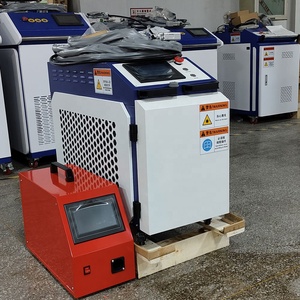
Versatile industrial system capable of instant switching between continuous laser cleaning, seam welding, light cutting, and post-weld passivating. Fitted with ergonomic handheld wobble head.
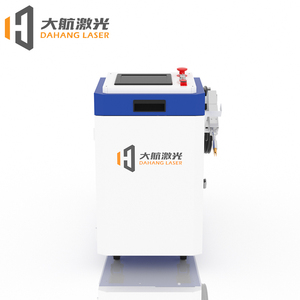
Compact footprint engineered for small-to-medium fabrication shops. Integrated dual-loop water chiller ensures 24/7 thermal stability during non-stop oxide layer and rust removal.
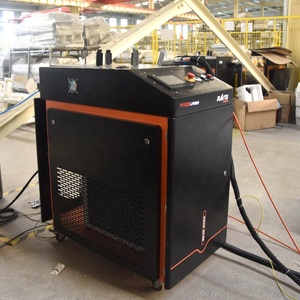
Optimized beam quality (M² < 1.2) for precise thermal ablation and deep penetration welding. Ideal for stainless steel processing, aluminum de-oxidation, and mold renovation.
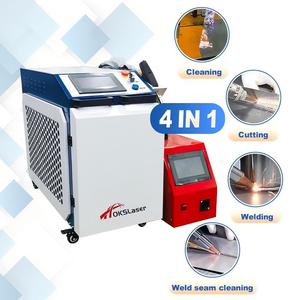
Heavy-duty 3000W fiber optic engine suited for high-speed industrial rust removal, large structure paint stripping, and heavy plate bevel welding prep.
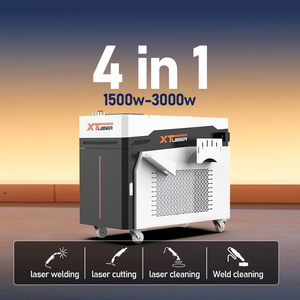
Next-generation digital control interface featuring pre-loaded material cleaning recipes, adaptive optical zoom, and low maintenance gas-assist pathways.
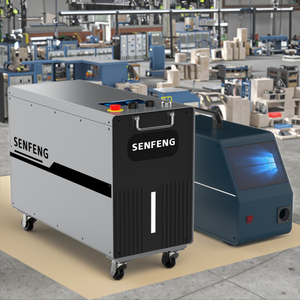
Engineered for minimum operator fatigue during extended production cycles. Features quick-change protective lenses and real-time optical thermal sensors.
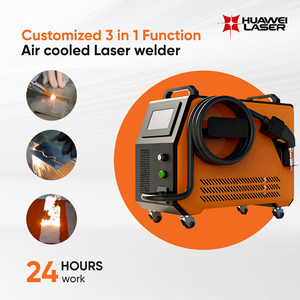
Revolutionary refrigerant-free air cooling architecture. Weighing under 40kg total, this unit offers maximum mobile convenience for site repairs and elevated structural maintenance.
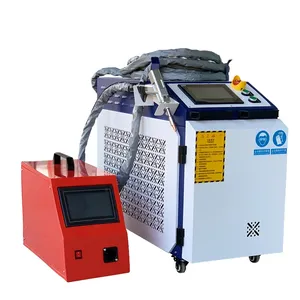
Industrial workhorse featuring top-tier Maxphotonics or BWT laser sources. Built for high-frequency rust removal, thick scale stripping, and continuous shop floor usage.
Combining 35+ years of optoelectronic innovation, rigid ISO-compliant QA, and custom robotic automation integration to empower global manufacturing leaders.
Every laser system is backed by extensive material interaction trials. Our optics engineers measure heat-affected zones (HAZ), ablation rates, and spectral reflectance to optimize recipe presets for your specific metal alloy or surface coating.
We prioritize operator environment and optical safety. All automated laser cleaning cells feature dual-channel interlocks, OD6+ protective viewing glass, integrated high-efficiency fume extraction, and CE/FDA compliant electrical cabinet isolation.
From 6-axis Fanuc/KUKA cobot cell integration to dynamic 5-axis motion gantries, our factory specializes in custom PLC/MES-connected laser surface cleaning workstations tailored to continuous assembly line speeds.
Industrial surface decontamination has undergone a fundamental paradigm shift. Traditional chemical pickling, grit blasting, and dry-ice blasting are increasingly restricted due to environmental regulations (such as Euro 7 and BS7 non-exhaust particulate standards), high consumable overhead, and substrate micro-damage. Modern high-power fiber laser cleaning offers a non-contact, green, and highly controllable alternative.
Core Physical Principle: Laser surface cleaning operates through optical ablation, thermo-elastic expansion, and plasma shockwave generation. When a high-intensity laser pulse impacts an oxide or organic film, the contaminant absorbs the photon energy, rapidly exceeding its vaporization temperature while leaving the high-reflectivity metal substrate undamaged.
Understanding the distinction between CW fiber lasers and nanosecond Pulsed (MOPA) lasers is crucial for procurement optimization:
Static laser beams create deep thermal cratering. Our advanced 4-in-1 handheld cleaning heads employ dual-axis galvo galvo scanning mirrors capable of executing dynamic 2D scanning patterns (spiral, linear, circular, raster, and matrix). By distributing laser energy uniformly across a wide line width (up to 300mm), we eliminate thermal hotspots and maintain uniform surface roughness (Ra).
Comparative lifecycle evaluations prove that fiber laser cleaning reduces operational expenditure by up to 70% over a 3-year horizon. Hazardous waste generation (sludge, contaminated media) is reduced to near zero, requiring only HEPA-filtered dust extraction to capture fine particulate emissions.
Key technological transformations driving international buyer strategy, machinery specifications, and factory floor upgrades.
Procurement heads are shifting toward self-calibrating systems. Modern laser cleaners now integrate inline pyrometers and vision sensors that analyze oxide thickness in real time, automatically adjusting pulse frequency and scan speed to prevent substrate over-burning.
Water chillers add weight and maintenance points. The industry is rapidly adopting air-cooled fiber laser modules (up to 1200W), reducing system weight by over 50% and enabling true field-portable field operations for pipeline and power line maintenance.
To eliminate manual positioning variance, buyer specs increasingly call for modular collaborative robot (cobot) mounts. Cobot-guided handheld guns achieve sub-millimeter trajectory repeatability across curved automotive bodies and complex aerospace parts.
As international environmental regulations tighten under global decarbonization frameworks, industrial cleaning processes are undergoing rigorous ESG (Environmental, Social, and Governance) audits. Mechanical media blasting releases hazardous respirable dust (silica), while chemical solvent cleaning generates VOC emissions and toxic chemical waste that incur heavy disposal tariffs.
Laser cleaning aligns directly with zero-emission manufacturing goals:
Technical and commercial clarity for procurement managers, factory directors, and laser process engineers.
Contact our engineering sales desk today to request sample material cleaning testing, customized automation drawings, or competitive factory-direct pricing for your procurement team.