Explore our flagship 4-in-1 multi-functional laser workstations, high-speed cladding systems, and portable laser processing units engineered for extreme durability, low dilution, and sub-micron accuracy.
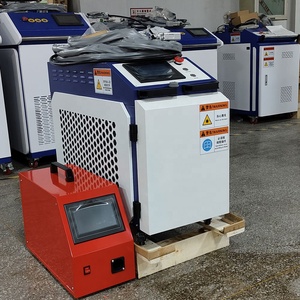
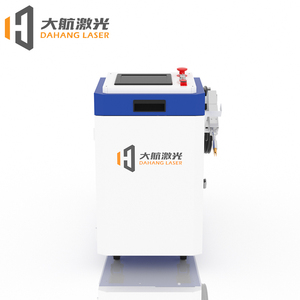
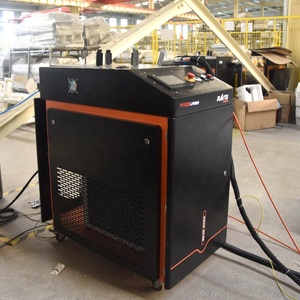
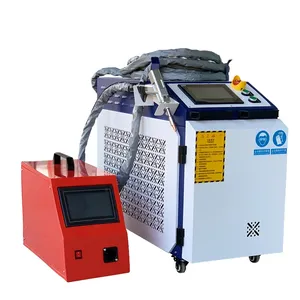
Laser cladding—also referred to as Laser Metal Deposition (LMD) or Direct Energy Deposition (DED)—has emerged as the premier additive manufacturing and surface modification technique for heavy industry, aerospace, automotive, energy, and precision toolmaking. As global supply chains face tightening environmental mandates (such as Euro 7 and BS7 particulate limits) and demanding operational conditions, evaluating top Chinese laser cladding manufacturers has evolved from a simple cost assessment into a strategic engineering decision.
At its core, laser cladding utilizes a high-power coherent laser beam (typically high-brightness continuous-wave fiber lasers operating in the 1060–1080 nm spectrum) to generate a localized molten pool on a metallic substrate. Simultaneously, metallic or metal-matrix composite (MMC) powder or wire feedstock is injected into this pool. Upon cooling, a metallurgically bonded coating is formed with characteristics superior to traditional thermal spraying, hard chrome plating, or arc welding overlaying.
Our manufacturing infrastructure integrates 11 proprietary laser process platforms designed, tested, and validated in our specialized applications laboratory.
Operating at surface speeds up to 500 m/min, EHLA melts powder particles in flight before they touch the melt pool, creating ultra-thin coatings (50–300 µm) for fast brake-disc coating and hydraulic cylinder manufacturing.
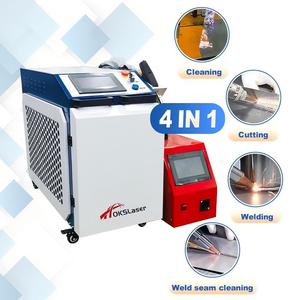
Seamlessly switch between laser welding, rust/paint cleaning, sheet metal cutting, and localized seam cladding using single compact fiber optics paired with smart wobble optical heads.
Real-time pyrometer monitoring tracks melt-pool temperatures up to 2,500°C, automatically adjusting laser power dynamically to guarantee uniform microstructure across non-uniform part geometries.
Integrates 6-axis industrial articulated robots with 2-axis tilt-turn positioners, allowing complex 3D tool repairs, continuous spiral shaft cladding, and internal pipe lining down to 80 mm ID.
Coaxial multi-jet and annual powder nozzles engineered with hard-metal inserts guarantee stable powder feeding, minimizing powder loss and yielding utilization efficiencies exceeding 85%.
Fully enclosed laser processing cells engineered according to ISO 11553 and IEC 60825 standards, featuring automated safety interlocks, optical viewing windows, and integrated HEPA filtration.
When selecting surface treatment solutions for high-wear environments such as mining augers, oil & gas drill collars, hydraulic rams, and automotive brake discs, comparing key technical metrics provides clear quantitative rationale for laser cladding adoption.
| Performance Metric | High-Speed Laser Cladding (EHLA) | Hard Chrome Plating | HVOF Thermal Spray | Submerged Arc Welding (SAW) |
|---|---|---|---|---|
| Bonding Type | Metallurgical (True Fusion) | Electro-Chemical | Mechanical Interlocking | Metallurgical |
| Bonding Strength (MPa) | > 350 to 500 MPa | 40 – 60 MPa | 60 – 80 MPa | > 300 MPa |
| Dilution Rate (%) | < 2% to 5% | 0% | 0% | 15% – 30% |
| Substrate Thermal Stress | Extremely Low (No Distortion) | None (< 100°C) | Low to Moderate | Very High (Risk of Warpage) |
| Environmental Impact | Eco-Friendly (Zero Hex-Chrome) | High Toxic Waste (Cr6+) | High Fumes & Noise | High Slag & Emissions |
| Coating Thickness Range | 0.05 mm – 2.5 mm | 0.01 mm – 0.05 mm | 0.1 mm – 0.5 mm | 2.0 mm – 10.0 mm |
As global buyers source industrial laser machinery from China, procurement requirements are shifting beyond base purchase price toward long-term operational efficiency, energy consumption metrics, and smart line integration capabilities.
1. Euro 7 and BS7 Automotive Compliance: The automotive sector is replacing cast-iron brake discs with laser-clad corrosion- and wear-resistant coatings (Inconel + Carbide mixtures). This reduces brake dust particulate emissions by over 70%. Sourcing high-throughput EHLA machines with dual-spindle automation is now a primary capital expenditure drive among global Tier-1 suppliers.
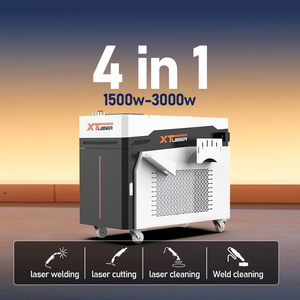
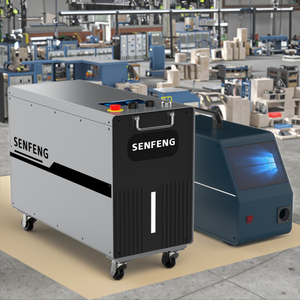
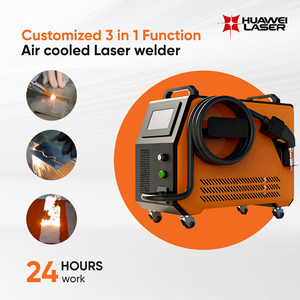
2. Adoption of Multi-Function 4-in-1 Compact Units: Maintenance, repair, and overhaul (MRO) facilities are moving away from single-purpose machines. Compact 4-in-1 units (Handheld Laser Welding, Cleaning, Cutting, and Cladding) operating at 1500W to 3000W fiber laser powers are replacing traditional TIG/MIG welding rigs and chemical solvent bath lines thanks to lower power consumption and minimal footprint.
3. Advanced Powder-to-Wire Transitions: While powder-based coaxial cladding delivers superior alloy composition control, wire-feed laser cladding is gaining traction for high-volume marine crankshaft and structural steel repairs due to 98%+ deposition efficiency and zero powder-waste handling requirements.
4. Digital Twin & Smart Diagnostics (Industry 4.0): Export buyers now require OPC-UA and MES connectivity. Modern Chinese laser platforms feature remote optical diagnostic sensors, real-time power meter tracking, and predictive maintenance alerts for laser diode module health.
Founded in 1991, Scantech Laser has spent over three decades establishing in-house R&D and manufacturing capabilities for heavy industrial laser platforms. Differing from third-party assemblers, our engineering team manages the complete product lifecycle: from optical head design and CNC motion control tuning to custom enclosure fabrication and metallurgical sample validation.
Before issuing any equipment quote, our applications lab conducts rigorous sample trials on your specific alloys. We analyze cross-sectional metallography, verify micro-hardness gradients (Vickers/Rockwell), and perform tensile pull-tests to establish precise process parameters.
We build Special Purpose Machines (SPMs) featuring custom gantry systems, heavy-duty lathe turners, integrated vision alignment, and automated loading/unloading robotics tailored to seamless factory floor integration.
Common questions answered by our lead application engineers to simplify buyer technical evaluations:
We integrate premier global and tier-1 fiber laser sources including IPG Photonics, Raycus, and MAX Photonics depending on buyer specification, beam quality (M²) requirements, and localized service preferences.
Powder feeding offers broader alloy customization (including carbide composites like WC-Co) and is ideal for complex geometries. Wire feeding offers near-100% material utilization and zero workplace dust, making it optimal for straightforward cylindrical cladding or thick layer repairs.
Standard 4-in-1 handheld units ship within 7–10 working days. Custom robotic cladding systems follow a 4- to 8-week engineering build cycle including Factory Acceptance Testing (FAT) with sample trial sign-offs prior to international freight dispatch.
Yes. By switching the optical nozzle tip and adjusting wobble frequency settings, handheld 2000W–3000W units can deposit specialized wire feeds to perform localized micro-cladding and mold repair without severe thermal distortion.
3000W systems typically require 3-Phase 380V/50Hz (or 220V/60Hz optional) electrical hookups and an integrated dual-temperature industrial water chiller to maintain optical head and laser source thermal stability within ±0.5°C.
All export deliveries include comprehensive Operation & Maintenance Manuals, CE Compliance Certificates, Electrical Schematics, Optical Path Calibration Records, and IQ/OQ validation templates for regulated industrial installations.
Contact our laser application engineering desk today for a detailed feasibility review, material sample trial report, or custom machine quotation tailored to your production throughput requirements.
Contact Us