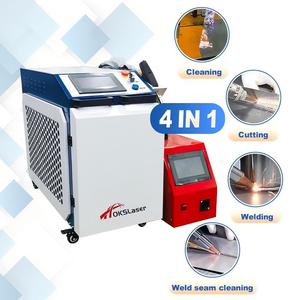
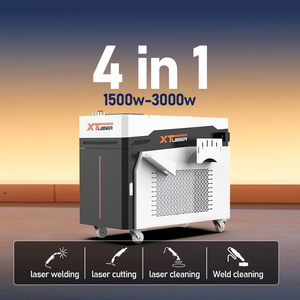
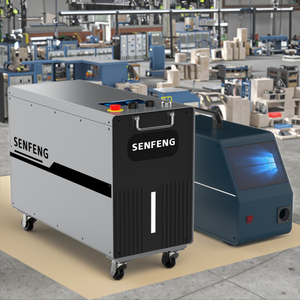
High-precision 4-in-1 laser platforms designed for heavy-duty metal fabrication, pipe joinery, rust stripping, and structural steel maintenance.
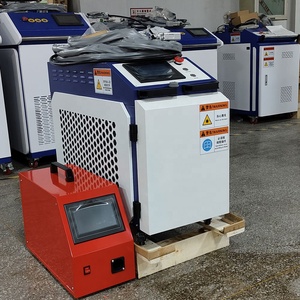
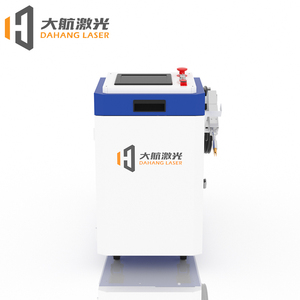
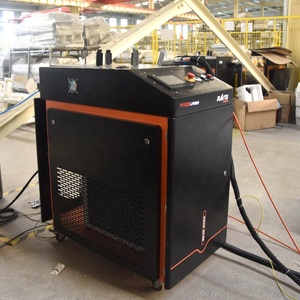
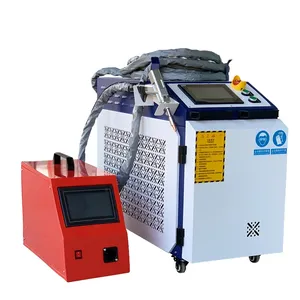
Every pipe laser and handheld system leaves our assembly line thoroughly audited for EN 60825-1 laser safety standards, complete with dual-channel interlocks and emergency stop circuitry.
Backed by 35 years of industrial engineering heritage (Scantech Laser technology line), we design optical delivery systems, galvo wobble modules, and heavy-duty pipe feed automation systems in-house.
We support overseas OEM partners with pre-configured EU/US stock, complete export-ready wooden crating, fast spare parts dispatch, and 24/7 cloud-enabled diagnostic troubleshooting.
The manufacturing landscape for structural metal pipes, automotive tubular assemblies, heating and plumbing manifolds, and heavy machinery chassis is undergoing a fundamental shift. Traditional joint preparation methods—such as plasma cutting, mechanical saw cutting, TIG (Tungsten Inert Gas) welding, and manual grinding—are increasingly recognized as throughput bottlenecks that consume excessive energy, generate heavy post-weld distortion, and demand scarce skilled labor. Modern production managers are turning toward CE-certified high-power fiber pipe lasers and multi-function 4-in-1 handheld processing units to achieve operational agility and superior metallurgical integrity.
Fiber lasers operating in the 1064 nm to 1080 nm near-infrared spectrum offer unprecedented optical absorption efficiency when interacting with ferrous and non-ferrous structural alloys. Unlike traditional arc welding, which inputs massive heat over broad zones, a high-power fiber laser delivers energy density exceeding 106 W/cm2 at the focal point. This creates a highly localized "keyhole" effect during welding and rapid ablation during cleaning.
When executing pipe and tubular profile joining, the narrow Heat-Affected Zone (HAZ) prevents micro-structural phase degradation in high-strength carbon steels (e.g., Q235, Q355) and austenitic stainless steels (304L, 316L). The resulting welds demonstrate refined dendritic grain structures, minimal tensile stress accumulation, and pull-test ratings that consistently equal or exceed base metal tensile strengths.
To quantify the financial and operational impact of transitioning to a certified industrial pipe laser platform, consider the following empirical benchmark comparison compiled by Scantech Laser's Application Engineering Center:
| Parameter | Handheld 4-in-1 Fiber Laser | Traditional TIG / MIG Welding | Plasma / Mechanical Sawing |
|---|---|---|---|
| Processing Speed | 3x to 10x faster welding; instant cleaning | Baseline (1x) - Slow multi-pass | Moderate - Requires manual deburring |
| Heat-Affected Zone (HAZ) | Microscopic (< 0.3 mm width) | Broad (3.0 mm - 8.0 mm zone) | Extensive thermal degradation |
| Post-Process Finishing | Zero to minimal (Integrated cleaning) | Heavy grinding & pickling required | Edge beveling & deburring required |
| Operator Skill Requirement | Low (1-2 days basic training) | Very High (Certified welder needed) | Moderate operator skill |
| Consumable Expenses | Nozzles, Protective Lenses, Gas | Electrodes, Wire, Flux, Shield Gas | Plasma Tips, Saw Blades, Coolant |
| CE Laser Safety Level | Class 4 (Handheld) / Class 1 (Automated) | N/A (Standard UV Arc Safety) | N/A (Mechanical & Noise Hazards) |
Selecting a factory supplier for industrial fiber laser equipment requires stringent due diligence beyond basic machine cost. Buyers must evaluate safety certifications, component origins, optical build quality, and thermal dissipation architectures to guarantee long-term operational uptime:
As the international manufacturing sector transitions toward Industry 4.0 and decarbonization, several macro procurement trends are shaping the laser equipment industry:
Trend 1: Migration toward High-Efficiency Air-Cooled Handheld Systems
While 2000W and 3000W heavy-duty applications rely on water chillers, advances in semiconductor pump diodes have enabled ultra-compact 800W–1200W air-cooled handheld units. These machines eliminate liquid coolants, reduce total unit weight by over 50%, and fit comfortably into field service vans for on-site pipe installation.
Trend 2: Integrated Multi-Axis Robotic Laser Cells & MES Connectivity
Pipe manufacturers are increasingly combining handheld laser heads with collaborative robots (cobots) or 6-axis industrial arms. Integrated Ethernet/IP, Modbus, and OPC UA protocols allow central MES platforms to monitor real-time laser energy output, gas pressure, and weld seam quality tracking for complete lot traceability.
Trend 3: Expansion of Handheld 4-in-1 & 5-in-1 Multi-Tasking Platforms
Procurement departments prefer versatile capital assets. Systems that seamlessly alternate between welding, rust stripping, seam prep, cutting, and weld bead cleaning via quick-change nozzle tips provide significantly higher Return on Investment (ROI) compared to single-function machines.
Answers to common operational, compliance, and purchasing inquiries encountered by B2B buyers.
When importing laser machinery into European or international markets, verify that the equipment complies with the CE Machinery Directive (2006/42/EC), Low Voltage Directive (2014/35/EU), and Electromagnetic Compatibility (EMC) Directive (2014/30/EU). Crucially for laser devices, compliance with EN 60825-1 (Safety of laser products) and EN 11553-1 (Safety of machinery - Laser processing machines) must be documented by a qualified Test Report and Declaration of Conformity.
Maximum single-pass penetration thickness depends on laser wattage and material type. A 1500W fiber welder effectively joins stainless steel up to 4.0mm and carbon steel up to 4.0mm. A 2000W system penetrates up to 6.0mm stainless/carbon steel and 5.0mm aluminum. A 3000W system achieves single-pass welds on up to 8.0mm steel and 6.0mm aluminum or brass pipes. With wire feeding, multi-pass techniques can join thicker structural pipe walls.
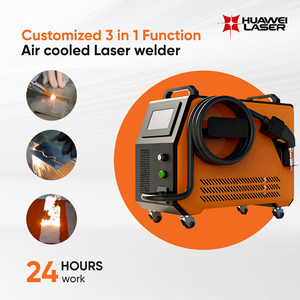
Water-cooled systems utilize a dual-loop refrigerated chiller to maintain stable temperatures across both the fiber source and optical head, enabling continuous 24/7 industrial production at higher wattages (1500W to 3000W). Air-cooled systems use high-efficiency heat sinks and fans; they are lighter, highly portable, and require no liquid maintenance, making them ideal for sub-1200W mobile field repairs or light fabrication workshops.
For stainless steel and titanium pipes, high-purity Nitrogen (N2) or Argon (Ar) is required to prevent oxidation and maintain corrosion resistance. Argon is strongly recommended for aluminum alloys. For carbon steel pipe joining where slight surface discoloration is acceptable, Nitrogen or Argon remains standard. When operating in laser cleaning mode, dry oil-free compressed air can be used as an economical blowing gas to purge vaporized dust and debris.
Maintenance is minimal compared to mechanical tooling. Daily tasks involve inspecting and cleaning the protective lens (cover slide) in the laser head using isopropyl alcohol and replacing copper nozzle tips if spatter accumulates. Monthly maintenance includes inspecting water chiller coolant levels (distilled water replacement every 3 months), cleaning air dust filters, and checking safety interlock cable integrity.
Standard CE-certified handheld laser welders ship within 7–12 business days from our plant. Machines are vacuum-sealed with anti-rust desiccant and packed in ISPM-15 compliant export wooden cases. Every delivery includes comprehensive operating manuals, video tutorials, factory calibration certificates, and 24/7 remote video support for initial commissioning and operator training.
Need customized pipe laser automation, specialized optics, or direct factory wholesale pricing? Our engineering team provides sample material trial testing, metallographic weld reports, and tailored OEM configurations.
Send an Inquiry