Engineered with high-damage-threshold optics, optimized focal lengths, and real-time thermal monitoring for global manufacturing environments.
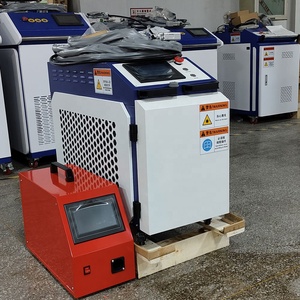
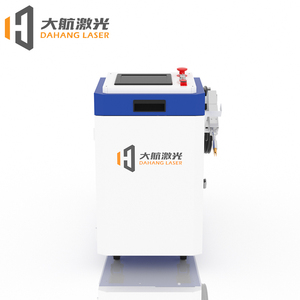
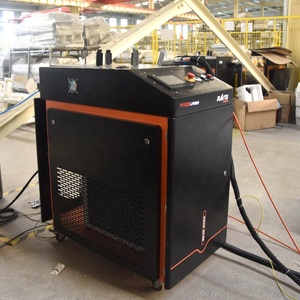
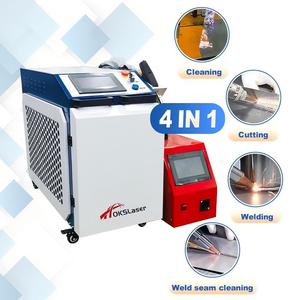
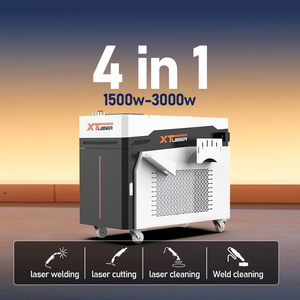
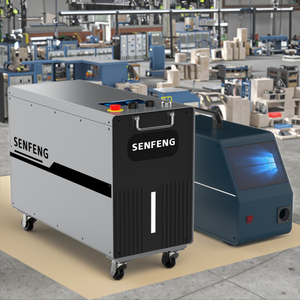
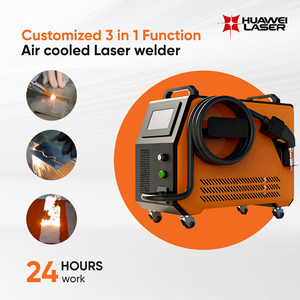
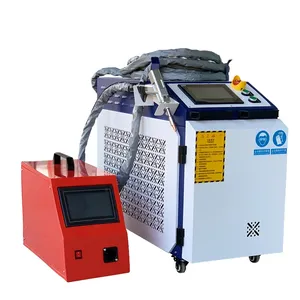
In modern high-power fiber laser processing—ranging from 1000W to upwards of 30kW—the optical beam delivery system serves as the primary determinant of process stability, weld penetration consistency, cutting edge roughness, and overall operational longevity. As global manufacturers shift toward automated production lines and multi-functional 4-in-1 handheld processing heads (welding, cutting, cleaning, and soldering), the requirement for CE-certified, high-damage-threshold laser optics has transitioned from a preferred specification to an absolute industrial imperative.
Precision optical components utilized in fiber laser machines must operate without thermal-induced distortion. When monochromatic light at 1064 nm (or harmonic wavelengths such as 532 nm green and 355 nm UV) traverses collimating and focusing optical elements, localized absorption of optical energy elevates lens body temperature. This phenomenon—known as thermal lensing—causes localized refractive index shifts and surface curvature expansion, resulting in focal point drift along the Z-axis. For precision manufacturing, even a 0.5 mm focal shift can induce spatter during welding, incomplete joint penetration in automotive alloys, or heavy dross formation during high-speed metal cutting.
Core Technical Takeaway: CE certification under European Directive 2006/42/EC (Machinery Directive) and IEC/EN 60825-1 (Laser Safety) requires optical assemblies to demonstrate stringent structural integrity, electrical ground continuity, optical radiation enclosure security, and certified anti-reflective (AR) dielectric coatings that maintain absolute optical transmittance above 99.8% under continuous thermal stress.
High-power industrial optical heads designed and exported by certified suppliers rely exclusively on synthetic fused silica (JGD1 / Suprasil grade) rather than conventional K9 or BK7 glass. Fused silica offers an exceptionally low thermal expansion coefficient (5.5 × 10⁻⁷ /°C) combined with a high thermal damage threshold (> 15 J/cm² for 10ns pulses at 1064nm). This ensures that beam quality parameters ($M^2 \le 1.1$) are preserved throughout extended multishift production runs.
Doublet and triplet air-spaced lens designs engineered to transform divergent fiber laser output into a parallel beam with zero spherical aberration.
Telecentric and F-Theta scan lenses coated with ion-assisted deposition (IAD) dielectric layers to guarantee focal spot diameters down to 25 microns.
Sacrificial protective windows designed with dual-sided V-coating to shield expensive internal optics from metal debris, spatter, and process fumes.
| Optical Component Type | Substrate Material | Wavelength Range | Damage Threshold | CE & ISO Compliance |
|---|---|---|---|---|
| High-Power Collimator Lens | Synthetic Fused Silica | 1064 nm ± 20 nm | > 20 MW/cm² (CW) | EN 60825-1, RoHS Compliant |
| Dual-Axis Galvo Wobble Mirror | CVD Silicon Carbide (SiC) | 1064 nm / 532 nm | > 15 MW/cm² (CW) | 2014/30/EU (EMC Directive) |
| F-Theta Laser Scan Lens | High-Purity Optical Quartz | 355 nm / 532 nm / 1064 nm | > 10 J/cm² (Pulsed) | CE Machinery Directive 2006/42/EC |
| Protective Protective Window | JGD1 Fused Quartz | 1064 nm V-Coated | > 10 MW/cm² (CW) | REACH, CE Certified |
Rooted in over 35 years of industrial laser machine engineering (established in 1991), our manufacturing facilities incorporate state-of-the-art optical fabrication, cleanroom assembly lines, and rigorous quality assurance protocols. Every laser system, optic component, and handheld process torch exported to global markets undergoes comprehensive multi-stage testing prior to dispatch.
All sensitive beam-expansion optics, galvo scanners, and sealed optical cavities are aligned and mounted in ISO Class 7 (Class 10,000) cleanroom environments to prevent particulate contamination.
Integrated infrared thermal feedback modules continuously regulate process temperature during laser hardening, cladding, and deep-penetration welding to eliminate part overheating.
Patented optical isolation pathways divert reflected laser radiation away from fiber feed cables when processing highly reflective metals such as pure copper, brass, and aluminum alloys.
Our complete portfolio carries authentic CE certification, supported by complete Technical Construction Files (TCF), third-party EMI testing, and interlocked safety enclosure designs.
Clients are invited to send sample substrates to our in-house optical engineering lab for micro-sectioning, hardness testing, tensile pull trials, and metallurgical validation prior to ordering.
With direct stocking hubs across the EU, North America, and Asia, standard optical consumables and multi-axis processing machines are dispatched with expedited lead times.
The rapid evolution of e-mobility, semiconductor manufacturing, and aerospace component fabrication is fundamentally altering the procurement requirements for laser optical components and industrial machine tools. Sourcing directors and optics buyers must navigate several macro technological shifts over the coming decade:
Traditional single-mode Gaussian beam profiles are increasingly being augmented by Adjustable Mode Beam (AMB) technology. By utilizing dual-core fiber delivery cables coupled with specialized optical heads, laser energy is split between a central core beam and an outer ring beam. Sourcing optics compatible with AMB sources requires specialized dual-zone anti-reflective coatings and thermal-management systems capable of handling non-uniform energy distribution during zero-spatter EV battery busbar welding.
Procurement trends show a dramatic increase in demand for smart optical heads incorporating coaxial vision cameras and pyrometric weld depth sensors. Modern CE-certified laser welding heads feature dichroic beam splitters that allow visible light (400–700 nm) to pass to high-resolution CMOS sensors while reflecting 1064 nm process radiation. This enables automated seam tracking and AI-driven defect detection without sacrificing optical throughput.
Picosecond and femtosecond lasers (operating in the sub-picosecond domain) eliminate heat-affected zones (HAZ) by driving cold ablation. Sourcing optical components for ultrafast applications demands extremely low Group Delay Dispersion (GDD) mirrors and fused silica optics with dielectric coatings optimized to prevent pulse broadening under gigawatt peak power conditions.
When evaluating global laser optics suppliers and system exporters, purchasing teams often focus heavily on initial capital expenditure (CAPEX) while underestimating operational expenditure (OPEX) driven by optical component degradation, machine downtime, and consumable replacement frequencies. A comprehensive Total Cost of Ownership (TCO) evaluation framework should prioritize the following criteria:
TCO Formula: $TCO = CAPEX + (Consumable\ Optics\ Cost \times Replacement\ Rate) + Downtime\ Losses - Energy\ Efficiency\ Savings$
By procuring laser machines equipped with high-grade JGD1 quartz protective windows and optimized water-cooling internal galleries, factory managers can extend protective window operational lifespans by up to 300%, reducing annualized optical replacement costs significantly.
Here are clear engineering answers to the common technical and regulatory questions presented by global procurement managers, system integrators, and safety compliance officers:
Every shipment includes a comprehensive Declaration of Conformity (DoC) certifying compliance with the Low Voltage Directive (2014/35/EU), EMC Directive (2014/30/EU), and Laser Safety Standard IEC/EN 60825-1. Technical construction binders provide optical transmittance test curves, AR coating spectrophotometer reports, water-pressure test certificates for cooled heads, and mechanical dimension schematics.
Air-cooled laser torches and optical lenses are suitable for lower power applications (up to 1200W CW) or short-duty-cycle operations. For continuous industrial production at power levels of 1500W, 2000W, 3000W, and above, active water cooling through internal brass/aluminum flow channels surrounding the collimating and focusing optics is mandatory to prevent thermal lensing and focal drift.
Under standard clean sheet metal processing conditions, protective windows should be visually inspected at the start of each shift using a focused LED inspection light. Cleanliness must be maintained using optical-grade isopropyl alcohol (>99.9% purity) and lint-free wipes. Windows exhibiting pitted burn spots, coating discoloration, or surface scratches must be replaced immediately to prevent laser energy absorption that could destroy internal focusing lenses.
Yes. Our handheld welding, cleaning, and cutting torches feature standardized mechanical mounting flanges and quick-disconnect optical connectors (QBH/QCS standard). They interface directly with 6-axis industrial robots (e.g., Fanuc, ABB, KUKA, Yaskawa) via digital I/O or industrial Ethernet protocols (Profinet, EtherCAT) for automated manufacturing lines.
Highly reflective non-ferrous metals bounce a significant percentage of 1064 nm light back along the optical beam path. Our optical heads incorporate quarter-wave polarizers and 45-degree dichroic isolation mirrors that physically defect reverse-propagating specular reflections into an internal water-cooled beam dump, protecting the fiber delivery cable end-face from catastrophic damage.
Standard replacement optics, handheld welding torches, and consumable kits ship within 48 hours from regional warehouse stocks. Complete laser systems ship within 15 to 25 business days following Factory Acceptance Testing (FAT). All optical components are vacuum-sealed in moisture-proof anti-static cleanroom pouches and packaged in ISPM-15 certified wooden export crates for safe sea or air freight transport.
Request an optical engineering review, obtain direct factory export quotations, or schedule sample testing for your specific industrial applications.
Contact Us