CE-certified thermal management units engineered for continuous industrial duty, delivering precise temperature stability from ±0.1°C to ±0.3°C across global laser processing setups.
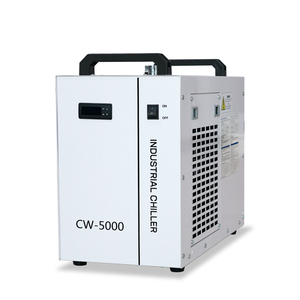
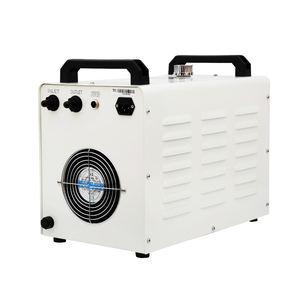
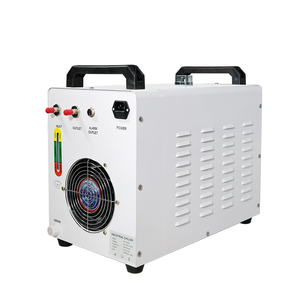
Industrial laser systems—spanning high-power fiber cutting heads, glass-tube CO2 engravers, ultraviolet (UV) cold marking sources, and ultrafast picosecond/femtosecond oscillators—depend fundamentally on strict thermal equilibrium. A laser source converts electrical energy into coherent optical radiation, but up to 70% of the input power is dissipated as waste heat within the gain medium, optical cavity, and pump diodes. Uncontrolled temperature fluctuations induce thermal lensing, beam mode distortion, center wavelength drift, and catastrophic optical damage (COD). As an established CE Certified Laser Chiller Exporter, our manufacturing protocols integrate advanced fluid dynamics, micro-PID microprocessors, and eco-compliant refrigeration circuits to guarantee consistent optical output under demanding multi-shift industrial cycles.
Modern high-power fiber lasers (1kW to 30kW+) require two distinct thermal zones to operate efficiently. The main optical fiber generator operates optimally at 25°C to 28°C to prevent moisture condensation on internal optical components. Conversely, the QBH delivery head, optics lenses, and galvo scanner require lower temperatures or isolated fluid loops to prevent localized thermal expansion that shifts the focal plane (focal shift).
Our dual-circuit CE certified chillers integrate two independent water loops driven by a single high-efficiency compressor assembly:
| Laser Source Type | Typical Heat Load Ratio | Recommended Chiller Series | Temperature Precision | Critical Risk Controlled |
|---|---|---|---|---|
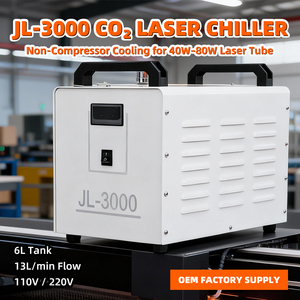
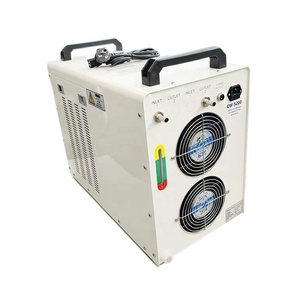
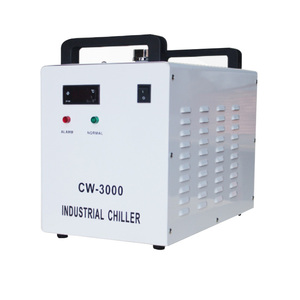
| CO2 Glass / Metal Tube (40W - 150W) | 65% Thermal / 35% Optical | CW-3000 / CW-5000 / CW-5200 | ±0.3°C to Radiator Passive | Glass Tube Thermal Cracking & Output Decay |
| High-Power Fiber (1kW - 12kW) | 70% Thermal / 30% Optical | Dual-Temp Recirculating Series | ±0.3°C to ±0.5°C | Diode Wavelength Drift & Focal Shift |
| UV Cold Laser (3W - 15W) | 80% Thermal / 20% Optical | Ultra-Precise CWUL Series | ±0.1°C | Nonlinear Crystal (LBO/BBO) Efficiency Collapse |
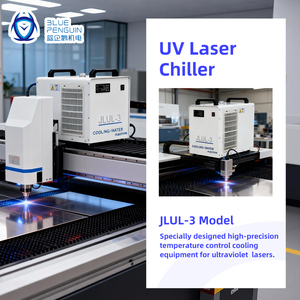
| Ultrafast (Pico / Femto) | 85% Thermal / 15% Optical | JLUL-3 / High-Precision Series | ±0.1°C Active PID | Pulse-Width Instability & Mode Locking Loss |
Exporting industrial thermal machinery into European, North American, and Asian markets requires strict compliance with international machine safety standards. Every industrial chiller exported from our facilities undergoes rigorous certification under the following European Directives:
LVD Directive 2014/35/EU (EN 60204-1): Electrical equipment of machines is engineered with IP54-rated control enclosures, emergency stop isolation circuits, phase-sequence protection relays, and heavy-duty grounding terminals to withstand industrial grid surge voltages.
EMC Directive 2014/30/EU (EN 61000-6-2 / EN 61000-6-4): High-power switching in laser equipment produces electromagnetic interference (EMI). Our chillers incorporate shielded sensor wiring, toroidal line filters, and isolated PID controller power supplies to prevent false alarm triggers caused by RF noise from nearby fiber laser power sources or plasma cutting arcs.
Pressure Equipment Directive (PED 2014/68/EU): Refrigerant pressure vessels, copper heat exchangers, and hermetic scroll compressors are factory hydrostatic pressure-tested up to 4.2 MPa to ensure zero refrigerant leakage over years of continuous operation.
Selecting the correct chiller capacity involves evaluating the total electrical efficiency of the laser source, ambient operating temperature, and duty cycle. Sourcing officers and automation integrators should apply the standard thermal load formula:
For example, a 3kW Fiber Laser with a 33% electro-optical efficiency generating waste heat requires: Q = 3.0 kW × [(1 - 0.33) / 0.33] × 1.25 = 7.61 kW of active refrigeration capacity. This mandates a minimum 8kW-class dual-circuit industrial water chiller.
Built with 35+ years of industrial laser system manufacturing expertise, incorporating premium components, stringent QA protocols, and responsive global customer service.
Pre-configured for multi-voltage grids (220V/50Hz, 220V/60Hz, 380V/60Hz, 110V/60Hz) with full CE, RoHS, and REACH documentation for swift customs clearance worldwide.
Intelligent digital controllers offer dual temperature modes (Constant Temp & Smart Mode) with real-time temperature telemetry, RS-485 Modbus connectivity, and diagnostic reporting.
Integrated protections against water flow interruption, high/low temperature limit breaches, compressor overcurrent, and fluid reservoir depletion safeguard your high-value laser source.
Global environmental regulations, including the EU F-Gas Regulation (EU 517/2014) and US EPA SNAP program, are phasing out high Global Warming Potential (GWP) refrigerants like R-410A and R-134a. Next-generation laser chillers are moving rapidly toward eco-friendly alternatives such as R-32 (GWP 675) and natural hydrocarbon refrigerants like R-290 (Propane, GWP 3).
Procurement Strategy: When placing long-term export orders for 2025–2030 machine integration, confirm that your supplier offers certified low-GWP refrigerant options to meet future environmental audit standards.
Modern automated smart factories require full digital integration between laser cutting/welding cells and auxiliary thermal units. Standalone chillers are being replaced by smart chillers equipped with RS-485 Modbus protocol, CANopen, or Ethernet/IP communication.
Procurement Strategy: Ensure your specified chiller supports real-time parameter feedback (flow rates, inlet/outlet temp, compressor pressure) to allow predictive maintenance and prevent unexpected line shutdowns.
From engineering R&D to final factory acceptance testing (FAT), every chiller unit undergoes strict quality validation to handle harsh industrial shop floor conditions.
Before packaging and container loading, each chiller runs continuously under simulated 100% full-load thermal conditions in a 45°C environmental test chamber for 48 hours to verify COP performance, pump pressure, and vibration isolation.
We customize pump head lift (30m to 70m), water reservoir capacities, stainless steel heat exchangers (304/316L), deionized resin filters, and custom casing paint colors to match your machine brand identity.
Clear, engineer-backed answers to essential questions asked by international buyers and laser equipment integrators.
Consult with our laser thermal specialists to select the exact CE-certified chiller model, flow rate, and cooling capacity for your application.
Get Catalog