China has a wide range of suppliers offering Sheet Metal Fiber Laser Cutting machines, from established equipment manufacturers to trading companies. Their products may look similar in online catalogs, yet differ in laser source, cutting head, control system, bed construction, and after-sales support. A machine’s advertised power alone does not show how it will perform on your parts.
Buyers should compare suppliers against real production needs. Ask for a sample cut using your material and typical thickness, then inspect edge quality, burrs, and cutting consistency. Request clear specifications for the laser source, working area, positioning accuracy, extraction system, and included software. Cutting results also depend on material, thickness, assist gas, and settings. There is no single setting for every job.
Service matters. Confirm what the warranty covers, how spare parts are supplied, and whether technicians can provide remote or on-site support. Ask for references from customers with comparable applications, and verify technical claims through documents or demonstrations. A polished showroom is useful, but it is not proof of long-term reliability.
Price still counts. So does downtime. A lower initial quote may exclude installation, training, or essential options, while a higher quote may include them. Compare itemized proposals rather than headline prices. Some details are easy to overlook, and supplier claims can be difficult to assess from a distance. That is worth admitting. The strongest shortlist balances verified machine performance, practical support, transparent costs, and a supplier’s willingness to answer specific questions.
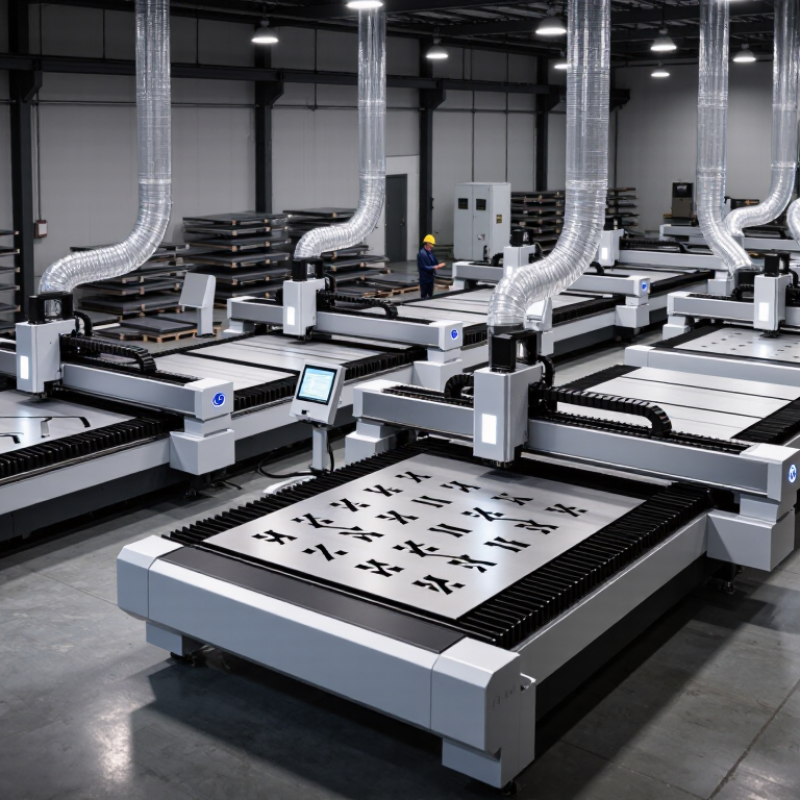
Sheet metal fiber laser cutting uses a concentrated beam to melt or vaporize metal along a programmed path. A fiber source produces light near 1.06 micrometers, which optics focus into a small, intense spot. Assist gas pushes molten material through the cut, while a CNC system controls the cutting head and sheet movement. The result can be narrow kerfs, detailed profiles, and little mechanical force on the workpiece. It is not contact-free in every practical sense: heat still affects the cut edge.
The process suits materials such as carbon steel, stainless steel, and aluminum, but results depend on thickness, power, focus, and gas settings. A clean-looking edge takes tuning. Grand View Research’s Laser Cutting Machines Market Size report estimated the global market at USD 5.87 billion in 2023, reflecting broad industrial adoption rather than a guarantee of performance in every workshop. For buyers comparing Chinese suppliers, ask for sample cuts in your actual material and thickness. Check burrs, dimensional accuracy, and consistency across repeated parts—not just the fastest advertised cutting speed. A polished sample is useful, but production is the real test.
China’s sheet metal fiber laser cutting market is not one uniform group of factories. It includes equipment manufacturers, contract cutting shops, system integrators, and export-focused trading companies. Their roles overlap, which can make supplier labels confusing. Some factories build machine beds and assemble cutting systems; others source key modules and focus on commissioning. That difference matters.
Many suppliers cluster near metalworking, electrical component, and logistics networks. A company may quote a machine, then rely on local partners for installation, training, or maintenance. Ask who handles each step. Review sample cuts using your material, thickness, and drawing—not only polished demonstration footage. Check edge dross, hole roundness, repeatability, and how clearly the team explains operating settings. Small details tell a lot.
Export-oriented suppliers may provide English documentation and shipping coordination, while service depth varies by destination. Compare stated power, working area, positioning accuracy, and supported file formats with your production needs. Request a written scope for installation, operator training, warranty coverage, and spare-parts response times. These items are less visible than a laser source rating, yet they affect production uptime. Prices can look similar on paper. Buyers may underestimate the handoff after delivery.
Evaluating Chinese sheet metal fiber laser cutting suppliers requires more than comparing machine power and quoted prices. Grand View Research estimated the global laser cutting machine market at USD 6.7 billion in 2023 and projected a 7.1% compound annual growth rate through 2030. That growth makes supplier claims easier to find, but not easier to verify. Ask for cutting samples using your own material, thickness, and part geometry. Inspect edge dross, heat discoloration, dimensional tolerance, and consistency across repeated cuts. Numbers need context.
Factory automation is another useful signal, not a guarantee of cutting expertise. The International Federation of Robotics reported that China installed 276,288 industrial robots in 2023, around 51% of global installations. Ask whether the supplier can show process records, equipment calibration logs, and a documented inspection routine for finished parts. A live factory audit can reveal how operators handle nozzle changes, lens cleaning, and material traceability. Ask for evidence.
Check the quotation against practical details: laser source configuration, cutting head, chiller capacity, extraction system, software support, and warranty exclusions. Request a written acceptance test covering cut quality, positioning repeatability, and delivery of spare parts. Compare response times across several technical questions; vague answers can indicate future service friction. I would still treat a polished demonstration cautiously: one clean sample does not prove stable production over a full shift. Ask for references from customers cutting similar gauges and alloys, then verify what support they actually received.
Chinese sheet-metal fiber-laser suppliers range from equipment builders to factories offering turnkey lines. Their capabilities may include sheet loading, nesting software, cutting, and part unloading. Power, bed size, and automation vary widely, so compare specifications against your actual materials and shift volumes. Request a test cut on your own sheet, then inspect edge dross, hole accuracy, and heat marks. A polished demo is not production proof.
Demand is supported by China’s manufacturing scale: the World Steel Association reported 1,019.1 million tonnes of Chinese crude steel production in 2023. Fortune Business Insights valued the global laser-cutting machine market at US$6.21 billion in 2023 and projected US$10.22 billion by 2032. These figures indicate a sizable market, not the performance of any individual supplier. Ask for documented cutting tolerances, service response times, spare-parts availability, and warranty terms. Check them carefully. A low purchase price can hide costly downtime, and published specifications do not always reflect daily factory conditions.
Indicative maximum mild-steel cutting thickness across common fiber laser power classes
Higher laser power generally enables cutting thicker sheet metal. The values shown are representative capability benchmarks, not guaranteed specifications; actual results depend on the machine configuration, cutting gas, material grade, and required edge quality.
Choosing a sheet metal fiber laser supplier starts with your parts, not a machine brochure. Share a representative drawing, material grades, thickness range, tolerances, and monthly volume. Request sample cuts in the materials you use. Inspect edge taper, burrs, heat discoloration, and hole consistency against your own measurement plan. Quotes prove little. Ask for first-article inspection records and repeatability results from actual production runs.
Deloitte’s 2024 Smart Manufacturing and Operations Survey found that 86% of manufacturers see smart manufacturing as a competitiveness driver within five years. That makes digital job tracking, nesting records, and revision control practical supplier checks. Ask how operators confirm the correct drawing revision at the cutting table. Also check how the supplier reports scrap, manages urgent changes, and records downtime. A polished demonstration cannot show every production problem.
Match capacity to your real order pattern. For mixed, low-volume work, responsive scheduling may matter more than maximum cutting speed. For steady batches, review recent delivery records and available shift capacity. If possible, visit the shop and watch a job move from material storage to inspection. It takes time. A supplier who discusses limitations plainly may be more dependable than one promising perfect results on every part.
Supplier evaluation scorecard. The weights below are suggested priorities, not measured supplier ratings. Confirm every capability against your materials, part drawings, and production volume.
| Evaluation dimension | Suggested weight | What to verify | Useful evidence to request | Production fit |
|---|---|---|---|---|
| Material and thickness capability | 20% | Confirm the machine can process your actual grades and thicknesses of carbon steel, stainless steel, aluminum, or other specified sheet materials. Cutting limits vary with material, laser power, assist gas, and required edge quality. | A written material/thickness capability chart, plus sample cuts using your material and requested settings. | High priority when your product mix includes multiple materials or thicknesses. |
| Cut quality and dimensional results | 15% | Assess dimensional accuracy, kerf, burr, dross, edge condition, and repeatability against your drawing tolerances. Results depend on the machine, material, setup, and process parameters. | Measured sample parts, inspection results, and a cutting test based on representative production geometry. | Essential for close-tolerance parts and downstream welding or assembly. |
| Machine configuration and capacity | 15% | Check laser output, working area, table arrangement, loading method, software compatibility, electrical requirements, and available floor space against the factory layout and job mix. | A detailed technical specification, equipment layout, utility requirements, and configuration list for the quoted machine. | Match capacity to sheet size, part nesting, shifts, and expected workload. |
| Service, maintenance, and spare parts | 15% | Clarify support hours, remote troubleshooting, technician availability, warranty coverage, preventive maintenance, and the availability of consumables and replacement parts in your region. | Written service terms, response-time commitments, recommended spare-parts list, and escalation procedure. | Especially important for continuous production or facilities without in-house laser technicians. |
| Application engineering and training | 10% | Determine whether the supplier can assist with process setup, nesting, operator training, commissioning, and troubleshooting for your specific production requirements. | A training plan, commissioning scope, sample process documentation, and named support roles. | Valuable when introducing fiber laser cutting or changing materials and workflows. |
| Safety and compliance documentation | 10% | Review enclosure and interlock design, operating instructions, risk information, electrical documentation, and applicable laser-safety requirements for the intended installation market. | Safety documentation and conformity records relevant to the destination country. IEC 60825-1 is an international standard addressing laser product safety classification and requirements. | Required for safe installation, operator training, and regulatory review. |
| Delivery, installation, and commissioning | 5% | Confirm the delivery schedule, packaging, shipping responsibilities, installation scope, site preparation, acceptance testing, and the responsibilities of both parties. | A project schedule, delivery terms, installation checklist, and written acceptance criteria. | Important when coordinating factory upgrades or a fixed production launch date. |
| Total cost of ownership | 10% | Compare the complete purchase and operating costs, including tooling and consumables, assist gas, energy, maintenance, training, shipping, installation, and expected downtime. | An itemized quotation and clearly stated exclusions, warranty costs, maintenance assumptions, and payment milestones. | Compare lifecycle value rather than purchase price alone. |
| Total suggested weighting | 100% | Score each shortlisted supplier against the same production requirements and evidence set. Run a sample cutting test before final selection whenever practical. | ||
The market includes machine manufacturers, contract cutting shops, system integrators, and export-focused trading companies. Their roles can overlap.
Ask for a test cut using your material, thickness, and drawing. Inspect edge dross, hole roundness, heat marks, and repeatability. Small flaws matter.
Ask to see calibration logs, process records, and finished-part inspections. Watch how operators change nozzles, clean lenses, and track materials.
Check the laser source, cutting head, working area, chiller, extraction system, positioning accuracy, and supported file formats. Get the details in writing.
Request written terms for installation, training, warranty coverage, and spare-parts response times. Ask who handles service in your destination. Vague answers deserve a pause.
No. Automation can be a useful signal, but it does not guarantee cut quality. Ask for evidence from actual production.
Not by themselves. A clean demonstration cut may not reflect a full production shift. I might still be too cautious, but I would verify it.
Installation, training, spare parts, and service delays can affect uptime and total costs. Compare the complete written scope, not just the machine price.
This article explains how Sheet Metal Fiber Laser Cutting uses a focused laser beam to cut metal with accuracy, speed, and minimal material waste. It outlines the structure of China’s supplier market, from specialized equipment manufacturers to integrated providers offering machines, technical support, and production solutions. Rather than treating suppliers as interchangeable, the article considers how their capabilities, service models, and areas of expertise can differ.
Readers will find practical criteria for evaluating suppliers, including cutting performance, machine configuration, quality control, customization options, delivery capacity, and after-sales support. The article also compares common supplier strengths without focusing on specific brands, helping buyers understand what to ask during an evaluation. Finally, it offers a straightforward framework for matching a supplier to production volume, material types, precision requirements, budget, and long-term service needs. This approach helps businesses make a more informed choice for their manufacturing operations.