0%

Choosing the right Industrial Laser Cutting Machine can shape production quality, operating costs, and delivery performance. Global buyers often compare laser power, cutting speed, automation, software compatibility, and after-sales support. However, a machine that performs well in one factory may disappoint in another. Material thickness, workshop temperature, electricity stability, and operator experience all influence results.

This guide examines ten leading industrial laser cutting machines for international purchasing decisions. It considers fiber laser sources, working-table sizes, positioning accuracy, maintenance access, safety systems, and energy consumption. Real-world details matter. A clean 6,000-watt system may cut thick carbon steel efficiently, but its performance still depends on lens care and gas purity. Small delays can become costly across a 24-hour production schedule.

Performance is only part of the decision. Buyers should verify certifications, warranty conditions, spare-parts availability, installation training, and regional service response. Manufacturer reputation helps, but it should not replace documented testing. Ask for sample cuts using your own materials. Review kerf width, edge quality, piercing time, and heat distortion. Some rankings may appear subjective because factory needs differ. That limitation deserves attention. A machine with impressive specifications may lack practical support after delivery. This overview aims to provide a balanced, evidence-informed starting point for manufacturers, fabricators, and distributors seeking dependable equipment for global operations.
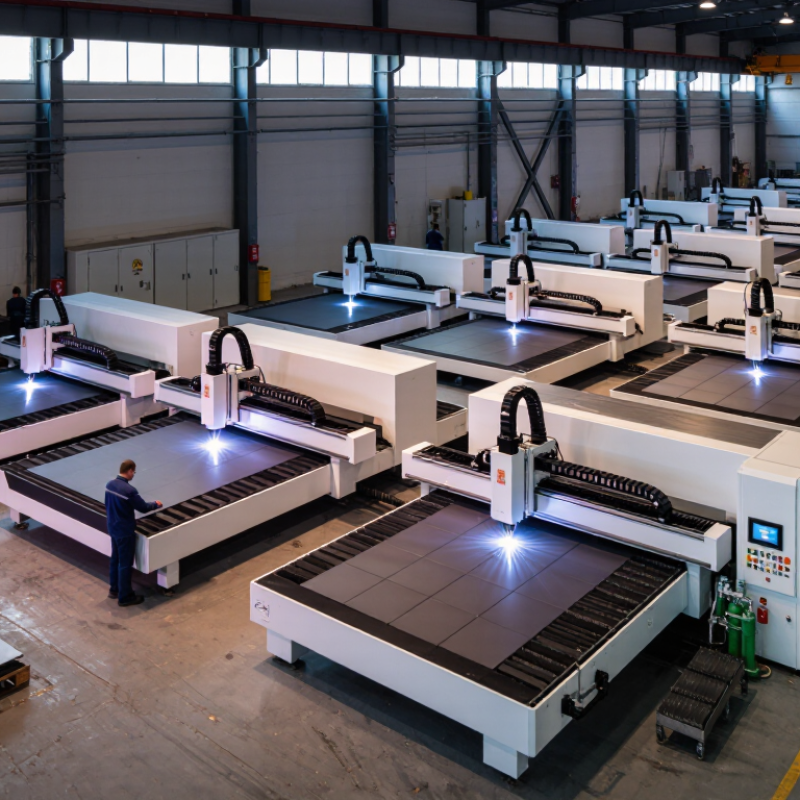
Top 10 Industrial Laser Cutting Machines for Global Buyers?

What Defines an Industrial Laser Cutting Machine?

What Defines an Industrial Laser Cutting Machine?

An industrial laser cutting machine is more than a powerful light source. It combines a laser generator, motion system, cutting head, software, extraction, and guarded safety controls. ISO 11553-1 treats laser processing equipment as machinery requiring engineered protection, not merely workshop hardware. In production, buyers should examine beam quality, positioning accuracy, pierce speed, thermal stability, and duty cycle. A 24-hour factory exposes weak designs quickly. The machine must hold tolerances across long shifts, not only during a showroom demonstration.

Power matters, but it does not define industrial capability alone. Optics, assist-gas control, nesting software, and automatic calibration often decide real output. The 2024 World Robotics report recorded 541,302 industrial robot installations worldwide in 2023. That figure reflects a wider move toward connected production, where laser cutters exchange data with handling and quality systems. Energy use also deserves scrutiny. The International Energy Agency’s Energy Efficiency 2023 report places industry near 37% of global final energy demand. Efficient standby modes and stable cutting parameters can therefore affect operating costs. Still, specifications can mislead. A higher wattage may cut thicker plate, yet it may increase heat distortion, maintenance needs, and power demand. Practical trials on the buyer’s actual materials remain essential. No datasheet replaces that evidence.

Top 10 Industrial Laser Cutting Machines for Global Buyers — What Defines an Industrial Laser Cutting Machine?

The chart compares ten common industrial fiber-laser power configurations used for metal sheet and plate processing. Laser power is a key specification, but an industrial machine is also defined by its working area, automation level, cutting-head technology, positioning accuracy, duty cycle, safety systems, and compatibility with the buyer’s material range. Actual cutting thickness and speed vary with material grade, assist gas, sheet condition, machine design, and process settings.

How to Compare Laser Types, Power, and Cutting Materials

Choosing among the top industrial laser cutting machines starts with the material, not the advertised wattage. Fiber lasers suit mild steel, stainless steel, aluminum, brass, and other reflective metals. They usually cut thin and medium sheets quickly. CO2 lasers remain useful for nonmetal materials, including acrylic, wood, rubber, and some composites. A machine’s laser type should match your daily production mix.

Power affects thickness, speed, edge quality, and operating cost. Higher power is not automatically better. A 6 kW system may outperform a 12 kW system on thin sheetwork when the beam, lens, gas control, and cutting software are better matched. Oxygen can improve carbon steel cutting, while nitrogen often produces cleaner stainless steel edges. Ask for test cuts using your actual grades and thicknesses. A polished sample can hide inconsistent results. I have seen buyers focus on maximum thickness and overlook piercing time, heat distortion, and material waste.

Tips: Compare cutting charts carefully. Check real cycle times, not only peak speed. Confirm service response, spare-part access, operator training, and electrical requirements in your region. Review safety guarding, extraction, and documented compliance. Also inspect the nesting software and loading process. These details shape productivity every shift. Leave room for uncertainty; suppliers may publish ideal laboratory figures, while your factory has dust, vibration, variable gas quality, and changing operators.

Top 10 Industrial Laser Cutting Machines for Global Buyers? - How to Compare Laser Types, Power, and Cutting Materials
Rank Machine Configuration Laser Type Typical Rated Power Best-Suited Materials Typical Practical Cutting Range* Working Area / Format Assist Gases Key Strength Main Buying Consideration
1 High-Power Sheet and Plate Cutter Fiber 12–20 kW Carbon steel, stainless steel, aluminum, brass, copper Carbon steel: approximately 20–40 mm
Stainless steel: approximately 15–30 mm
Aluminum: approximately 15–30 mm
1,500 × 3,000 mm to 2,500 × 6,000 mm Oxygen, nitrogen, compressed air High throughput on medium and thick metal plate Requires substantial electrical capacity, extraction, cooling, and gas infrastructure
2 Medium-Power Production Sheet Cutter Fiber 6–8 kW Carbon steel, stainless steel, aluminum, galvanized steel, brass Carbon steel: approximately 12–25 mm
Stainless steel: approximately 10–20 mm
Aluminum: approximately 10–20 mm
1,500 × 3,000 mm to 2,000 × 4,000 mm Oxygen, nitrogen, compressed air Balanced productivity for general metal fabrication Compare pierce time, cut quality, nozzle control, and nitrogen consumption
3 Flexible Multi-Material Sheet Cutter Fiber 3–4 kW Mild steel, stainless steel, aluminum, copper, brass Carbon steel: approximately 8–16 mm
Stainless steel: approximately 6–12 mm
Aluminum: approximately 6–12 mm
1,500 × 3,000 mm or 1,500 × 4,000 mm Oxygen, nitrogen, compressed air Good compromise between capital cost and cutting versatility Maximum thickness varies significantly with alloy, surface condition, and gas pressure
4 Thin-Sheet High-Speed Cutter Fiber 1–2 kW Thin carbon steel, stainless steel, aluminum, galvanized sheet Carbon steel: approximately 4–10 mm
Stainless steel: approximately 3–8 mm
Aluminum: approximately 3–6 mm
1,500 × 3,000 mm Nitrogen, oxygen, compressed air Efficient processing of thin-gauge sheet at high speed Not the best choice for frequent thick-plate production
5 Tube and Profile Cutting Machine Fiber 2–6 kW Round tube, square tube, rectangular tube, channel, angle, stainless profiles Common wall thickness: approximately 0.8–12 mm, depending on profile and material Tube lengths commonly 6,000–12,000 mm
Diameter commonly up to 230–350 mm
Nitrogen, oxygen, compressed air Automated bevel-free cutting of holes, slots, and contours in profiles Check chuck design, residual-length handling, profile range, and loading automation
6 CO₂ Metal Plate Cutter CO₂ 2–4 kW Carbon steel, stainless steel, galvanized steel, acrylic, wood, and selected nonmetals Carbon steel: approximately 10–20 mm
Stainless steel: approximately 6–12 mm
Nonmetals: application-dependent
1,500 × 3,000 mm to 2,000 × 4,000 mm Oxygen, nitrogen, compressed air Versatility across metals and some nonmetal materials Higher maintenance and lower wall-plug efficiency than modern fiber systems
7 Precision Small-Format Cutter Fiber 500 W–2 kW Thin stainless steel, brass, copper, aluminum, titanium, shim stock Typical sheet thickness: approximately 0.2–6 mm 1,000 × 2,000 mm to 1,500 × 3,000 mm Nitrogen, compressed air, oxygen Fine details, small kerf, and economical operation for thin components Limited productivity and penetration on thick plate
8 High-Accuracy Gantry Cutter Fiber 2–6 kW Stainless steel, carbon steel, aluminum, copper alloys Typical sheet thickness: approximately 0.5–16 mm 1,500 × 3,000 mm to 2,000 × 4,000 mm Nitrogen, oxygen, compressed air Stable dimensional accuracy for repeat production Evaluate machine rigidity, calibration method, thermal compensation, and motion accuracy
9 Five-Axis 3D Laser Cutter Fiber 2–6 kW Pressed parts, formed sheet, stainless steel, aluminum, high-strength steel Typical formed-part thickness: approximately 0.8–8 mm Working envelopes commonly around 1,000 × 2,000 mm Nitrogen, oxygen, compressed air Cuts three-dimensional components and angled surfaces without dedicated dies Higher programming complexity and greater investment than 2D systems
10 Automated Shuttle-Table Production Cutter Fiber 3–12 kW Carbon steel, stainless steel, aluminum, brass, copper Typical sheet thickness: approximately 0.5–25 mm, depending on power and material 1,500 × 3,000 mm to 2,000 × 6,000 mm Nitrogen, oxygen, compressed air Reduces loading and unloading downtime in high-volume production Confirm automation compatibility, pallet capacity, floor space, and safety integration

*Cutting ranges are indicative practical ranges rather than guaranteed limits. Actual results depend on laser source quality, beam characteristics, focal optics, material grade, thickness tolerance, assist-gas purity and pressure, nozzle condition, cutting-head control, and required edge quality.

Which Features Matter for Global Industrial Buyers?

Global buyers should judge laser cutting machines by measurable performance, not showroom speed. Grand View Research estimated the global laser cutting machine market at about USD 5.6 billion in 2023, with continued growth through 2030. That expansion increases the need for dependable, serviceable equipment. A practical machine should offer stable beam quality, automatic focus control, and repeatable positioning across steel, aluminum, and stainless sheet. Cutting data must include thickness, edge quality, gas pressure, and cycle time.

Energy use also deserves close attention. U.S. Department of Energy guidance states that compressed-air leaks can waste 20% to 30% of compressor output in industrial facilities. Buyers should therefore inspect assist-gas efficiency, nozzle design, and standby consumption. Small details matter. A poorly sealed hose can quietly raise operating costs. Automation features, including sheet loading, nesting software, and collision detection, can reduce handling errors. However, automation is not always the best investment. A smaller factory may need easier maintenance instead.

Safety and support remain critical for international operations. IEC 60825-1 provides a recognized framework for laser-product safety, while ISO 9013 helps assess thermal cutting quality. Request documented test results, electrical compatibility, training plans, spare-parts availability, and response times. Remote diagnostics can shorten downtime, but they cannot replace skilled local technicians. I would also question impressive production figures that exclude setup and piercing time. Real factory conditions are messier. Trial cuts using your own material reveal more than polished demonstrations.

Top 10 Industrial Laser Cutting Machines by Application

Industrial laser cutting machines should be compared by application, not by advertised wattage alone. Fortune Business Insights valued the global laser cutting machine market at approximately USD 6.83 billion in 2023, with steady growth projected through 2032. That expansion reflects varied production needs: automotive body panels, aerospace alloys, shipbuilding plate, construction steel, agricultural equipment, electrical cabinets, appliance panels, medical devices, furniture parts, and general metal fabrication.

For thin sheet metal, fiber laser systems offer fast piercing and clean edges. Tube-cutting machines suit frames, exhaust components, and structural assemblies. Aerospace workshops need controlled heat input, traceable settings, and reliable cutting of aluminum or titanium. Medical production demands fine kerfs and repeatable micro-features. Heavy fabrication requires high power, stable tables, and effective fume extraction. Electronics suppliers often prioritize precision over raw speed. Small details matter.

MarketsandMarkets identifies automotive and industrial manufacturing as major areas for laser processing adoption. However, choosing solely from market growth data can mislead buyers. A machine cutting 25-millimeter steel may perform poorly on delicate stainless components. In practical evaluations, operators should test the actual material, thickness range, nesting pattern, and shift schedule. Energy use, assist-gas consumption, maintenance access, and software training also affect ownership costs. I have seen impressive cutting samples hide slow loading procedures. That is worth questioning. A realistic acceptance test should measure finished parts per hour, not just maximum cutting speed.

How to Evaluate Cost, Support, Safety, and Compliance

Choosing among the top 10 industrial laser cutting machines requires more than comparing purchase prices. A low-cost machine may need expensive lenses, gases, software updates, or specialist maintenance. Request a five-year ownership estimate, including electricity, consumables, training, downtime, and installation. Test a sample part in your actual material, such as 6 mm carbon steel, and inspect edge quality, burrs, and cutting speed.

Support quality often determines production stability. Ask for technician response times, spare-parts availability, remote diagnostics, and operator training. A clear service agreement should define emergency support and maintenance responsibilities. Do not accept vague promises. One overlooked weakness is language: safety instructions and software guidance must be understandable to local operators. A machine that performs well during a demonstration may still frustrate a busy workshop.

Safety and compliance deserve documented checks. Confirm enclosure design, door interlocks, emergency stops, fume extraction, fire protection, and laser classification. Review electrical drawings, risk assessments, inspection records, and conformity documents required in the destination market. Requirements differ by country and application. Verify them with qualified local specialists, not only the seller. A practical audit should include noise, ventilation, floor space, and operator access. Some buyers focus heavily on output speed. That can be a mistake. Faster cutting is not useful when unsafe setup, weak training, or delayed repairs repeatedly stop production.

FAQS

Which laser type suits metal cutting?

Fiber lasers usually suit mild steel, stainless steel, aluminum, and brass. They work well on thin and medium metal sheets. Reflective metals need careful machine matching.

When is a CO2 laser a practical choice?

CO2 lasers remain useful for acrylic, wood, rubber, and some composites. Match the laser to your daily materials. The cheapest option may not fit production needs.

Does higher laser power always mean better performance?

No. A well-matched 6 kW system may cut thin sheets better than a 12 kW system. Beam quality, lenses, gas control, and software also matter.

How should cutting speed and quality be compared?

Request test cuts using your actual material grades and thicknesses. Inspect burrs, edge smoothness, piercing time, heat distortion, and waste. Peak speed can mislead.

Which cutting gases affect edge quality?

Oxygen can improve carbon steel cutting. Nitrogen often creates cleaner stainless steel edges. Gas quality and pressure still influence results.

What costs should a machine comparison include?

Estimate five-year ownership costs, including electricity, lenses, gases, software, training, installation, and downtime. Purchase price alone is incomplete. Sometimes, surprisingly so.

How can supplier support be evaluated?

Ask about technician response times, spare-part access, remote diagnostics, and operator training. Confirm emergency support in writing. Vague promises are a warning sign.

Which safety and compliance details need checking?

Review enclosure design, door interlocks, emergency stops, extraction, fire protection, and laser classification. Check electrical drawings, risk assessments, inspection records, and required conformity documents.

What workshop conditions can affect machine performance?

Dust, vibration, changing operators, poor ventilation, and inconsistent gas quality can reduce results. Inspect floor space, noise, loading access, and maintenance areas. Laboratory figures may not survive daily production.

Conclusion

An Industrial Laser Cutting Machine is a precision manufacturing system designed to cut, engrave, or process materials such as steel, aluminum, stainless steel, copper, plastics, and composites. This guide explains how fiber, CO2, and other laser technologies differ, while showing how laser power, cutting speed, accuracy, and material thickness influence equipment selection. It also presents ten machine types organized by practical applications, including sheet metal production, tube processing, automotive components, fabrication, and high-volume manufacturing.

For global industrial buyers, important considerations extend beyond cutting performance. Automation options, software compatibility, energy efficiency, maintenance access, operator safety, and production flexibility can strongly affect long-term value. The guide also outlines how to compare total ownership cost, delivery and installation requirements, technical support, spare-parts availability, training, and compliance with applicable safety and electrical standards. By evaluating these factors together, buyers can choose a reliable laser cutting solution that matches their materials, workflow, budget, and international operating requirements.


Alexander

Alexander

Alexander is a highly experienced marketing professional dedicated to helping businesses understand complex products and make confident, informed decisions. With a strong background in market research, content strategy, customer communication, and digital marketing, he brings both commercial......