0%

Choosing a High-Speed Laser Cladding Machine requires more than comparing laser power, scanning speed, or purchase price. The decision affects coating quality, repair consistency, energy use, and long-term maintenance. A machine may move quickly yet produce excessive dilution, unstable powder flow, or uneven tracks. Speed alone is not performance.

MarketsandMarkets’ 2024 Laser Cladding Market report projects growth from approximately USD 0.6 billion in 2023 to USD 1.0 billion by 2028. Its forecast reflects rising demand for wear-resistant surfaces in aerospace, energy, mining, and heavy manufacturing. The report also highlights automation and process control as important growth factors. Grand View Research similarly identifies industrial repair and surface enhancement as major application areas.

Professor William M. Steen, a pioneer of laser material processing, emphasized the practical value of controlled deposition: “Laser cladding is a process for depositing material where it is needed, with minimal dilution.” That principle remains highly relevant. A reliable High-Speed Laser Cladding Machine should therefore combine fast movement with accurate heat management, closed-loop monitoring, and stable powder delivery.

Look closely at the details. A turbine blade should not show dark overheating marks near its edge. A mining component should retain a uniform coating after repeated impact. These visible results matter more than impressive brochure numbers.

Still, no machine suits every workshop. Material reflectivity, powder size, substrate geometry, and operator skill can change outcomes. That is easy to underestimate. Buyers should request application trials, measured dilution data, surface-finish results, and documented uptime before committing. Industry reports guide the market view, but verified production evidence should guide the final choice.
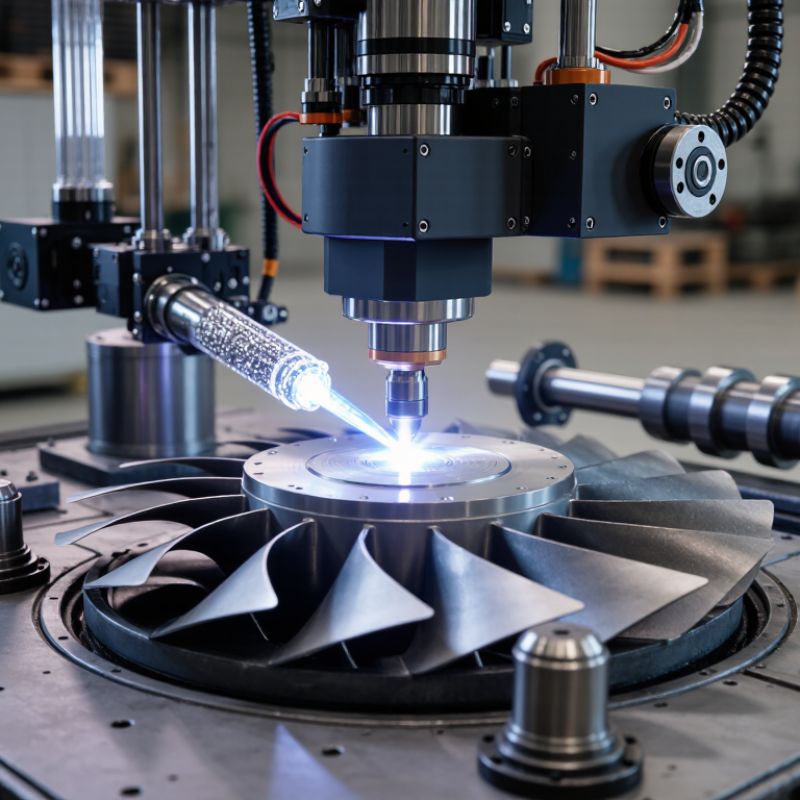
How to Choose a High Speed Laser Cladding Machine?

Define the Application and Performance Goals

Before choosing a high speed laser cladding machine, define the application precisely. Are you repairing worn shafts, protecting valves, or adding material to new components? Each task requires different powder chemistry, laser power, spot size, and motion control. Record the substrate, coating thickness, hardness, allowable dilution, and final machining allowance. Speed is not everything.

The machine should match measurable performance goals. Specify deposition rate in kilograms per hour, coating efficiency, dimensional accuracy, and heat input. A faster travel speed may reduce bonding quality or create unstable tracks.

In practical trials, monitor dilution, porosity, microhardness, and the heat-affected zone through cross-sectional testing. The 2024 Wohlers Report valued the global additive manufacturing industry at 20.035 billion dollars in 2023, showing broader industrial adoption, but market growth does not guarantee process suitability. Your material and geometry remain decisive.

Use production samples, not only brochures. Test thin edges, corners, curved surfaces, and interrupted paths. For repair work, compare cycle time against manual preparation and post-machining. For surface protection, measure wear or corrosion performance after coating.

A 2024 industry analysis from MarketsandMarkets projected continued growth in laser cladding applications, especially for energy, aerospace, and heavy equipment. However, forecasts are not specifications. A modest test plan can expose unrealistic expectations early.

It is easy to overvalue peak power. Actual productivity may fall when powder feeding, cooling, inspection, and finishing are included. That detail is often missed.

Compare Laser Cladding Technologies and Machine Configurations

How to Choose a High Speed Laser Cladding Machine?

High speed depends on deposition rate, powder efficiency, laser power, and cooling stability. It is not simply a faster scanning head. MarketsandMarkets estimated the laser cladding equipment market at about USD 0.7 billion in 2024, with continued growth through 2029. This expansion reflects demand for repair, wear protection, and controlled material use.

Compare the process before comparing machine speed. Powder-fed cladding offers accurate material placement and suits complex repair areas. Wire-fed systems can deliver higher deposition rates and reduce airborne powder, but they need steadier wire alignment. A practical trial should measure bead width, dilution, porosity, and heat distortion. Watch the substrate temperature. It often reveals problems earlier than surface appearance.

Configuration matters just as much. A three-axis table may suit repeatable shafts, while a robotic cell handles large or irregular parts. Coaxial nozzles support multidirectional paths, but off-axis nozzles can be simpler to maintain. Select closed-loop monitoring for laser power, melt-pool temperature, and powder flow. The Wohlers Report 2024 valued the global additive manufacturing industry at USD 20.035 billion in 2023, showing how quickly process control is becoming important. However, that figure covers many technologies, not cladding alone.

Do not chase the highest rated speed. It may reduce bonding quality. In my experience, stable thermal control usually beats impressive catalog numbers. A machine that is easy to calibrate can outperform a faster, poorly matched system. The right comparison includes operator training, fixture access, maintenance time, and real test coupons. Some assumptions will fail. That is useful.

How to Choose a High Speed Laser Cladding Machine?

Comparison of Laser Cladding Technologies and Machine Configurations

Technology or Configuration Typical Deposition Rate Typical Laser Power Material Delivery Best-Suited Applications Surface Finish and Dilution High-Speed Capability Main Advantages Main Limitations
High-Speed Laser Cladding with Powder Approximately 0.5–4 kg/h, depending on powder size, alloy, laser power, and overlap Typically 2–12 kW for industrial repair, wear protection, and large-area coating Fine or medium metal powder delivered through a coaxial or lateral nozzle Wear-resistant coatings, dimensional restoration, corrosion protection, and production of near-net-shape features Generally low dilution and a relatively smooth clad layer; additional machining may still be required High material flexibility, accurate alloy placement, good automation potential, and suitable for complex geometries Powder handling requires extraction, filtration, storage controls, and careful parameter optimization
Laser Metal Deposition with Wire Approximately 1–10 kg/h; larger wire diameters can support higher throughput Typically 2–20 kW, depending on wire size and deposition speed Metal wire fed into the laser-generated melt pool Large components, structural build-up, heavy repair, and applications where powder recovery is undesirable Usually high material utilization, with a coarser surface that often needs finish machining Material utilization can approach 90–100%; easier material containment and reduced airborne-powder exposure Less suitable for very fine features, narrow grooves, and some irregular or inaccessible surfaces
Coaxial Powder Nozzle Commonly 0.3–4 kg/h, depending on nozzle design and powder feed rate Approximately 1–12 kW Powder converges around the laser beam from multiple directions Multi-axis cladding, rotational parts, edges, internal features, and geometries requiring tool-direction flexibility Uniform tracks with good directional consistency; dilution can be controlled through travel speed and energy density Cladding can be performed in multiple orientations; supports more consistent deposition around curved features More complex and expensive than simple lateral delivery; alignment and powder-flow calibration are important
Lateral or Off-Axis Powder Nozzle Approximately 0.2–3 kg/h Approximately 1–8 kW Powder enters the melt pool from one side of the laser beam Simple surfaces, shaft repair, localized coating, and applications with a fixed processing direction Can produce good quality tracks, but track geometry may vary with travel direction and part orientation Good for straightforward, high-speed passes Lower equipment cost, easy maintenance, and straightforward parameter adjustment Limited access to complex geometries and greater sensitivity to nozzle-to-part orientation
Wide-Beam or Enlarged-Spot Cladding Approximately 1–8 kg/h, depending on spot size and feed rate Typically 4–20 kW Usually powder, although wire can also be used in suitable systems Large flat areas, cylindrical surfaces, mining components, rolls, and high-volume wear surfaces Wider tracks reduce the number of passes; surface waviness and heat input may increase if parameters are not optimized High areal productivity, fewer overlapping tracks, and improved production throughput Less appropriate for small features, sharp edges, and components requiring very fine geometric control
Fine-Spot Precision Cladding Approximately 0.05–1 kg/h Typically 0.5–4 kW Fine powder or thin wire, depending on the applicator Small repairs, mold and die restoration, thin edges, intricate contours, and heat-sensitive components Fine tracks, precise geometry, and low overall heat input; finish quality depends strongly on powder and substrate preparation Moderate rather than maximum; optimized for precision and control Good feature definition, small heat-affected zones, and reduced risk of distortion Lower deposition rate and longer processing time for large surfaces
3-Axis CNC Machine Determined primarily by the selected cladding head and process parameters Commonly 1–12 kW Powder or wire Flat surfaces, shafts, rings, plates, and parts with relatively simple tool access Consistent on accessible surfaces; repositioning may be necessary for complex components Good for repetitive production with simple toolpaths Lower acquisition cost, easier programming, and simpler maintenance Limited access to undercuts, internal surfaces, and continuously changing tool orientations
5-Axis CNC or Robotic Configuration Determined by the cladding head, laser source, motion speed, and part size Commonly 2–20 kW Powder or wire Complex aerospace, energy, tooling, and heavy-equipment components with curved or difficult-to-access surfaces Improved consistency on complex surfaces when the nozzle angle and stand-off distance are controlled Fewer re-fixturing operations, better access, and greater flexibility for complex toolpaths Higher programming, integration, calibration, and operator-training requirements
Rotary-Axis Shaft Cladding System Approximately 0.5–6 kg/h, depending on shaft diameter, rotational speed, and track width Typically 2–12 kW Powder or wire Hydraulic rods, rollers, bearing seats, turbine shafts, and other cylindrical components Uniform circumferential tracks are possible; final turning or grinding is commonly used for dimensional accuracy Efficient coverage, repeatable rotation, and relatively simple process planning Primarily optimized for rotational geometry and less flexible for non-cylindrical parts
Closed-Loop Process-Controlled System Comparable to the selected powder or wire process; productivity is maintained through real-time monitoring Typically 2–20 kW Powder or wire with melt-pool, height, temperature, or deposition monitoring High-value components, regulated industries, repeat production, and processes requiring documented consistency Improved layer-height and melt-pool stability when control loops are correctly calibrated Compensates for variations in surface condition, feed rate, and thermal accumulation; supports process records Higher system cost, greater integration complexity, and the need for validated sensors and control logic
Manual or Semi-Automatic Cladding Cell Approximately 0.1–2 kg/h, depending on operator control and part geometry Typically 0.5–4 kW Usually powder; wire is also possible in suitable torches or heads Low-volume repair, maintenance workshops, prototypes, and parts with irregular access Quality depends strongly on operator technique, stand-off distance, travel speed, and thermal management Limited for production-scale high-speed work Lower initial investment, flexible setup, and suitable for varied repair work Greater operator dependence, lower repeatability, and limited suitability for continuous production
Fully Automated Production Cell Determined by the laser cladding head, work envelope, material, and programmed process window Commonly 2–20 kW Powder or wire with automated feeding and optional monitoring High-volume manufacturing, standardized repair, hardfacing, and traceable industrial production High repeatability when fixturing, calibration, thermal control, and inspection are properly managed Consistent quality, reduced labor variation, repeatable toolpaths, and easier production data collection Higher capital cost and greater requirements for safety systems, programming, maintenance, and integration

Note: The performance ranges shown are typical engineering ranges rather than guaranteed machine specifications. Actual results depend on laser wavelength, beam quality, powder or wire alloy, particle or wire diameter, substrate material, track overlap, layer height, travel speed, thermal management, shielding gas, and part geometry.

Evaluate Key Specifications and Material Compatibility

How to Choose a High Speed Laser Cladding Machine?

A high-speed laser cladding machine should be judged by its real process window, not its advertised travel speed. Check laser power, spot size, powder feed rate, and working distance together. A small spot can create precise tracks, but it may reduce coverage efficiency. Excessive power can cause deep dilution, distortion, or substrate cracking. That detail is easy to miss.

Ask for measured results on your actual component geometry. A machine producing 25 kilograms per hour on a flat plate may perform differently inside a narrow groove. Review acceleration, robot stiffness, path accuracy, and cooling capacity. Stable powder delivery matters greatly. Uneven feeding creates ripples, pores, and inconsistent hardness. In production trials, examine cross-sections rather than trusting surface appearance alone.

Material compatibility requires equal attention. Match the powder’s chemistry with the substrate, melting behavior, thermal expansion, and corrosion environment. Nickel-, iron-, and cobalt-based powders behave differently during melting and solidification. Confirm adhesion through tensile testing, hardness mapping, wear testing, and metallographic inspection. Use small test coupons first. They are cheaper than repairing a failed shaft. Some specifications look excellent on paper but disappoint after repeated thermal cycles. That possibility deserves honest consideration. Ask whether the supplier can provide process records, calibration data, and independent test evidence. A reliable evaluation includes both successful samples and documented limitations.

Assess Automation, Safety, Maintenance, and Operating Costs

How to Choose a High Speed Laser Cladding Machine?

A high-speed laser cladding machine should be judged beyond deposition rate. Automation affects repeatability, labor, and operator exposure. The International Federation of Robotics reported 541,302 industrial robots installed worldwide in 2023. That figure supports automated handling, but integration still requires careful programming, sensor calibration, and skilled supervision. A useful trial should measure cycle time, powder waste, layer consistency, and recovery after a fault.

Safety cannot be treated as a checkbox. Laser processing equipment should align with ISO 11553-1 and risk assessment principles in ISO 12100. Class 4 laser systems can create hazards from direct beams, reflections, fumes, and fire. Enclosed work areas, interlocks, extraction, and documented training matter. They also need testing after maintenance.

Maintenance is where many quotations become misleading. Ask for nozzle life, optics replacement intervals, filter costs, calibration procedures, and local technical support. The U.S. Department of Energy’s Operations and Maintenance Best Practices report links predictive maintenance with lower downtime and better equipment reliability, but savings depend on data quality. Do not accept optimistic payback alone. Calculate electricity, shielding gas, powder, labor, consumables, and rejected parts. Compressed-air losses can quietly inflate operating costs. The DOE notes that compressed air may represent about 10% of industrial electricity use, and sometimes much more. A fast machine is not automatically economical. That lesson is easy to miss.

How to Choose a High-Speed Laser Cladding Machine?

Assess automation, safety, maintenance, and operating costs with a practical, brand-neutral evaluation matrix.

The chart uses a 1–5 evaluation scale, where 5 represents the most favorable capability. Fully automated systems typically score higher because closed-loop process control, enclosed laser areas, automated powder delivery, and reduced manual intervention can improve consistency, safety, and operating efficiency. Confirm actual specifications through a site risk assessment, maintenance plan, and total-cost-of-ownership calculation.

Verify Supplier Expertise, Support, and Machine Reliability

Choosing a high-speed laser cladding machine starts with the supplier, not the advertised travel speed. The 2024 Wohlers Report valued the global additive manufacturing industry at 20.035 billion dollars in 2023, showing rapid industrial adoption. Growth also increases the risk of inexperienced suppliers. Ask for documented experience with your alloy, substrate, coating thickness, and production cycle. Request recent case records, sample cross-sections, hardness results, dilution measurements, and powder traceability documents. A showroom demonstration is not enough.

Look closely at technical support. Can engineers respond during an overnight stoppage? Are spare laser optics, powder feeders, filters, and cooling components locally available? Require training records, response-time commitments, remote diagnostics, and a written commissioning plan. ISO’s 2023 Survey reported more than 1.2 million ISO 9001 certificates worldwide, but certification alone cannot prove machine reliability. Test the machine under continuous production conditions. Measure uptime, bead consistency, powder efficiency, temperature stability, and restart performance after a fault. Small details matter.

Be cautious with perfect claims. A supplier may promise 99% uptime without defining the measurement period. Ask for the formula. Also inspect maintenance access with the machine powered down. If operators need thirty minutes to clean a feeder, that delay will multiply across shifts. Independent acceptance testing is worth the cost. Still, no checklist replaces careful observation of the supplier’s engineering depth, service discipline, and willingness to disclose limitations.

FAQS

What should I define before selecting a high-speed laser cladding machine?

Define the substrate, coating material, thickness, hardness, dilution limit, and machining allowance. Speed is not everything.

Which performance measurements matter most?

Measure deposition rate, coating efficiency, dimensional accuracy, heat input, porosity, microhardness, and heat-affected zone size.

Why should production samples be used during machine trials?

Real samples reveal problems that brochures may hide. Test thin edges, corners, curved surfaces, and interrupted paths.

Can higher travel speed reduce coating quality?

Yes. Excessive speed may weaken bonding or create unstable tracks. A slower setting can produce better, more consistent layers.

How should automation be evaluated?

Check cycle time, powder waste, layer consistency, sensor calibration, programming effort, and recovery after faults. Automation still needs skilled supervision.

What safety features should a laser cladding system include?

Use an enclosed work area, beam interlocks, fume extraction, fire controls, and documented operator training. Test safety functions after maintenance.

Which maintenance questions should I ask suppliers?

Ask about nozzle life, optics replacement, filter costs, calibration procedures, spare parts, and local technical support. Small consumables can become expensive.

How can I calculate the real operating cost?

Include electricity, shielding gas, powder, labor, maintenance, rejected parts, and post-machining. Compressed-air losses may quietly increase costs.

Is the fastest machine always the most economical choice?

No. Compare complete cycle time, waste, inspection, cooling, finishing, and downtime. I might overvalue peak power without this calculation.

Conclusion

Choosing a High-Speed Laser Cladding Machine begins with clearly defining your application, target materials, coating thickness, production volume, and required surface quality. These goals will help determine the most suitable laser source, cladding method, motion system, and machine configuration. Compare available technologies based on deposition rate, precision, heat input, working area, and adaptability to complex components. Key specifications should also include laser power, powder or wire compatibility, process control, cooling capacity, and integration with existing production equipment.

Beyond performance, evaluate automation, operator safety, maintenance requirements, energy consumption, and total operating costs. A reliable machine should support stable, repeatable processing while minimizing downtime and material waste. Before making a decision, verify the supplier’s technical expertise, training services, spare-parts availability, software support, and track record in similar applications. Testing representative samples and reviewing long-term reliability can provide valuable evidence that the selected system will meet both current production needs and future expansion plans.

Seraphina

Seraphina

Seraphina is a dedicated marketing professional with a strong understanding of product strategy, customer needs, and market trends. As a key contributor to the company’s communications team, she regularly updates the corporate website with insightful blog articles that explain industry......