0%

Choosing an Industrial Laser Cleaning Machine is less about buying the highest-powered unit and more about matching its capabilities to the work. Rust on a steel bracket, paint on a mold, and oxide on a delicate component behave differently under a laser. The wrong settings can leave residue, alter the surface, or slow production. A small test area can reveal more than a polished specification sheet.

Dr. Reinhart Poprawe, a laser-manufacturing researcher and former director of Fraunhofer ILT, offers relevant expertise in industrial laser technology. The following is a paraphrase, not a verbatim quotation, of an application-first principle: “Start with the material and contaminant, then choose the laser process.” That distinction matters. Compare pulsed and continuous-wave systems, average power, scan width, portability, extraction needs, and operator training. Ask suppliers to demonstrate cleaning on your actual part, including edges, corners, and stubborn deposits. Watch the surface closely. Measure cycle time, too.

A capable machine should fit the production environment, not just a laboratory sample. Check how easily operators set repeatable parameters, maintain the optics, and document results. Confirm that the supplier provides suitable safety guidance and practical service support. No specification guarantees a perfect outcome. Even a careful trial can disappoint when the real parts vary. That is worth admitting. This guide will help you weigh performance, cost, and workflow before choosing equipment.
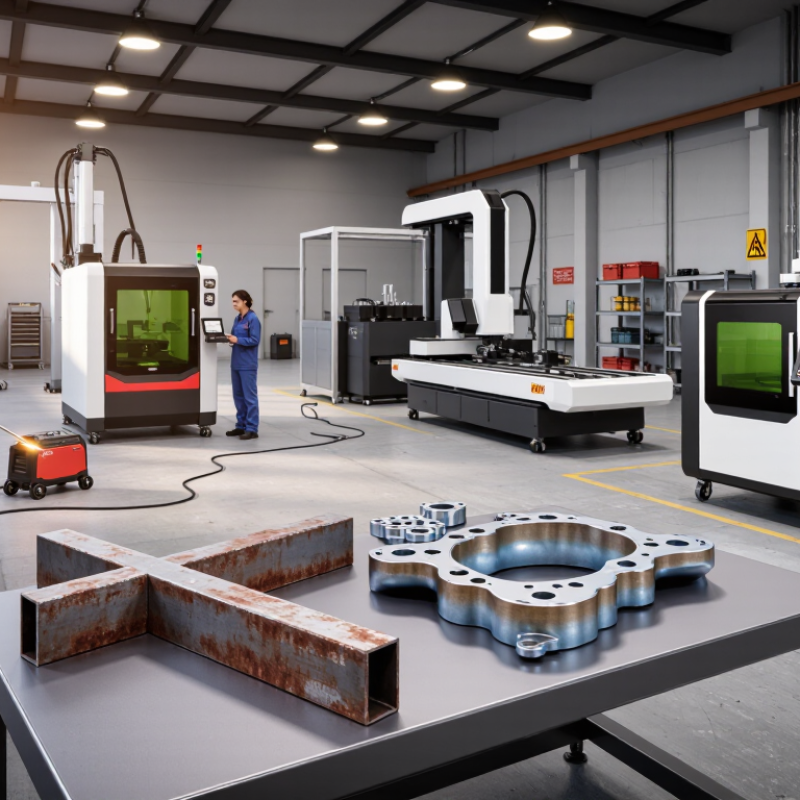
How to Choose an Industrial Laser Cleaning Machine

Identify the Cleaning Task and Required Production Capacity

Before comparing machines, define what must be removed and what must remain untouched. Rust on a steel weld, paint on a cast part, and residue near a seal need different settings and beam paths. Record the substrate, contaminant thickness, treated area, acceptable surface change, and part geometry. Then test representative parts, not just a convenient flat coupon. A coupon can look clean while a recessed corner still holds residue.

Set capacity from the complete production cycle. Measure loading, clamping, scanning, repositioning, inspection, and unloading across a normal batch. Divide available production minutes by the observed cycle time, then allow for changeovers and downtime. A machine’s peak scanning speed is not its real parts-per-hour rate. This distinction matters on automated lines: the International Federation of Robotics reported 4,281,585 industrial robots operating worldwide in 2023, up 10% from 2022, in World Robotics 2024. Automation is common; matching cleaning time to upstream and downstream stations still takes measurement.

Ask suppliers to process your actual parts at the required takt time, and inspect both cleanliness and surface condition. Check fume extraction and operator access during the trial. Small parts may need fast scanning; bulky assemblies may lose time to handling. I would also retest after settings change. That adds work, but assumptions age quickly.

Match the Laser Type to the Workpiece and Contaminant

Choose the laser by asking what absorbs the beam: the contaminant or the workpiece. SPIE’s Handbook of Laser Technology and Applications lists common industrial wavelengths near 1,064 nm for solid-state and fiber sources, and 10.6 μm for CO₂ lasers. These figures identify the beam, not a guaranteed cleaning result. For a thin rust layer on a steel bracket, a pulsed 1,064 nm system can remove deposits with limited heat input when carefully tuned. Test first. Thick paint, grease, and oxide do not respond alike, even on the same alloy.

For oil on aluminum, use low energy and inspect for discoloration or surface texture changes; the metal may absorb energy differently than the film. A continuous-wave source can suit broad, heavy deposits, but prolonged heating may warp thin sheet. The 2022 ANSI Z136.1 laser-safety standard highlights wavelength and exposure duration as important hazard factors, so match shielding and operating procedures to the chosen source. Compare removal rate, roughness, and temperature on a small coupon before treating the full part. That step can feel slow. It is still easy to skip. Settings from a supplier’s chart are only a starting point; coating thickness, focus, and beam speed change the outcome.

Compare Power, Beam Control, and Cleaning Performance

Power is only a starting point. A higher-wattage machine can remove thick scale faster, but it may also heat thin sheet metal or damage a delicate coating. Compare average power with pulse energy, pulse duration, and repetition rate. These values describe how energy reaches the surface, not just how much the machine delivers.

Beam control changes the result. Adjustable spot size, scanning width, and pulse settings help operators treat a rusty weld without repeatedly striking nearby clean metal. Grand View Research’s 2024 laser-cleaning market report estimates continued market growth, but market demand does not prove that one power level suits every job. Ask suppliers for test results on your own material, coating, and contamination. Measure cleaning time and inspect for residue, discoloration, or surface damage. A bright surface is not always a clean one.

Run a short trial on a sample part. Record the settings and inspect the surface under consistent lighting; where needed, check roughness or coating adhesion. Keep extraction and operator protection in the trial plan, too. That matters. I would not choose from a showroom demonstration alone. The test may look excellent on thick steel, then disappoint on a thin panel. Some uncertainty remains until the machine meets your actual parts.

How to Choose an Industrial Laser Cleaning Machine — Compare Power, Beam Control, and Cleaning Performance

Machine Type Typical Laser Output Beam Control Typical Applications Cleaning Performance Key Selection Consideration
Pulsed fiber laser Approximately 50–200 W average power Short pulses; scanner settings commonly adjust scan width, speed, and pattern. Pulse energy and duration depend on the system. Precision rust removal, paint stripping, mold cleaning, and work on thin or heat-sensitive parts Offers controlled material removal with relatively low heat input when correctly configured. Usually slower than higher-power systems on large areas. A practical starting point when protecting the underlying surface is more important than maximum area coverage.
Higher-power pulsed fiber laser Approximately 200–500 W average power Pulsed operation with scanner-controlled paths; available scan ranges and pulse parameters vary by machine. Heavier rust, coatings, and production cleaning where surface condition still requires careful control Can increase removal rate while retaining the benefits of pulsed operation. Results depend on coating thickness, substrate, and settings. Compare pulse energy, pulse duration, repetition rate, and usable scan width—not average power alone.
Continuous-wave (CW) fiber laser Commonly around 1–2 kW for handheld cleaning systems Continuous output; a scanning head moves the beam across the work area. Scan speed and path affect heat input. Large-area rust, scale, and coating removal on robust metal parts Often provides high throughput on suitable surfaces, but continuous energy delivery can create more heat input than pulsed cleaning. Check substrate thickness, heat sensitivity, required removal depth, and operator control before prioritizing speed.
Higher-power CW fiber laser Approximately 2–6 kW in some industrial configurations Typically uses a scanning head; beam width, scan pattern, and travel speed are system-dependent. High-throughput cleaning of large, robust metal surfaces and demanding production work Can deliver very high removal rates on compatible materials, with increased potential for heating, discoloration, or substrate damage if misapplied. Confirm that the process is suitable for the base material and that the work area, extraction, and safety controls support the higher output.
Beam-control features to compare Not a power category Look for adjustable scan width, scan patterns, speed controls, focus adjustment, and repeatable parameter settings. Parts with edges, recesses, varying geometries, or repeatable production requirements Good control can improve coverage consistency and help limit unnecessary exposure; it does not compensate for unsuitable process parameters. Request a sample test on the actual substrate and contaminant, then compare removal quality and cycle time.

Note: Power ranges are representative market categories, not universal specifications. Cleaning speed and surface effects vary with the laser’s pulse characteristics, optics, scan settings, contaminant, substrate, and required finish. Verify performance with a controlled trial on the intended material.

Check Safety Features, Setup, and Operating Requirements

An industrial laser cleaning machine should fit the safety controls and working conditions of your site, not just the surface you plan to clean. Check the laser classification, enclosure, access controls, and interlocks. Eyewear must match the laser’s wavelength and the manufacturer’s guidance; ordinary safety glasses are not enough. Small details matter.

Plan the work area before installation. A level, stable floor helps keep the head and workpiece aligned. Confirm electrical supply, cooling needs, and required clearance from the equipment manual. Arrange suitable fume extraction near the cleaning point, and check that filters are appropriate for the material being removed. Keep combustible items away, and consider how reflective surfaces could redirect the beam. A test patch on a small, noncritical area can reveal heat or finish changes.

Before each shift, inspect cables, hoses, connectors, and protective covers for damage. Secure the workpiece so it cannot move, and restrict access to trained operators. Use the machine’s approved settings and keep the beam path controlled. A checklist can still miss something; pause if the extraction sounds unusual or the work surface behaves unexpectedly. Record settings and observations, since small changes in coating, distance, or movement speed can affect the result.

How to Choose an Industrial Laser Cleaning Machine

Check safety features, setup needs, and operating requirements before comparing machines.

Safety controls and operating requirements deserve the highest attention during evaluation. Ratings are a practical planning guide, not measured industry data; verify machine specifications against your materials, workplace risk assessment, and applicable regulations.

Evaluate Trials, Service Support, and Long-Term Costs

A credible trial should use your actual parts, not a polished sample supplied for a demonstration. Bring representative materials with typical coatings, rust, or residue, and agree on measurable acceptance criteria beforehand. Record cleaning time, surface condition, and any heat marks under consistent lighting. Repeat the test on several areas; one clean spot proves little. Ask operators to run the machine after basic training, since handling affects results. A trial can still miss real production variation.

Service support matters when a machine stops mid-shift. Ask who diagnoses faults, how quickly replacement parts usually arrive, and what training is included. Get the answers in writing. Compare total ownership costs, not just the purchase price: include electricity, protective equipment, routine maintenance, consumables if applicable, and staff time. A low-cost unit may become expensive if support is distant or setup takes longer than expected. Estimates are not guarantees, so leave room for downtime.

Tips: Request a written trial report and a sample maintenance schedule. Check the quoted service response against your working hours. Costs add up. Revisit your assumptions after the first month of operation.

FAQS

Is higher power always better for laser cleaning?

No. Higher power may remove thick scale faster, but it can heat thin metal or damage coatings. Compare pulse energy, duration, and repetition rate too.

Which settings affect cleaning results?

Spot size, scanning width, and pulse settings shape the treated area. They can help avoid repeatedly striking nearby clean metal. Test them on your material.

How should I judge a cleaning trial?

Use representative parts with typical rust, coatings, or residue. Record cleaning time, then inspect under consistent lighting for residue, discoloration, or heat marks. One clean spot proves little.

Does a bright surface mean the part is clean?

Not necessarily. A bright surface may still have residue. Check the finish closely, and consider surface roughness or coating adhesion where needed.

What safety features and site conditions should I check?

Review the laser classification, enclosure, access controls, and interlocks. Check electrical supply, cooling, floor stability, and equipment clearance. Small details matter.

What protective measures should operators use?

Use eyewear suited to the laser wavelength and equipment guidance; ordinary safety glasses are not enough. Arrange suitable fume extraction and keep the beam path controlled.

What should operators inspect before each shift?

Check cables, hoses, connectors, and protective covers for damage. Secure the workpiece and restrict access to trained operators. Pause if extraction sounds unusual.

How can I compare long-term costs and support?

Include electricity, protective equipment, maintenance, consumables, and staff time. Ask about fault diagnosis, replacement parts, and training in writing. Estimates are not guarantees.

Can a successful trial guarantee production results?

No. Repeat tests across several areas and have operators try the machine after basic training. Real production variation may still change results. I would leave room for doubt.

Conclusion

Choosing an Industrial Laser Cleaning Machine starts with defining the materials, contaminants, surface area, and production volume involved. Consider whether the equipment must remove rust, paint, oil, or other residues, and how quickly each job needs to be completed. The laser type should suit both the workpiece and the contaminant, while adjustable power and beam control can help balance cleaning speed with surface quality.

Before making a decision, review safety features, installation needs, operator training, and day-to-day requirements. Whenever possible, arrange a trial using representative workpieces to assess cleaning results and operating efficiency. Also compare service support, maintenance needs, energy use, and expected equipment life. Looking at the full cost of ownership, rather than purchase price alone, helps identify a machine that can meet current production needs and remain practical as operations evolve.

Evelyn

Evelyn

Evelyn is a dedicated marketing professional with a deep understanding of the company’s products, customers, and industry landscape. Through a combination of strategic insight, creative communication, and practical market knowledge, Evelyn helps present the company’s solutions in a clear, valuable,......