0%

Choosing an Automotive Laser Micromachining Supplier is not just a search for a machine with impressive specifications. It is a decision about repeatable quality, production uptime, and process support. A clean cut on one sample means little if the result shifts across a full production run. Ask how the supplier handles material changes, fixture design, and inspection. Request representative parts, not only polished demonstrations.

Laser-manufacturing expert Prof. Reinhart Poprawe is known for emphasizing the integration of laser technology into industrial production. A useful question inspired by that approach is: “Can the process maintain precision at production speed?” It is a practical test, not a verified direct quotation. For Automotive Laser Micro-Machining, the answer depends on more than laser power. Beam control, pulse settings, thermal effects, and part handling all matter. Ask for measured tolerances and documented test conditions. A microscope image helps. So does a clear account of how the sample was made.

A capable supplier should discuss process development, traceability, maintenance, and scale-up in concrete terms. Look for data from materials and features similar to your own. Check whether the team can explain failures as clearly as successes. That detail matters. Still, no checklist removes uncertainty. A supplier may look strong in a trial and struggle with real production variation. Start with a defined pilot, agree on acceptance criteria, and review the results together. Be cautious of guarantees that skip the evidence.
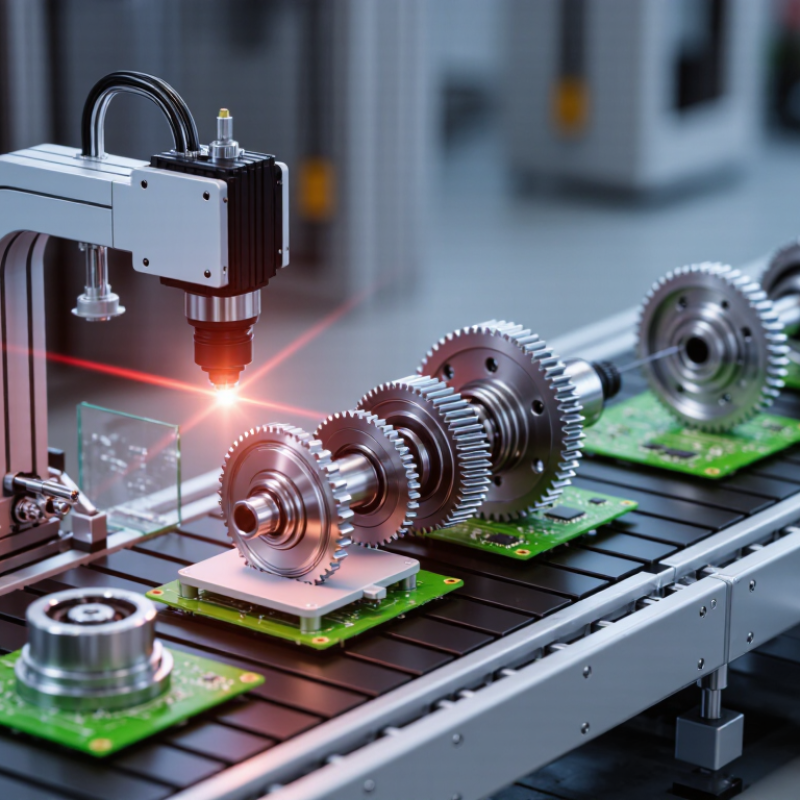
How to Choose an Automotive Laser Micromachining Supplier

Define Automotive Laser Micromachining Requirements

Define the part before comparing suppliers: material, thickness, feature size, edge quality, and allowable heat-affected zone. A stainless-steel sensor aperture needs different settings from a polymer connector or battery component. Specify the geometry, tolerances, surface condition, and acceptable variation across production lots. Include annual volume and target cycle time, too. A perfect sample made slowly may not suit a production line.

The IEA’s Global EV Outlook 2024 reports nearly 14 million electric cars were sold in 2023, about 18% of total car sales. That shift increases demand for precise processing across diverse automotive components, but it does not define your process window. Ask suppliers to test your actual material and inspect cut edges, burrs, and dimensional consistency. Request measured results, not only demonstration images. Early drawings are often incomplete; that is normal, but assumptions should be recorded and reviewed.

Tips: Send representative parts and drawings. Agree on inspection methods and acceptance limits before trials. Small details matter. Check whether the supplier can document process settings and repeatability. If requirements change after testing, revise the specification rather than relying on memory.

Assess Supplier Equipment and Process Capabilities

Assess a supplier’s equipment against your actual part, not a brochure’s maximum specifications. Ask about laser wavelength, pulse duration, power stability, and beam delivery. These settings affect heat input, edge quality, and cycle time. Match them to your materials, such as thin stainless steel, coated components, or small battery-related parts. Numbers are not enough.

Request trial parts made from your material and representative geometry. Inspect cut edges, holes, and fine features under magnification, then review how the supplier measured them. Ask about vision alignment, fixturing, and in-process checks; a tiny shift in a curved component can change feature location. A clean sample alone can mislead. Check results across repeated runs, not just one favorable piece. Ask how operators control focus, maintain optics, and document process settings. These details help reveal whether quality depends on a stable process or on one skilled technician. It is easy to overvalue machine precision and overlook loading variation. Discuss how the supplier will respond when a material batch or design changes. Their answer should include practical verification steps, not only promises.

How to Choose an Automotive Laser Micromachining Supplier - Assess Supplier Equipment and Process Capabilities

Assessment Area What to Assess Evidence to Request Practical Questions
Laser sources and wavelengths Check whether the available laser type, wavelength, pulse duration, and power range suit the material and feature requirements. Different materials and applications may require different laser parameters. Equipment list, source specifications, process-development records, and sample results on the intended material. Which laser source and parameter range would you evaluate for our material, feature size, and surface-quality requirements?
Motion and positioning Assess stage or scanner capabilities, work area, positioning repeatability, and synchronization between motion and laser firing. Machine specifications, calibration records, and measurements from representative parts or test patterns. How do you verify positioning performance across the full working area and over repeated production runs?
Material and feature experience Look for demonstrated experience with the relevant substrate, coatings, thicknesses, and feature types. Examples may include drilling, cutting, ablation, trimming, or texturing. Non-confidential sample parts, process reports, and documented results for comparable materials and geometries. Can you process a representative sample and report feature dimensions, edge condition, and any heat-affected region?
Metrology and inspection Confirm that measurement methods can verify the drawing characteristics, such as hole diameter, depth, position, burrs, and surface condition. Inspection plans, instrument capability details, sample measurement reports, and calibration status. Which characteristics are measured, by what method, and how are measurement results linked to each production lot?
Process development and control Assess how the supplier establishes process parameters, manages material variation, and controls changes to equipment, software, or process settings. Process flow, control plan, parameter records, change-control procedure, and examples of qualification documentation. How are process settings approved, recorded, and requalified after a relevant change?
Production capacity and repeatability Evaluate cycle time, available production hours, equipment redundancy, batch handling, and the ability to maintain consistent output at the expected volume. Capacity assumptions, sample cycle-time study, production-run data, and documented yield or rework definitions. What assumptions support the quoted capacity, and how do you monitor variation between parts and lots?
Part handling and cleanliness Review fixturing, loading orientation, contamination controls, extraction, and protection of finished surfaces. Requirements depend on the part and downstream process. Fixture concepts, handling instructions, cleaning methods, and inspection results for contamination-sensitive features. How will the part be held and cleaned without damaging the machined area or introducing unwanted residue?
Traceability and documentation Check whether production and inspection records can be associated with part or lot identifiers and retained for the required period. Example traveler or lot record, traceability workflow, record-retention policy, and sample certificate of conformity where applicable. Which process and inspection data are recorded, and can they be retrieved by part or lot number?
Automotive quality practices Verify the supplier's quality-management arrangements and ability to support customer-specific requirements. Confirm certifications directly and check their scope and current validity. Current certificates where applicable, audit responses, corrective-action examples, and the quality plan for the proposed work. How are nonconforming parts contained, investigated, and reported, and how are corrective actions verified?
Safety and environmental controls Assess laser guarding, interlocks, operator training, fume or particulate extraction, and safe handling of process waste. Safety procedures, equipment risk assessments, maintenance records, and extraction or waste-handling documentation relevant to the process. What controls address laser exposure, generated fumes or particulates, and routine maintenance risks?
Sampling and qualification Agree on a practical sequence from feasibility trials to sample approval and production release, with acceptance criteria defined before testing. Trial plan, sample inspection report, agreed acceptance criteria, and a schedule for qualification activities. What data will be delivered with the trial parts, and what results are required before production approval?

Verify Quality Systems and Automotive Compliance

How to Choose an Automotive Laser Micromachining Supplier

Verify Quality Systems and Automotive Compliance

A polished certificate is not enough. Check that the supplier’s quality system covers the actual facility and laser process handling your parts. Ask to review current audit records, calibration logs, and a sample inspection report. For a tiny fuel-injector or sensor feature, the report should show how dimensions were measured and which equipment was used. Look for documented control plans, lot traceability, and clear procedures for process changes. IATF 16949 certification may be relevant, but confirm the scope and customer requirements rather than assuming one certificate fits every project.

Automotive compliance also depends on where the part will be used and sold. Ask how the supplier identifies applicable customer specifications and maintains records for each production lot. Request evidence from a representative trial: hole-size results, burr checks, and inspection of the heat-affected area. Good suppliers explain limits as well as capabilities. That honesty matters. A spotless sample may not predict stable production, and an audit can miss a weak handoff between shifts. Ask who reviews deviations and how corrective actions are verified.

Tips: Confirm certificate validity and site scope. Trace one sample lot from raw material to final inspection. Ask what changes require your approval. Then compare the answers with the records, not just the sales presentation.

How to Choose an Automotive Laser Micromachining Supplier

Verify Quality Systems and Automotive Compliance

The chart shows the edition years of selected standards; it does not indicate a supplier’s certification or performance. Ask suppliers to verify valid certificates for the relevant site and scope, then review laser-process evidence such as process validation, control plans, traceability, calibration, change control, and corrective-action records.

Edition-year references: ISO 9001:2015, IATF 16949:2016, ISO 14001:2015, ISO 45001:2018, and VDA 6.3:2023.

Evaluate Production Capacity, Lead Times, and Costs

Choosing an automotive laser micromachining supplier takes more than comparing quoted prices. Ask how many parts the supplier can produce per shift, and whether that figure reflects your material, feature size, and inspection requirements. A shop’s headline capacity may assume ideal conditions. Request recent production data or a trial run using representative parts. Check how operators monitor laser power, focus, and feature dimensions during a shift. Small variations can affect fit downstream.

Lead times need the same careful review. Separate the estimate into engineering, process development, sample approval, tooling or fixture preparation, and production ramp-up. Ask what happens if a sample fails inspection or a drawing changes. Get the assumptions in writing. A short quoted lead time may exclude validation work, which can matter more than the machining itself. I have seen schedules look convincing on paper, then slip when a fixture needed adjustment.

Compare costs per accepted part, not just the initial piece price. Include setup, programming, inspection, packaging, expected scrap, and costs for repeat orders or design changes. Ask how minimum order quantities affect small pilot runs. Then compare the quote with your expected demand and delivery schedule. Cheap can be expensive. If a supplier cannot explain its capacity, timing, and cost assumptions clearly, ask for a more detailed breakdown before committing.

Validate Performance Through Samples and Audits

A supplier’s polished demonstration part is only a starting point. Send production-grade material, drawings, and tolerances, then request samples from more than one run. Check kerf width, edge quality, taper, heat-affected zones, and dimensional repeatability using agreed measurement methods. Ask for raw inspection results, not just a pass certificate. A single golden sample can flatter a process.

Tips: Define acceptance limits before testing. Include a difficult feature, such as a narrow slot beside a thin wall. Record the material lot, laser settings, and inspection equipment.

Audit the process behind the sample. Review calibration records, preventive-maintenance logs, operator training, traceability, and how the supplier handles nonconforming parts. Ask to see corrective-action records and confirm that changes are verified on later production runs. ASQ’s cost-of-quality guidance cites poor-quality costs that can reach 15–20% of sales in some organizations; this broad benchmark is not specific to laser machining, but it shows why prevention matters. Treat the figure cautiously. A short audit cannot prove long-term capability, and sample results may not predict every production condition. Request a capability study across representative runs, and agree how results will be reported.

FAQS

Which equipment details should I ask a supplier about?

Ask about laser wavelength, pulse duration, power stability, and beam delivery. These settings affect heat input, edge quality, and cycle time. Numbers alone are weak.

How can I check whether a supplier can machine my part?

Request trial parts made from your material and representative geometry. Inspect edges, holes, and fine features under magnification. A clean sample can still mislead.

Why should trial parts be checked across multiple runs?

Repeated runs can reveal variation that one favorable part hides. Ask how the supplier controls focus, optics maintenance, and process settings. Small shifts matter.

What should I ask about alignment and fixturing?

Ask how vision alignment, fixturing, and in-process checks are handled. On a curved component, a tiny shift can move a feature. Easy to miss.

Which quality records should I review?

Request current audit records, calibration logs, control plans, and a sample inspection report. Check which equipment measured each dimension.

How can I confirm a certificate applies to my project?

Verify that the certificate is current and covers the actual production site and process. Also confirm customer requirements; a certificate alone is not enough.

What evidence can demonstrate production quality?

Ask for representative trial results, including hole-size measurements, burr checks, and heat-affected area inspections. Good suppliers explain limits, too.

How should material or design changes be managed?

Ask what changes require your approval and what verification steps follow. Trace a sample lot from raw material through final inspection. Records matter more than promises.

Conclusion

Choosing an Automotive Laser Micro-Machining supplier starts with clearly defining the project requirements, including materials, feature sizes, tolerances, surface quality, and expected production volumes. These details help determine whether a supplier’s laser equipment, process controls, and technical expertise are suitable for the application. It is also important to understand how the supplier manages process development and maintains consistent results as production needs change.

A thorough evaluation should cover quality systems, relevant automotive requirements, production capacity, lead times, and total costs. Requesting sample parts can help verify that the process meets practical performance expectations, while a facility or process audit can provide insight into equipment maintenance, documentation, and production controls. Comparing suppliers across these areas helps identify a partner capable of delivering reliable results, supporting production schedules, and addressing technical challenges throughout the project.


Evelyn

Evelyn

Evelyn is a dedicated marketing professional with a deep understanding of the company’s products, customers, and industry landscape. Through a combination of strategic insight, creative communication, and practical market knowledge, Evelyn helps present the company’s solutions in a clear, valuable,......