China is becoming a major production base for electric-vehicle batteries and precision manufacturing equipment. The IEA’s Global EV Outlook 2024 reported nearly 14 million electric car sales worldwide in 2023. It also expected sales to exceed 17 million in 2024. This growth increases pressure on battery manufacturers to improve welding speed, consistency, and traceability. E-Mobility Battery Laser Welding is now central to that challenge, especially for cylindrical cells, prismatic packs, pouch-cell tabs, busbars, and battery housing connections.
Klaus Löffler, a laser-technology expert and former executive at TRUMPF, has emphasized this practical requirement: “Laser welding must combine precision, productivity, and process reliability.” His statement reflects what experienced battery engineers see on production lines. A strong supplier should demonstrate stable penetration, limited heat input, low spatter, and repeatable electrical resistance. Inline vision, power monitoring, leak testing, and weld-data traceability also matter. A bright weld is not automatically a strong weld.
This is where China-based suppliers can offer competitive engineering, automation integration, and shorter equipment lead times. However, “best” depends on cell format, material combination, production volume, and certification needs. Some demonstrations look impressive but lack long-term cycle data. That weakness deserves attention. Buyers should request sample weld reports, destructive-test results, maintenance records, and factory acceptance criteria. The IDTechEx battery technology reports repeatedly highlight manufacturing quality as a decisive factor in battery cost and performance. Therefore, selecting a China E-Mobility Battery Laser Welding supplier should involve more than price. Real expertise appears in stable results, transparent data, responsive service, and a machine that remains reliable after thousands of production hours.
China Best E-Mobility Battery Laser Welding Supplier?
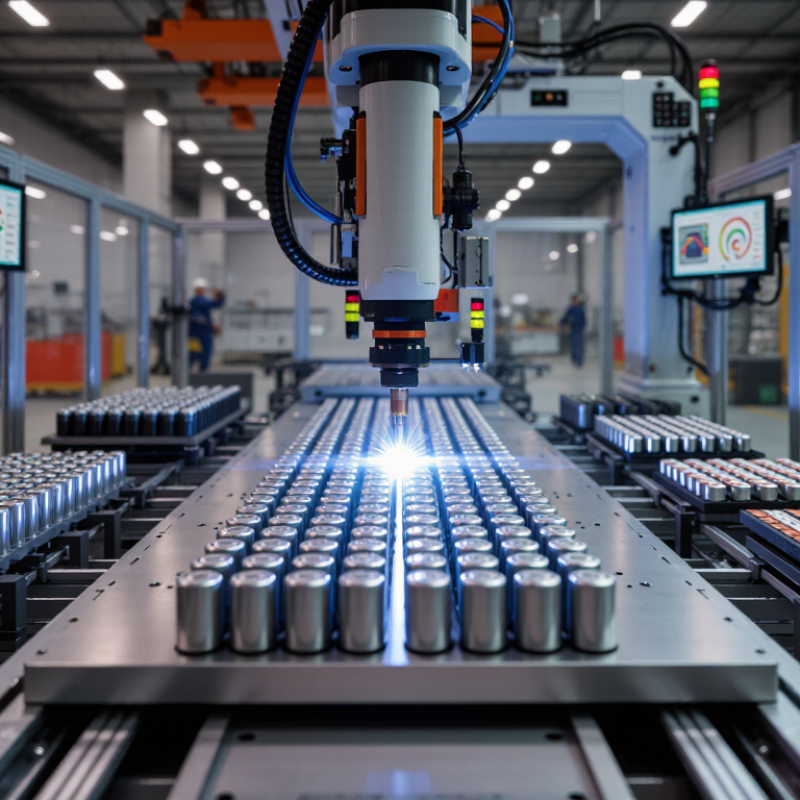
China’s e-mobility market passed 11 million EV sales in 2024. This volume is changing battery manufacturing expectations. Production lines now need stable welding, accurate inspection, and faster process feedback. Laser welding supports these needs for cell tabs, busbars, battery trays, and cooling components. It can create narrow welds with limited heat distortion. That matters when copper and aluminum parts sit close to sensitive cells.
Choosing a capable Chinese supplier requires more than checking equipment speed. Ask for real welding samples, material data, and test records. A reliable supplier should explain laser power, weld depth, pulse control, and fixture accuracy in practical terms. Vision inspection, resistance testing, pull testing, and weld traceability also deserve attention. Experience with mass production is valuable, but it should be proven through repeatable results, not impressive claims.
Tips: Test your own battery materials before signing. Check copper and aluminum separately. Request long-cycle production trials. Review failed weld samples, too. This part is often ignored. A fast machine may still create hidden defects if clamping, cleaning, or cooling is inconsistent. Suppliers should also support operator training and process adjustment after installation. No system is perfect, and even a strong proposal may need revision after factory testing.
Key market indicators and battery manufacturing considerations for China’s electric-mobility industry
| Data Dimension | 2023 | 2024 | Change / Relevance | Reference |
|---|---|---|---|---|
| New-energy vehicle sales in China | 9.495 million units | 12.866 million units | +35.5%; exceeded 11 million units | National automotive industry statistics, 2024 annual release |
| New-energy vehicle production | 9.587 million units | 12.888 million units | +34.4%; supports large-scale battery demand | National automotive industry statistics, 2024 annual release |
| New-energy vehicle share of total vehicle sales | 31.6% | 40.9% | +9.3 percentage points; stronger demand for automated battery assembly | Calculated from published vehicle sales data |
| New-energy vehicle exports | 1.203 million units | 1.284 million units | +6.7%; increases requirements for stable weld quality and traceability | National automotive industry statistics, 2024 annual release |
| Public charging facilities in China | Approximately 2.726 million | Approximately 3.579 million | +31.3%; reflects expanding electric-mobility infrastructure | National charging-infrastructure statistics, year-end releases |
| Typical battery pack electrical joining points | Cell-to-cell and busbar connections | Cell, module, busbar and terminal connections | Laser welding is used where low heat input, repeatability and compact welds are required | Battery-pack manufacturing process guidance |
| Key laser-welding quality indicators | Weld penetration, resistance and appearance | Weld penetration, resistance, appearance and process traceability | In-line monitoring helps reduce defects in high-volume production | Common battery-welding quality-control practice |
| Important supplier evaluation criteria | Equipment capability and application fit | Equipment capability, safety, service and validation data | Assess laser stability, fixture accuracy, vision inspection, data logging and after-sales support | Industrial equipment procurement checklist |
It creates narrow welds with limited heat distortion. This protects nearby cells and supports tabs, busbars, trays, and cooling parts.
Request real samples, material data, test records, and verified cycle times. Ask for copper and aluminum samples separately.
Use vision inspection, resistance testing, pull testing, and weld traceability. Review failed samples, not only successful demonstrations.
Each cell and weld should link to an operator and serial number. Records can include laser power, pulse duration, shielding gas, and inspection images.
Copper and aluminum react differently during welding. Your tolerances, surface condition, and clamping method may change the result. The first trial may not be perfect.
Check repeatable cycle times, uptime records, and long-cycle trials. Laboratory speed is not enough. Real shifts reveal unstable cooling or clamping.
Confirm enclosure integrity, interlocks, fume extraction, emergency stops, and maintenance records. Safety is not just paperwork.
Include consumables, training, downtime, validation, service, scrap, and rework. A low quotation may become costly after one unstable shift.
Expect operator training, process adjustments, and service response. A strong proposal may still need revision after factory testing.
No. Performance must be proven with your materials, tolerances, and production rhythm. Claims are not repeatability.
China’s e-mobility market continues to expand rapidly, with more than 11 million electric vehicles sold in 2024. As battery production grows, E-Mobility Battery Laser Welding has become an essential process for creating reliable cell, module, and busbar connections. Laser systems operating in the 2–6 kW range can support precise, low-heat welding while helping manufacturers achieve consistent joint quality. Important performance targets include a weld yield of at least 99.5% and electrical resistance below 10 mΩ.
When selecting a qualified supplier, manufacturers should evaluate more than equipment price. A dependable partner should demonstrate automotive-quality management through certifications such as IATF 16949, support battery functional safety requirements aligned with ISO 26262, and provide products and processes suitable for UN 38.3 testing needs. High throughput, complete production traceability, robust safety controls, responsive technical support, and transparent total cost are key factors in identifying the best long-term laser welding partner.