Choosing the 2026 best Industrial Laser Drilling System requires more than comparing laser power or advertised speed. Buyers must match the system with material, hole diameter, depth, taper, and production volume. A 20-micron hole in a thin ceramic substrate demands different optics from a 2-millimeter passage through aerospace titanium.
Industry forecasts show continued investment in laser manufacturing. Grand View Research reports strong growth in the industrial laser market through 2030, supported by automation, electronics, medical devices, and aerospace production. MarketsandMarkets also identifies fiber lasers, precision processing, and integrated control systems as important technology directions. However, forecasts vary by research method and market definition. Treat them as signals, not guarantees.
Real buying decisions depend on measurable performance. Examine pulse duration, beam quality, positioning accuracy, thermal damage, debris control, and uptime. Ask suppliers for test coupons, microscope images, cycle-time records, and maintenance histories. A system claiming high drilling speed may produce unacceptable recast layers. That detail matters.
Total cost matters more.
This guide compares leading system architectures, including nanosecond, picosecond, and femtosecond platforms. It considers throughput, software capability, operator training, service coverage, and component availability. Independent validation remains essential, because laboratory results may not represent continuous factory operation. The “best” system is rarely the most powerful one. It is the system that repeatedly meets specification, protects yield, and fits the buyer’s existing workflow. Some assumptions will need revision as laser sources, automation standards, and customer requirements change during 2026.
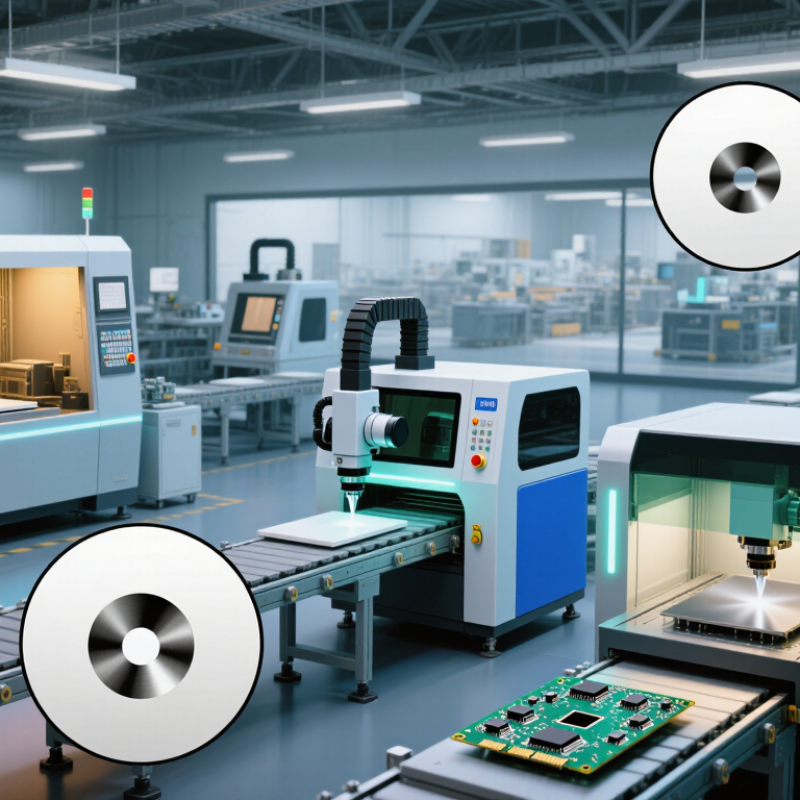
An industrial laser drilling system uses concentrated light to create precise holes in metal, ceramics, polymers, or composite materials. A laser source generates the beam, while lenses focus it onto a controlled point. Motion stages position the workpiece or drilling head. Software manages pulse energy, duration, spacing, and depth.
Small holes matter. A short pulse can remove material with limited heat spread. Longer pulses may produce deeper holes, but they can also leave melted edges or unwanted deposits. In production trials, operators inspect entry diameter, exit shape, taper, and the heat-affected zone. Gas assistance can clear debris from the hole. Sensors may monitor focus, temperature, and beam stability during operation.
A suitable system depends on material thickness, hole diameter, production volume, and required tolerance. Engineers should test real samples instead of trusting a catalog specification alone. Reflective metals can challenge beam control. Thick ceramics may crack when settings change too quickly. Maintenance also affects accuracy, especially when protective windows collect dust. No system performs perfectly under every condition. Even experienced teams sometimes adjust settings after observing rough edges or inconsistent depth. A reliable purchase includes process trials, operator training, safety interlocks, documented calibration, and accessible technical support.
It uses concentrated light to create precise holes in metals, ceramics, polymers, and composites. Lenses focus the beam onto a tiny point. Motion stages position the workpiece or drilling head. Software controls pulse energy, timing, spacing, and depth.
Each pulse removes a small amount of material. The beam may melt, vaporize, or fracture the surface. Repeated pulses deepen the cavity. Assist gas removes vapor and loose debris. That is the core process.
Material thickness, hardness, reflectivity, and surface condition all matter. Pulse energy and duration affect heat spread. Focus position influences depth and taper. Fixture vibration can cause inconsistent openings. Small changes matter.
Measure entry diameter, exit shape, roundness, taper, and edge quality. Inspect the heat-affected zone and remaining debris. Check hole depth and repeatability across several parts. One successful hole proves very little.
No. Excessive energy can create rough edges and unwanted heat. Lower power may produce cleaner holes in thin materials. The best setting depends on the part. More power is not automatically better.
Request trials using your actual material and thickness. Measure hole size, taper, debris, cycle time, and repeatability. Supplier demonstrations may not reflect factory conditions. Real samples matter more.
Automatic focusing and vision alignment can reduce setup errors. Recipe control helps repeat proven settings. Material detection may prevent incorrect programs. Energy monitoring can reveal process drift. Automation should expose problems, not hide them.
Confirm compatibility with existing design software, factory networks, controls, extraction equipment, and fixtures. Check part dimensions, air quality, and available floor space. Require documented interfaces and acceptance testing. Interfaces can look standard, but behave differently.
Protective windows need inspection because dust can reduce accuracy. Operators should check focus, temperature, beam stability, and gas flow. Calibration records should remain current. Maintenance is easy to underestimate. That mistake can become expensive.
Choosing the best Industrial Laser Drilling System in 2026 requires a clear understanding of how the equipment creates precise holes in metals, ceramics, composites, and other industrial materials. Laser drilling uses a focused beam to generate controlled heat, remove material, and produce holes with high speed and accuracy. Buyers should compare laser type, pulse duration, power, beam quality, work area, hole diameter range, depth capability, and the system’s ability to handle different materials and production volumes.
Performance is only one part of the decision. A suitable system should provide reliable automation, easy programming, stable positioning, and compatibility with existing production lines and software. Safety features, ventilation, protective enclosures, operator controls, and routine maintenance requirements also affect long-term value. When evaluating total cost, buyers should consider equipment price, energy use, consumables, service support, downtime, and expected productivity. The best choice is a balanced solution that delivers consistent quality, flexible operation, safe performance, and a reasonable return on investment.