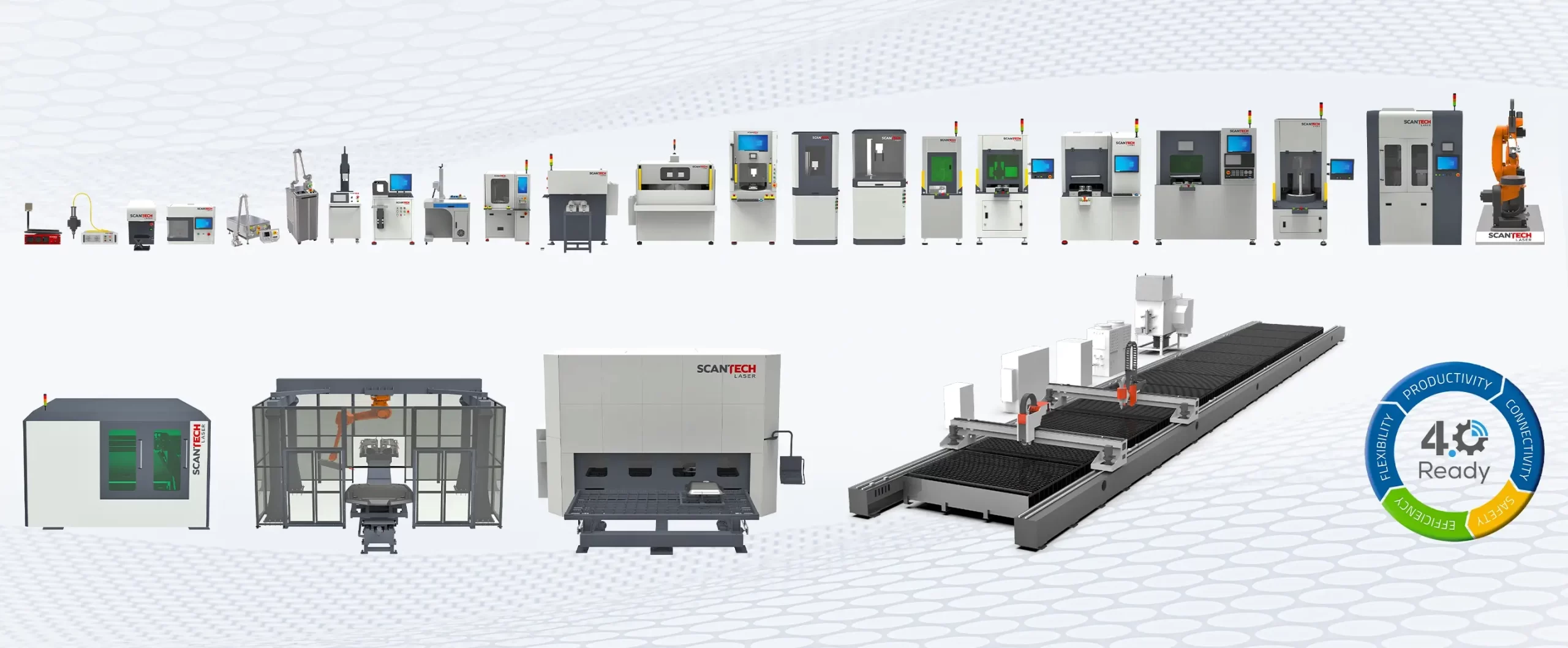
Industrial Aerospace Laser Processing System factory manufacturing facility
AS9100 & NADCAP Compliant Engineering

Aerospace Laser Processing System:
Next-Gen Manufacturing For Flight-Critical Components

Empowering global aerospace OEMs and Tier-1 suppliers with multi-axis 3D laser cutting, sub-micron turbine micro-drilling, high-speed superalloy cladding, and zero-HAZ femtosecond scribing systems designed, manufactured, and calibrated in-house since 1991.
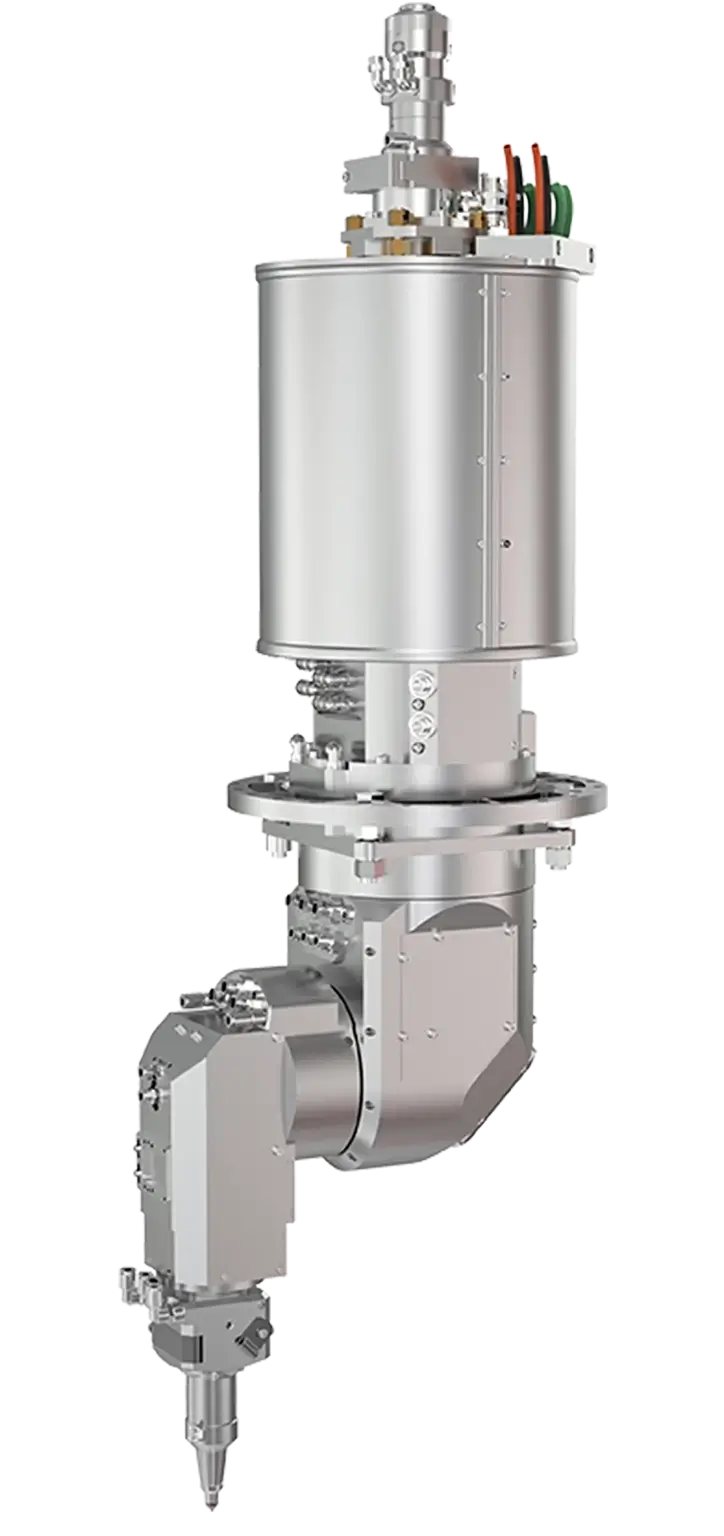
5-Axis Aerospace Laser Processing System cutting head for Inconel and Titanium superalloys
Dynamic 5-Axis Laser Cutting

Precision 3D Machining For
Inconel & Titanium Alloys

High-dynamic kinematic gantry platforms equipped with capacitive distance sensors, multi-kW fiber sources, and anti-reflection beam path geometry for flight-grade combustor liners and structural aero-components.

High speed laser cladding and thermal repair for aerospace turbine components
Aero-Engine Component Repair

High-Speed Laser Cladding
For Turbine Blade Restoration

Minimal dilution (< 5%), controlled thermal heat-affected zone (HAZ), and closed-loop pyrometer feedback for restoring high-pressure turbine vanes, compressor seals, and structural titanium airframes.

0
Years Engineering Heritage
<15μm
Recast Layer Control
0
In-House R&D Lab & Testing
24/7
AS9100 Process Support
Strategic Procurement Analysis

Solving The Structural Bottlenecks In Next-Gen Aerospace Fabrication

Modern aerospace architecture demands non-yielding tolerances across exotic materials including Inconel 718, Ti-6Al-4V, Hastelloy-X, Ceramic Matrix Composites (CMC), and Carbon Fiber Reinforced Polymers (CFRP). Traditional mechanical milling, electrical discharge machining (EDM), and manual welding introduce excessive tool wear, micro-cracking, residual thermal stress, and unacceptably high cycle times.

5-Axis Precision Beam Delivery for Aerospace Superalloys
Thermal Control

Eliminating Micro-Cracks & Recast Layers

Through ultrafast pulse shaping and synchronized multi-axis motion, our aerospace laser processing systems achieve clean cold-ablation regimes, preventing phase separation in high-temperature nickel superalloys.

Get a Quote
Aerospace Laser Processing System solution for high precision cutting
Kinematic Precision

High-Dynamic 5-Axis & 6-Axis Integration

Complex 3D geometries such as combustor heat shields, nacelle acoustic panels, and exhaust nozzles require high-speed vector interpolation with sub-micron positional repeatability.

Get a Quote
High speed laser cladding repair on aerospace turbine components
MRO & Restoration

Extending Fleet Life via High-Speed Cladding

Replace expensive component replacement with metallurgical laser deposition, adding anti-galling and oxidation-resistant superalloy coatings at high deposition rates with minimal substrate dilution.

Get a Quote
Product Portfolio

Core Aerospace Laser Processing System Platforms

Engineered specifically for aerospace OEMs, defense contractors, and Tier-1 engine manufacturers. Each system is integrated with industrial fiber or ultrafast beam sources, granite or cast gantry stability, and automated process feedback.

SYSTEM PLATFORM 01
5-Axis CNC Fiber Laser Cutting System for Aerospace Superalloys

5-Axis CNC Fiber Laser Cutting System

Specifically developed for complex 3D contouring of Inconel 625/718, Titanium Ti-6Al-4V, and stainless superalloys. Featuring linear motor drives, dynamic 5-axis cutting head, capacitive height sensing, and high-pressure assist gas delivery for burr-free edges.

SYSTEM PLATFORM 02
Ultrafast Femtosecond Laser Micro Drilling System

Ultrafast Laser Micro-Drilling Platform

Engineered for turbine blade cooling holes, effusion cooling panels, and fuel injector micro-nozzles. Employs picosecond or femtosecond pulse regimes to produce non-circular shaped diffuser holes down to 50μm diameter with zero recast layer and no thermal micro-cracking.

SYSTEM PLATFORM 03
High Speed Laser Cladding and Additive Repair Cell

High-Speed Laser Cladding & Additive Repair System

Tailored for aero-engine overhaul and MRO facilities. Deposits Stellite, Inconel, and René alloys onto turbine blade tips, compressor seals, and shaft journals with metallurgical bonding, low heat input, and dilution under 5%.

SYSTEM PLATFORM 04
Robotic 3D Laser Welding Cell for Aerospace Structural Assemblies

Robotic 3D Laser Welding System

Built for titanium structural components, fuel tanks, and environmental control system (ECS) ducting. Integrates high-frequency beam wobble optics, seam tracking, and inert gas trailing shields to guarantee deep penetration keyhole welds without oxygen contamination.

SYSTEM PLATFORM 05
High Precision Laser Surface Preparation and Thermal Barrier Coating Removal System

Laser Cleaning & Coating Removal System

Dry, chemical-free selective stripping of Thermal Barrier Coatings (TBC), paint, paint primers, oxides, and contaminants prior to structural bonding or non-destructive testing (NDT). Preserves underlying composite or metallic substrate intact.

SYSTEM PLATFORM 06
Ultrafast Laser Scribing & Machining Platform for Composites

Ultrafast Laser Composite Scribing System

Cold-ablation scribing and micro-machining of Carbon Fiber Reinforced Polymers (CFRP) and Ceramic Matrix Composites (CMC). Prevents fiber delamination, matrix charring, and fiber pull-out during aerodynamic surface profiling.

Aerospace Laser Processing Platform Specifications & Capability Matrix

Platform Category Laser Source & Wavelength Target Material Suite Typical Process Tolerance Aerospace Compliance Standard
5-Axis Laser Cutting High-Power CW Fiber (1064nm) Inconel 718, Ti-6Al-4V, Hastelloy, Stainless 310 ± 0.025 mm positional accuracy AS9100D, NADCAP AC7116
Turbine Hole Micro-Drilling Femtosecond / Picosecond (1030nm / 515nm) CMSX-4, René N5, Ni-Superalloys with TBC ± 0.005 mm diameter stability GE/P&W/Rolls-Royce Hole Spec
Robotic Aero Welding Fiber Laser with Wobble Head (1070nm) Titanium Grade 5, Aluminum-Lithium 2099 Full penetration keyhole <0.1mm mismatch AWS D17.1 / ISO 24394
Aero-Engine Laser Cladding High-Power Direct Diode / Fiber (980/1064nm) Stellite 6, Tribaloy 800, Inconel 625 Powder Dilution < 5%, Zero porosity AMS 4300 Series / ISO 14922
Composite Laser Cleaning/Scribing Pulsed MOPA Fiber / UV Laser (355nm) CFRP, Ceramic Matrix Composites (CMC), TBC Coatings Zero micro-crack, Sub-micron selective depth Boeing BAC 5748 / Airbus AIPS
Why Global Aerospace OEMs Partner With Scantech Laser

35 Years Of In-House Laser Engineering Expertise

Founded in 1991 in Navi Mumbai, India, Scantech Laser has grown into an international leader in industrial laser machine manufacturing. We do not aggregate off-the-shelf components; we design, build, and test complete mechanical gantries, optical heads, software algorithms, and safety enclosures under one roof.

  • In-House R&DDedicated laser application laboratory with metallographic sectioning, pull testing, and optical profiling.
  • AS9100 / ISOISO-aligned manufacturing standards with Class 1 laser safety enclosures designed for 24/7 industrial production.
  • Process FirstEvery system quote is backed by empirical sample trial reports on client-supplied aerospace alloys.
  • Global ServiceComprehensive installation supervision, remote diagnostics, operator certification, and lifetime spare parts support.
Get a Quote
Request Technical Evaluation

Send Us Your Workpiece Drawings & Material Specifications

Our senior aerospace application engineers will conduct a thorough feasibility study, define optimal pulse energy regimes, estimate cycle times, and provide a tailored technical proposal—including when laser processing is not the optimal fit.

Aerospace Engineering FAQ

Frequently Asked Procurement & Technical Questions

Detailed technical answers to common queries asked by aerospace procurement directors, manufacturing engineers, and quality assurance leads during system evaluation.

NADCAP compliance for aerospace laser processing requires strict control over metallographic damage, micro-cracking, and microstructural phase changes. Scantech Laser systems utilize active thermal management, adaptive beam-shaping optics, and ultrafast picosecond/femtosecond laser sources. For deep hole drilling and cutting in nickel-based superalloys (such as Inconel 718 and Rene 41), our pulse-tailoring algorithms limit recast layer thickness to under 15 microns and micro-crack depths to zero in critical stress regions, fully adhering to AS9100 and NADCAP AC7116 audit standards.

Yes. Highly reflective alloys pose severe back-reflection risks to conventional fiber lasers. Scantech Laser integrates optical isolators, single-mode fiber lasers with optimized wavelength emission, real-time back-reflection monitoring sensors, and specialized circular polarization heads. Combined with high-speed 5-axis CNC path generation and closed-loop beam power modulation, our machines ensure stable cutting and welding of Al-Li 2099, Titanium Ti-6Al-4V, and Hastelloy without optical hardware damage or beam degradation.

Laser micro-drilling provides a 5x to 10x speed advantage over conventional high-speed EDM for turbine blade cooling holes. While EDM requires physical electrode wear management, dielectric fluid filtration, and long cycle times per hole, a multi-axis laser drilling system utilizes direct percussion or trepanning on-the-fly. This eliminates tool wear entirely, slashes cycle time per blade from hours to minutes, and supports complex non-circular diffuser cooling hole geometries required by next-generation high-pressure turbine designs.

Thermal distortion is controlled through tight control of heat input using high-frequency wobble welding optics and pulsed fiber laser technology. By oscillating the beam in customizable 2D patterns (zigzag, circular, continuous spiral), we achieve lower heat input per unit length compared to traditional TIG or continuous beam welding. This minimizes distortion on thin-wall titanium fuselage panels and Inconel ducting, maintaining tight geometric tolerances without post-weld mechanical straightening.

Our FAT and SAT processes strictly mirror aerospace quality standards. Before shipment from our Navi Mumbai facility, we execute full metallurgical cross-sectioning, laser interferometer positional calibration (ISO 230-2), beam caustic spatial profiling (M² measurement), tensile weld testing, and uninterrupted 72-hour stress endurance testing. SAT includes site installation supervision, local optical calibration, operator certification, and initial batch manufacturing qualification under client quality surveillance.

High-speed laser cladding (HSLC) creates a true 100% metallurgical bond with the substrate metal, whereas HVOF forms a mechanical bond susceptible to delamination under severe thermo-mechanical fatigue. Furthermore, laser cladding yields dilution rates under 5%, minimal heat input to prevent part warping, and significant material savings. MRO facilities achieve up to 3x longer component service life on re-clad turbine seals, compressor blade tips, and rotor shaft journals compared to HVOF spraying.

Verification & Documentation

Aerospace Technical Documentation & Qualification

Review our structural engineering standards, ISO compliance certificates, and metallurgical test procedures validated across international flight programs.

Aerospace Spec Sheet

5-Axis Laser Superalloy Cutting

Complete kinematic parameters, linear motor speed acceleration specs, gas consumption profiles, and edge surface roughness metrics (Ra < 3.2μm).

Get a Quote
White Paper

Turbine Hole Micro-Drilling HAZ Study

Metallographic analysis, electron microscope cross-sections, and thermal fatigue test data comparing femtosecond laser ablation with sinker EDM.

Get a Quote
MRO Case Study

High-Speed Laser Cladding of Aero-Vanes

Field test performance, hardness gradient curves, and wear rate comparisons of laser-clad Stellite alloys on commercial turbofan engine parts.

Get a Quote
Founded 1991 In-House R&D Application Lab ISO 9001:2015 Compliant Build Class 1 Enclosure Safety Standard Global Aerospace Service Desk
Direct Procurement Contact

Connect Directly With Our Aerospace Systems Engineering Team

Submit your CAD drawings, alloy specifications, tolerance criteria, and required cycle times. Our application engineering team will provide a comprehensive technical review and feasibility report.

Global Manufacturing HQ Navi Mumbai, India A-517 MIDC Mahape, Ghansoli, Navi Mumbai – 400710, Maharashtra, India
Aerospace Engineering Desk [email protected] Feasibility reviews, sample trial scheduling, and technical machine quotes.
Direct Phone Line +91 932 191 7007 Monday to Saturday, IST business hours. Global service support available 24/7.